Alloop Trio 299 Kickstarter Wearable Explained: One Tiny Sensor That Swaps Between a Band and a Ring (World Tech)
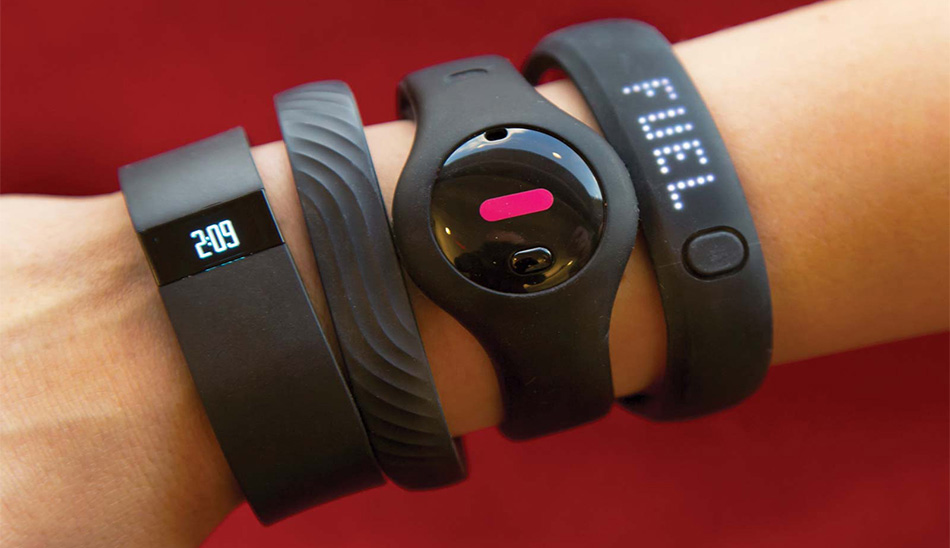
Illustrative image: several fitness trackers worn on one wrist. No license-safe photo of the Alloop Trio itself exists yet — Alloop's own renders are not freely licensed. Image: Wikimedia Commons / Abas Gemini, CC BY-SA 4.0
📌 KEY HIGHLIGHTS
- One sensor, three ways to wear it: the 2.4-gram Cube slots into a wristband, a ring, or a Halo band that adds voice logging and extra battery.
- What it tracks: resting heart rate, heart-rate variability, blood oxygen, breathing rate and temperature, plus sleep, recovery and Bio Age scores in the app.
- Kickstarter, not a shop shelf: pledges open 10 November 2026 at $299 (subject to change); shipping is estimated for late December 2026 to early January 2027.
- No subscription for the basics: the core app is free, with an optional Pro plan at about $5 a month — a deliberate break from ring rivals that charge monthly.
- The honest catch: Trio has not shipped, Alloop has published no accuracy data for the Cube, and no India launch or price has been announced.
What happened?
Choosing between a fitness band and a smart ring usually means accepting a compromise: rings are comfortable for sleep but get in the way during strength training, racket sports or manual work, while bands are practical by day but bulkier at night. Alloop, a US startup founded by Dr Tony Wu — co-founder and former CEO of RingConn — has answered with a modular idea: stop choosing, and move the same sensor between the two.
The company announced the Alloop Trio on 21 October 2026, unveiled it in New York on 23 October, and coverage has been running through 24 October in CNET, Gadgets & Wearables and The 5krunner. The pitch is "the world's first 3-in-1 health wearable": one sensing module, three ways to wear it, and an AI health agent in the companion app that turns the numbers into guidance.
The timing matters. Screenless trackers are having a moment — Google's Fitbit Edge and Fitbit Air, Whoop and Oura have all pushed the idea that a tracker should be a quiet sensor pack, not a second phone screen. Trio takes that trend one step further by making the sensor itself detachable.
Alloop Trio 299 Kickstarter wearable explained: one sensor, three ways to wear it
Everything in Trio revolves around the Cube, a small PPG optical sensor module weighing just 2.4 grams. It measures resting heart rate, heart-rate variability, blood oxygen, respiratory rate and temperature. Alloop rates the Cube at up to seven days per charge and 5 ATM water resistance, so it can be worn swimming as a ring or a band.
| Configuration | How it is worn | What it adds |
|---|---|---|
| Cube + wristband | On the wrist | Light, unobtrusive 24/7 tracking for the day |
| Cube + ring | On the finger | Most compact fit, designed for sleep |
| Cube + Halo + wristband | On the wrist | Voice logging, light and vibration alerts, extra battery; Halo charges the Cube while it is worn |
Halo is what makes Trio more than a sensor that changes clothes. Double-tap it and you can record a voice note — a meal, a coffee, a headache, how a workout felt — without reaching for your phone. The note lands in an Easy Journal in the Alloop app, where the AI Health Agent considers it alongside the sensor data. The app also produces sleep, recovery and Bio Age scores (Bio Age uses 18 measurements across six health categories), and it can read data from Apple Health, Google Health Connect, medical records, lab tests and continuous glucose monitors. The app runs on iOS and Android and can even be used without Trio hardware.

Illustrative image: a smartwatch tracking a cycling workout. Trio's own design is known only from Alloop's launch materials so far. Image: Wikimedia Commons / Alextredz, CC BY-SA 4.0
Why it matters — and what Indian buyers should note
For the wearables market, Trio is a genuinely new answer to an old question: why buy two trackers when one sensor could do both jobs? If the modular idea works, it undercuts the "ring for night, watch for day" two-device habit and challenges subscription-heavy rivals — Oura and Whoop both charge monthly fees, while Alloop's core app is free and its optional Pro plan costs only about $5 a month.
For Indian buyers, the honest position is: wait. Alloop has announced no India launch, no India price and no local availability; the Kickstarter campaign is US-first, and a $299 pledge (roughly ₹26,000 before shipping, customs and currency movement) is a lot to pay for unshipped hardware with no published accuracy data. India already has cheaper, shippable options in the same aisle — Samsung's leaked Galaxy Fit 4 is expected around $60 — and the smarter move for most buyers is to let early backers test the Cube first, then judge a retail unit on reviews. Trio's real significance for India is as a signpost: modular, subscription-free trackers are coming, and the next generation of budget bands may borrow the idea.
Should you care?
Price, availability & alternatives
| Tracker | Price | Subscription | Status |
|---|---|---|---|
| Alloop Trio | $299 (Kickstarter, subject to change) | Core free; Pro ~$5/month | Crowdfunding 10 Nov 2026; ships late Dec 2026–early Jan 2027 |
| Samsung Galaxy Fit 4 (expected) | ~$60 expected | None | Leaked, unannounced |
| Google Fitbit Edge | $179.99 | Varies by region | Launched October 2026 |
| Samsung Galaxy Buds On | India launch awaited | None | Sales in Japan from 27 Oct 2026; see our Galaxy Buds On India launch post |
For a different kind of wristwear entirely, see our Casio G-Shock 2500 Series India price story.
FAQs
How much does Alloop Trio cost?
Alloop lists Trio at a starting price of $299 for its Kickstarter campaign, with the company noting the price is subject to change. The core app is free to use, with an optional Pro plan at about $5 a month for deeper AI features.
When does Alloop Trio launch on Kickstarter?
The Kickstarter campaign opens on 10 November 2026. Alloop estimates shipping for late December 2026 to early January 2027, but crowdfunding dates can slip, so treat that window as an estimate, not a promise.
Can Alloop Trio be worn for swimming?
Alloop rates the Cube sensor at 5 ATM, so it can be worn swimming as a ring or a band. The Halo module is rated IP68, which covers rain and splashes but not swimming — keep Halo out of the pool.
Does Alloop Trio need a subscription?
No. Unlike some smart-ring rivals, Trio's core health tracking and AI agent features work without a subscription. The optional Pro plan (about $5 a month) adds deeper health research and longer-term personalised insights.
Takeaway: Trio's modular sensor is the freshest idea in wearables this week — one Cube, worn as a band by day and a ring at night, with no subscription for the basics. But it is still a Kickstarter promise, not a product you can buy and test, so the wise move is to watch the first backers' reviews before pledging.
Follow World Tech on TechByCountry for tomorrow's update.
📸 Get tech in the last 24 hours on Instagram — follow @_techinlast24hrs for daily posts (9 AM–9 PM) and reels at 12:30 PM & 8:30 PM.
Sources
Alloop — Trio official prelaunch page
Gadgets & Wearables — Alloop Trio turns from a fitness band into a smart ring (24 Oct 2026)
The 5krunner — Alloop Trio moves one sensor from band to ring (24 Oct 2026)
BigGo Finance — Alloop Trio announcement report (21 Oct 2026)
Tech Insider — Alloop Trio review (24 Oct 2026)
Comments
Post a Comment