
Illustrative image: a server room with illuminated racks — the kind of infrastructure live voice agents run on. Image: Wikimedia Commons / BalticServers.com, CC BY-SA 3.0. AssemblyAI TTS-1 is a hosted API, not a device, so no product photo exists.
TL;DR — assemblyai tts-1 text to speech voice agents explained in one line: AssemblyAI, best known for speech-to-text, has launched its first text-to-speech model, TTS-1, built to give live phone agents a natural voice at $15 per million characters, with a 4,000+ voice library, instant cloning and about 90 ms to first audio.
📌 KEY HIGHLIGHTS
- First TTS model from AssemblyAI: announced 28 October 2026, TTS-1 turns an agent's written replies into spoken audio for live phone calls — closing the loop for developers already using AssemblyAI speech-to-text.
- Price: $15 per million input characters, with no annual contract, no minimum spend and unlimited concurrency on pay-as-you-go.
- Voices: a library of more than 4,000 voices plus instant voice cloning from a short recording, with the speaker's permission confirmed first.
- Languages at launch: six — English, Spanish, French, German, Italian and Portuguese. No Hindi or other Indian language yet.
- The honest catch: AssemblyAI's headline speed and accuracy figures are its own lab tests; an independent benchmark measured slower streaming latency and lower reading accuracy.
assemblyai tts-1 text to speech voice agents explained: what happened?
AssemblyAI has spent years on the listening half of voice AI: its speech-to-text models transcribe calls for products from companies like Granola, Dovetail and Ashby. TTS-1 is the speaking half. It is a streaming text-to-speech model designed for one specific job — voice agents handling live phone calls, where a slow or mispronounced reply makes a caller hang up.
The model was announced on 28 October 2026 in AssemblyAI's launch post, "Introducing AssemblyAI-TTS-1: text-to-speech built for voice agents", and is generally available now through AssemblyAI's cloud in the US and EU. It is a hosted API only: there are no open weights and no on-premises option, so developers use it over HTTP, WebSocket or an OpenAI-compatible route rather than downloading and running it themselves.
Under the hood, AssemblyAI says TTS-1 works on continuous audio representations instead of the discrete audio tokens most TTS models use, and that this is what improves realism and cuts the time to first spoken audio. It was trained on millions of hours of audio, including real conversational data — the company pitches that as the reason its voices sound human on names, numbers and addresses rather than robotic on the details that matter in a call.
What TTS-1 actually offers
Three things define the launch: the voice library, the cloning, and the developer plumbing. The library holds more than 4,000 voices, and every voice speaks all six launch languages. Instant cloning needs only a short recording — the clone in AssemblyAI's launch post used 24 seconds of audio — plus a confirmation of the speaker's permission, and the voice is ready within seconds. That permission step matters: it is the safeguard against cloning someone's voice without consent, though it is a confirmation flow, not a technical proof of identity.
For builders, the practical details are straightforward: output is mono PCM, mu-law or A-law audio from 8 kHz to 48 kHz (24 kHz PCM native; telephony stacks can request 8 kHz mu-law directly), word timestamps are included, and a WebSocket session stays open per conversation with a cancel message for barge-in — so when a caller interrupts, the agent can stop mid-sentence without reconnecting. AssemblyAI also published reference agents for LiveKit and Pipecat, the two frameworks many voice-agent teams already use.
| TTS-1 fact | Detail |
|---|---|
| Price | $15 per 1 million input characters (including spaces and punctuation); no contract, no minimums, unlimited concurrency |
| Voices | 4,000+ voice library; instant cloning from a short recording with permission confirmation |
| Languages | English, Spanish, French, German, Italian, Portuguese at launch |
| Time to first audio | About 90 ms in production, per AssemblyAI; 47 ms median time to first byte in its own lab test |
| Hosting | AssemblyAI cloud only — US (us-east-1) or EU (eu-north-1); no open weights, no on-prem |
| Interfaces | HTTP API, WebSocket API, OpenAI-compatible route; LiveKit and Pipecat reference agents |
| Missing at launch | SSML, speed control, pitch adjustment, emotion tags, custom pronunciation dictionaries |
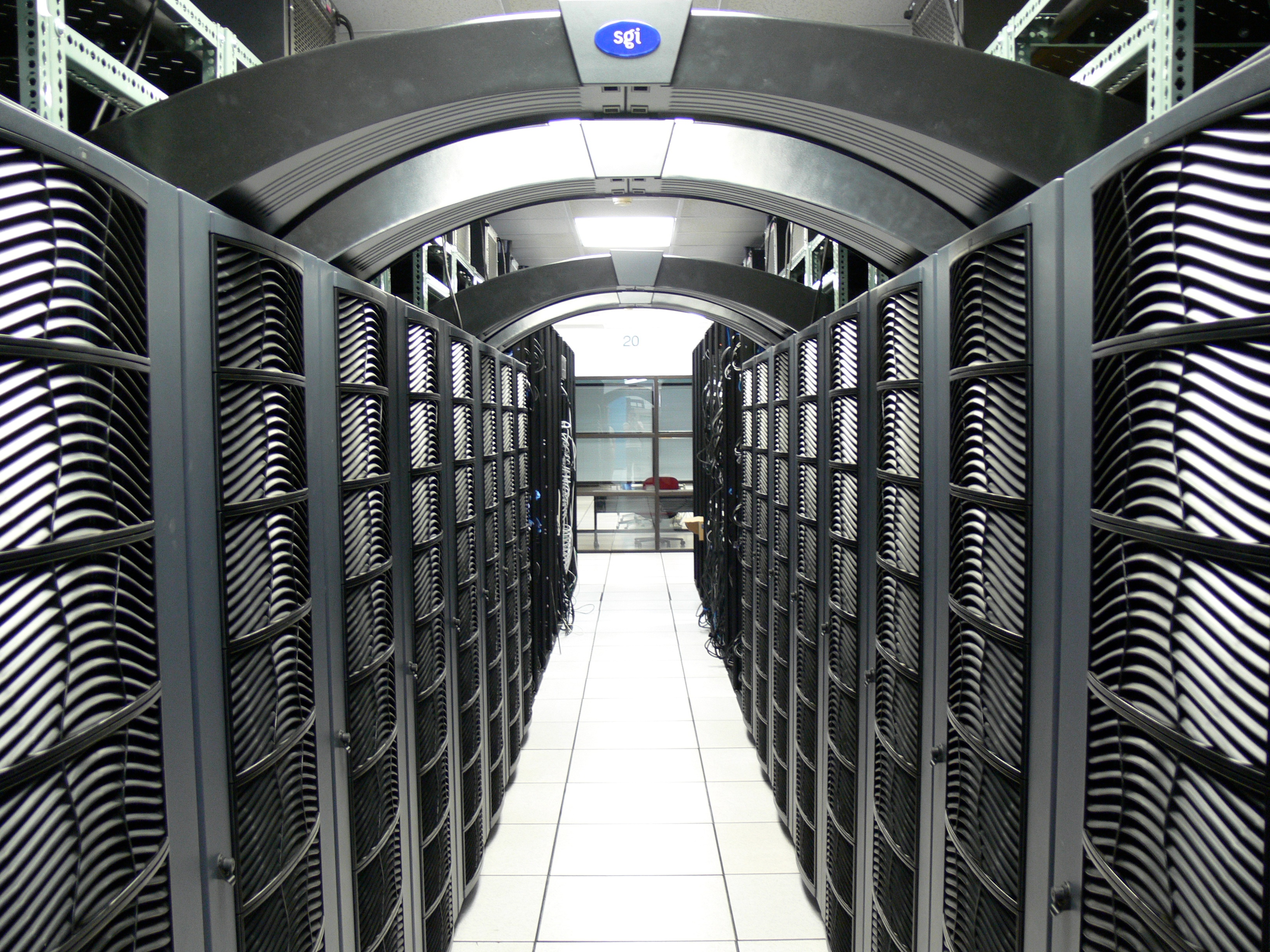
Illustrative image: a corridor between server racks in a data centre. Image: Wikimedia Commons / Christopher Bowns, CC BY-SA 2.0.
How TTS-1 compares with ElevenLabs, Cartesia and Inworld
AssemblyAI calls TTS-1 the lowest-priced frontier TTS model for voice agents. The price claim needs a footnote: Inworld's TTS-2 Flash also lists $15 per million characters on demand, dropping to $7 on a paid plan — so the sharper difference is concurrency, where AssemblyAI offers unlimited concurrency on pay-as-you-go while Inworld's on-demand tier caps at five concurrent requests. Against ElevenLabs Flash v2.5 ($40 per million) and Cartesia Sonic 3.6 ($37.38–$50 via plan credits), the $15 price is genuinely lower.
On performance, keep the two sets of numbers separate. In AssemblyAI's own tests (50 matched cloned voices, four English sets, eval dated 28 October 2026), TTS-1 hit 93.7% entity accuracy on hard targets like phone numbers and codes — effectively tied with ElevenLabs v4 at 93.6% — and a 47 ms median time to first byte, ahead of ElevenLabs Flash v2.5 (119 ms) and Cartesia Sonic 3.6 (143 ms). On Cekura's independent benchmark of 27 models, the picture was more mixed: TTS-1 scored 81.5% reading accuracy and 4.50 naturalness, with a median streaming latency of 159 ms measured from the last word sent to the first audible sound — 8th of 19 timed models, behind Inworld TTS-2 Flash at 45 ms and 93.2% accuracy. The two latency numbers measure different things, but the independent result is the one to trust for real calls: production performance at scale is still unproven.
| Model | List price per 1M chars | Languages | Note |
|---|---|---|---|
| AssemblyAI TTS-1 | $15 | 6 | Unlimited concurrency; no SSML or pronunciation controls yet |
| Inworld TTS-2 Flash | $15 on demand, $7 on Growth | 200+ | Fastest independent streaming latency (45 ms, Cekura) |
| ElevenLabs Flash v2.5 | $40 | 32 | SSML supported; slower on Cekura latency (177 ms) |
| Cartesia Sonic 3.6 | $37.38–$50 via credits | 44 | Custom pronunciation dictionaries; on-prem/VPC on enterprise |
Why it matters for World Tech readers — and what it means for India
Voice agents are moving from demos into real call handling — support lines, appointment booking, order tracking — and the voice is now the product surface. Whoever supplies a cheap, fast, accurate voice at scale shapes what those agents sound like. AssemblyAI's pitch is aimed squarely at builders: one vendor, one API key and one bill for speech-in (its Universal speech-to-text), the language model (its LLM Gateway) and speech-out, instead of stitching three vendors together. That is also the competitive story of the week: the same days brought OpenAI's expanded monitoring for its own AI agents and Mistral's open-weight Large 4 release — the industry is simultaneously racing to build agents, open them up, and watch them.
For India readers, two things matter most. First, the gap: none of the six launch languages is Hindi or any other Indian language, so an Indian-language voice agent cannot use TTS-1 today — English-language agents and BPO-style deployments are the near-term use. Second, the caution: voice cloning with only a permission confirmation raises the same misuse questions as every cloning tool, and the week's other warning — a Claude agent reported to have leaked credentials from a Pentagon system — is a reminder that agent safeguards are only as strong as their weakest check. If you build with TTS-1, test it on real Indian names, numbers and addresses before trusting the entity-accuracy claim, and keep the cloning permission step strict.
Should you care?
✅ Verdict: Yes, if you build voice agents or buy voice-AI tools. TTS-1 is a credible, cheap, low-friction voice for live calls — but treat the headline numbers as vendor claims until independent tests and production call data confirm them, and note the missing controls (SSML, pronunciation dictionaries) and missing Indian languages before committing.
FAQs
What is AssemblyAI TTS-1?
TTS-1 is AssemblyAI's first text-to-speech model. It converts an AI agent's written replies into spoken audio in real time, built for voice agents on live phone calls, and is sold as a hosted API rather than a downloadable model.
How much does AssemblyAI TTS-1 cost?
$15 per million input characters, counting spaces and punctuation. There is no annual contract, no minimum spend and no per-voice or concurrency fee on pay-as-you-go — every voice, cloning, word timestamps and EU processing are included at that rate.
Which languages does TTS-1 support?
Six at launch: English, Spanish, French, German, Italian and Portuguese, with several accents in each. AssemblyAI says more languages and accents are coming, but no dates or Indian languages have been announced.
How does instant voice cloning work, and is it safe?
A short recording (24 seconds in AssemblyAI's launch demo) plus a confirmation of the speaker's permission produces a clone within seconds. The permission confirmation is the safeguard — it is a consent step, not a technical guarantee — so builders should keep their own consent records and never clone a voice without clear permission.
Takeaway: AssemblyAI now owns both halves of the voice-agent conversation — hearing and speaking — at a price that undercuts most rivals. The model is real, available and cheap; the speed and accuracy headlines still need independent proof.
Follow World Tech on TechByCountry for tomorrow's update.
📸 Get tech in the last 24 hours on Instagram — follow @_techinlast24hrs for daily posts (9 AM–9 PM) and reels at 12:30 PM & 8:30 PM.
Sources
- AssemblyAI Blog — Introducing AssemblyAI-TTS-1: text-to-speech built for voice agents (28 October 2026, primary)
- AssemblyAI — Speech AI for Voice Agents ($15/1M chars, ~90 ms to first audio)
- MarkTechPost — AssemblyAI Ships AssemblyAI-TTS-1 (29 October 2026)
- RuntimeWire — AssemblyAI adds speech generation for voice agents (29 October 2026)
Comments
Post a Comment