CERT-In GoAhead Web Server Flaws India Explained: 3 TLS Bugs Hiding in Routers, Firewalls and Factory Gear
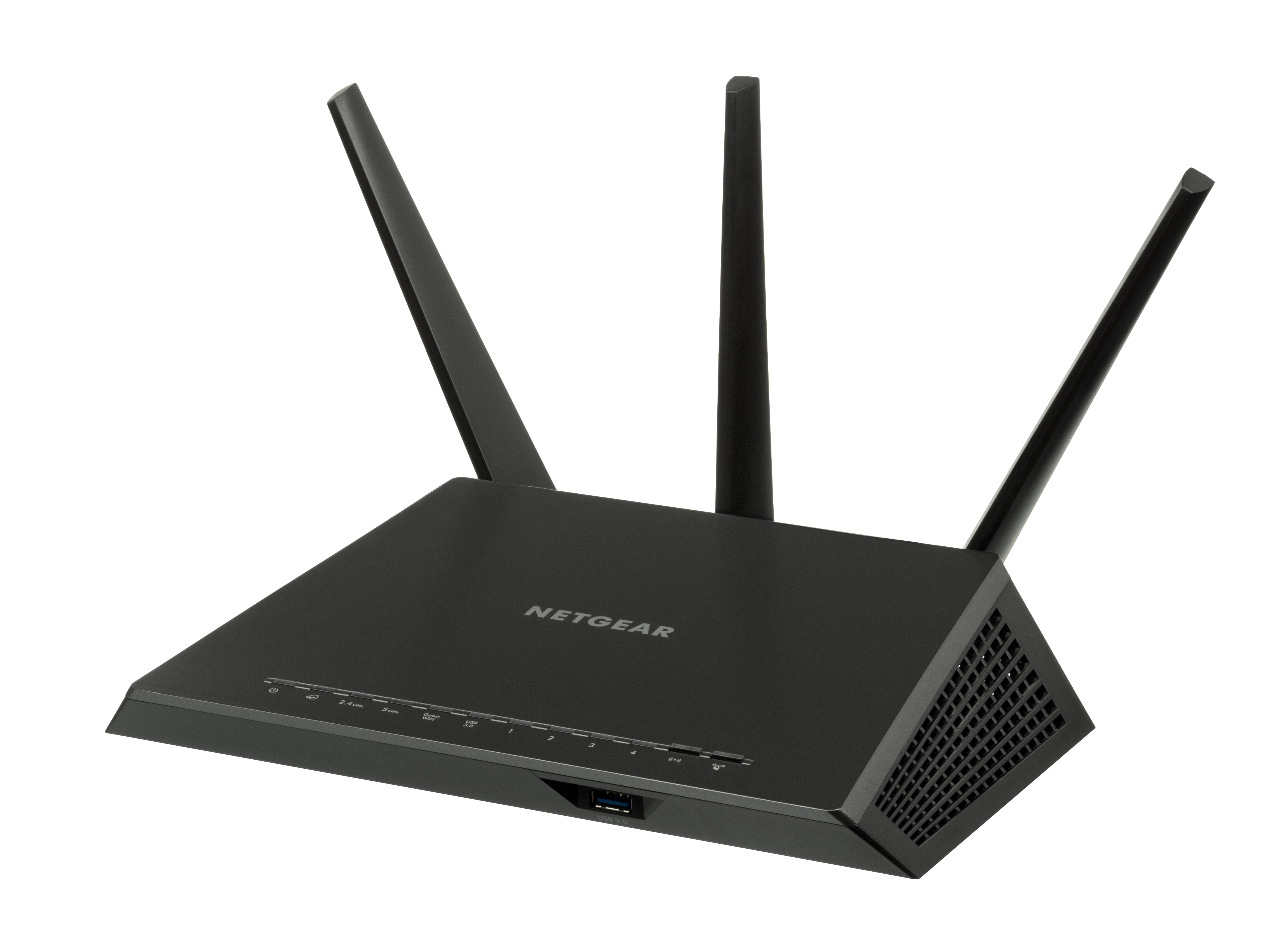
Illustrative image: a wireless router — the kind of device whose admin page can run on GoAhead. This is not a photo of an affected device or of GoAhead itself, which is software inside firmware. Image: Wikimedia Commons / Evan-Amos, public domain.
TL;DR — CERT-In GoAhead web server flaws India explained in one line: India's CERT-In issued critical advisory CIAD-2026-0057 on 28 October 2026 about three TLS flaws in the GoAhead embedded web server that runs the admin pages of routers, firewalls and industrial gear — the worst lets a revoked certificate still log in — and the fix only reaches you when your device maker ships new firmware.
📌 KEY HIGHLIGHTS
- The advisory: CERT-In advisory CIAD-2026-0057, issued 28 October 2026 and updated 30 October, rated Critical.
- The worst flaw: CVE-2026-115881 (CVSS 9.1) — GoAhead loads the certificate revocation list but never enforces it, so a revoked client certificate can still authenticate.
- The other two: CVE-2026-115884 (CVSS 7.4) lets an over-long certificate chain through on older LibreSSL builds; a Mbed TLS typo shrinks a 2048-bit key exchange value to a single byte (CVSS 5.9).
- The fix exists — upstream: GoAhead 6.1.1, released to device makers on 2 August 2026. Your router or firewall only gets it when its vendor ships new firmware.
- The catch: you cannot apt-upgrade a router. Inventory your devices, ask each vendor, and pull admin pages off the internet in the meantime.
CERT-In GoAhead web server flaws explained: what was found?
GoAhead is a small web server made by EmbedThis that device makers build into firmware to serve the admin pages of routers, firewalls, VPN and SD-WAN gateways, printers, network video recorders, UPS network cards and industrial controllers. EmbedThis says it runs in hundreds of millions of devices. Security researcher Sébastien Féry of FoxIO found three separate bugs in how GoAhead handles TLS — the encryption that protects those admin pages — and reported them privately in April 2026. EmbedThis fixed all three in GoAhead 6.1.1 and published its advisories on 12 October 2026; FoxIO's detailed write-up followed on 26 October. CERT-In's advisory on 28 October is India's official warning about the same flaws.
All three bugs are about certificate and key-exchange handling, and each one only bites on a particular TLS backend — the crypto library a device maker compiled GoAhead against. That is why no single "are we affected?" answer works: it depends on the backend and the settings in your firmware.
The three flaws in one table

Illustrative image: server racks at NERSC — the kind of infrastructure that GoAhead-powered gateways and controllers sit in front of. Image: Wikimedia Commons, CC0.
| Flaw | What goes wrong | Affected versions |
|---|---|---|
| CVE-2026-115881 (CVSS 9.1, Critical) | OpenSSL backend loads the certificate revocation list but never enforces it — a revoked client certificate still authenticates over mutual TLS | GoAhead 3.4.5 through 6.1.0 with the OpenSSL backend, mTLS enabled and a CRL configured |
| CVE-2026-115884 (CVSS 7.4, High) | LibreSSL legacy verifier accepts a client certificate chain longer than the configured limit when issuer checking is off | GoAhead 6.1.0 and earlier on LibreSSL 3.2.x and 3.3.2–3.3.6 |
| Weak key exchange (CVSS 5.9, Medium, no CVE yet) | A length typo sends a 1-byte Diffie-Hellman value instead of the full 2048-bit one, so a passive observer can decrypt some TLS 1.2 sessions | GoAhead 4.0.2 through 6.1.0 with the Mbed TLS backend, where the client accepts the broken parameters |
The revoked-certificate flaw is the one to grasp first. Mutual TLS is supposed to work like a staff badge system: both sides show certificates, and a revocation list is the list of cancelled badges. GoAhead loads that list at startup and reports no error — so an operator who configured it has every reason to believe revocation works. It does not. A client whose certificate was revoked — a stolen or retired device, for example — completes the handshake as if the certificate were still valid and gets whatever access that identity allows. In FoxIO's test against GoAhead 6.1.0, a revoked certificate was accepted with issuer checking switched on.
The Mbed TLS flaw is stranger and narrower. A buffer-length typo reduces the 2048-bit Diffie-Hellman modulus to a single byte, leaving only eight possible shared-secret values for an observer to try. But it only reaches a session if the client accepts the broken setup — OpenSSL, current Go and Java, and mainstream browsers refuse a value that small and fall back to a stronger key exchange, so the session never completes with those clients. The LibreSSL flaw similarly needs a specific combination: client certificates required, issuer checking off, and an older LibreSSL build.
Why the fix is slow: firmware, not a software update
Here is the awkward part, and the reason CERT-In's advisory matters more than the CVSS scores alone suggest. GoAhead does not ship to you — it ships to device makers, who bake it into firmware. The fixed library reached manufacturers on 2 August 2026, but you only get it when each vendor releases new firmware for your exact model, and some models will never get one. Fingerprinting tools can suggest a device runs GoAhead, but that does not prove it is vulnerable: only the vendor can confirm which backend and settings its firmware uses.
That supply-chain lag is also why this story is different from this week's CISA KEV listings. Those flaws come with confirmed exploitation in the wild; for the GoAhead flaws, no public claim of exploitation has been reported. The warning is about exposure and slow patching, not an ongoing attack — which makes it a good moment to inventory, while the cost of learning is still low.
Why it matters for India readers
CERT-In is India's national agency, and its advisory speaks directly to Indian organisations: enterprises, government networks, factories running industrial controllers, and the IT providers who manage client gear. Indian firms also sit on the other side of this supply chain — local system integrators and managed service providers maintain routers, firewalls and gateways for clients worldwide, and each one needs a vendor answer. No India-specific victim has been named, and this post claims none. The practical relevance is the same either way: if an admin page is reachable from the internet and its firmware predates the fix, the exposure is real. And under CERT-In's directions, specified cyber incidents must be reported within six hours of being noticed — so logs of admin logins from unknown addresses are worth keeping, not just glancing at. Read it alongside our Ivanti Connect Secure zero-day chain CISA KEV explainer, our PHP2Shell CISA KEV explainer and our GitLab CVE-2026-97229 CISA KEV explainer for the week's other edge-device flaws.
Should you care?
✅ Verdict: Yes, if your organisation runs network or industrial gear — build the inventory, ask every vendor for a GoAhead statement and fixed firmware, and get admin pages off the public internet now. ⏳ Home users: check your router vendor's support page for a firmware update and turn off remote administration if it is on; there is nothing to panic-buy, but there is also no patch you can install yourself.
What to do now: checklist
1) Inventory. List embedded devices: make, model, firmware version, management IP. 2) Ask the vendor. Check each vendor's advisory page or open a support ticket for GoAhead usage and fixed firmware — fingerprinting alone proves nothing. 3) Hide the admin page. Confirm no admin interface is reachable from the internet; put remote management behind a VPN and restrict it to a management VLAN or an allow-list of IT hosts. 4) Patch in stages. Roll firmware to one device first, verify, then the rest, and record the new versions. 5) After updating, end sessions, reboot and rotate admin passwords — EmbedThis recommends this for 6.1.1. 6) Watch the logs. Review device and firewall logs for admin logins from unknown addresses, and keep them for the six-hour reporting window.
FAQs
What is the GoAhead web server?
GoAhead is a lightweight embedded web server made by EmbedThis that device makers build into firmware to serve admin pages on routers, firewalls, gateways, printers and industrial controllers. EmbedThis says it runs in hundreds of millions of devices. It is software inside firmware, not a product you install yourself.
What are the GoAhead flaws CERT-In warned about?
Three TLS flaws in CERT-In advisory CIAD-2026-0057: CVE-2026-115881 (CVSS 9.1), where revoked client certificates are still accepted; CVE-2026-115884 (CVSS 7.4), where an over-long certificate chain is accepted on older LibreSSL builds; and a Mbed TLS weak key exchange (CVSS 5.9) that can let a passive observer decrypt some sessions. All three are fixed in GoAhead 6.1.1.
Which devices are affected by the GoAhead flaws?
Any device whose firmware embeds an affected GoAhead build with the matching TLS backend and settings — routers, firewalls, VPN and SD-WAN gateways, printers, network video recorders, UPS network cards and industrial controllers are all in scope in principle. Only the device vendor can confirm whether a specific model is affected, because exposure depends on the backend and configuration compiled into its firmware.
How do I fix the GoAhead flaws on my router or firewall?
You cannot patch GoAhead directly. Check your vendor's advisory page or support channel for fixed firmware based on GoAhead 6.1.1, install it in stages, then end sessions, reboot and rotate admin passwords. Until firmware arrives, keep admin pages off the internet and behind a VPN as the interim control.
Takeaway: CERT-In's GoAhead warning is a firmware supply-chain story: the code fix shipped in August, the disclosure came in October, and the patch only reaches your devices when each vendor ships it — so inventory now, ask the vendor, and hide the admin page in the meantime.
Follow India on TechByCountry for tomorrow's update.
📸 Get tech in the last 24 hours on Instagram — follow @_techinlast24hrs for daily posts (9 AM–9 PM) and reels at 12:30 PM & 8:30 PM.
Sources
- CERT-In — Advisory CIAD-2026-0057, GoAhead web server flaws, issued 28 October 2026, updated 30 October 2026, rated Critical (cited by the coverage below; advisory number and dates as published by CERT-In)
- Affix Center / DEV — GoAhead Web Server Flaws (CIAD-2026-0057): An Inventory-First Checklist for Network Admins (31 Oct 2026)
- Cybernews — GoAhead flaws put device encryption and certificates at risk (Oct 2026)
- SwapUpdate — GoAhead TLS Flaws Allow Revoked Client Certificates and Enable Session Decryption (Oct 2026)
- oss-security — Three TLS Bugs in GoAhead web server prior to 6.1.1 (27 Oct 2026)
- FoxIO — Choose Your Backend: Three TLS Bugs in GoAhead (researcher write-up, 26 Oct 2026)
Comments
Post a Comment