MeitY DEPA AI Training Framework India Explained: Sealed Rooms to Train AI on Bank and Hospital Data
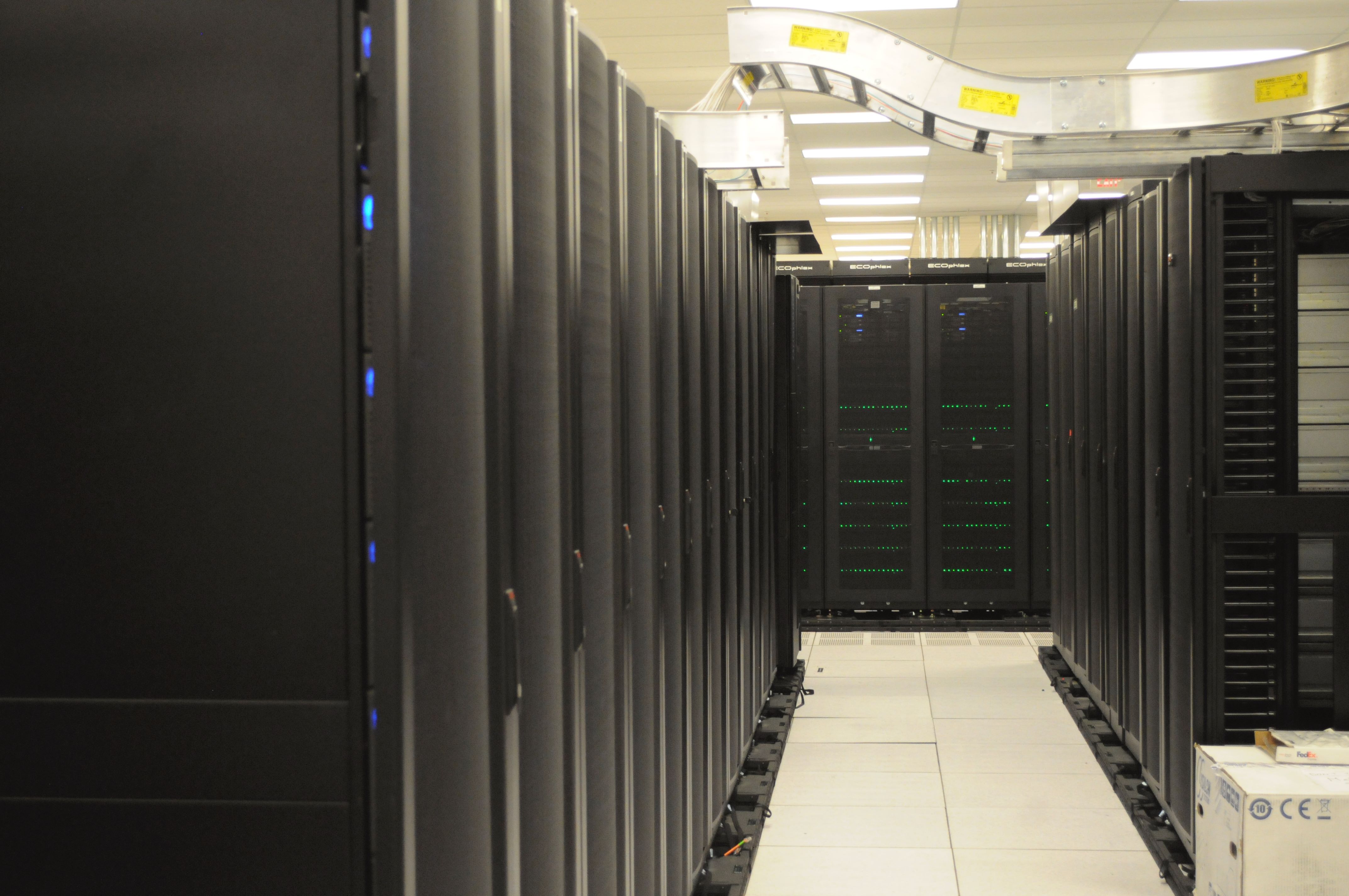
Illustrative image: server racks at NERSC — the kind of secure-computing infrastructure DEPA training runs inside. DEPA is a framework, not a device, so no product photo exists. Image: Wikimedia Commons, CC0.
TL;DR: The MeitY DEPA AI training framework India explained in one line: instead of handing sensitive bank and hospital data to AI developers, India wants the AI model to travel to the data and train inside a locked "sealed room", so raw records never leave their owner. The draft handbook was unveiled in Bengaluru on 30 October 2026, and it is not yet law.
📌 KEY HIGHLIGHTS
- MeitY Secretary S Krishnan unveiled the DEPA for AI Training handbook at a roundtable in Bengaluru on 30 October 2026; it was prepared with the iSPIRT Foundation.
- The framework tackles a "data deadlock": India's richest datasets sit inside hospitals, banks and public agencies that rarely share them, partly because a leak can draw penalties of up to ₹250 crore under the data protection law.
- Training happens inside a secure computing environment — a "sealed room" — governed by machine-readable electronic contracts; the developer gets back only the trained model, or a decision such as a loan outcome.
- Early pilots are already running: a bank has processed over 2 million credit-card eligibility requests in two weeks, and hospitals are training a tumour-detection model on MRI scans the startup never sees.
- The handbook claims the framework could unlock $500 billion in AI-driven value for India's GDP by 2030 — but it is a draft, not legally binding, and consultations are yet to begin.
What happened?
On 30 October 2026, the Ministry of Electronics and Information Technology (MeitY) unveiled a draft handbook for the Data Empowerment and Protection Architecture (DEPA) for AI Training. The handbook was prepared with the volunteer-led think tank iSPIRT Foundation and presented at a roundtable in Bengaluru attended by Principal Scientific Adviser Prof Ajay Kumar Sood, Infosys co-founder Kris Gopalakrishnan, iSPIRT co-founder Sharad Sharma, and representatives of HDFC Bank, Sarvam and Emergent AI. Business Standard, Mint and Inc42 all covered the unveiling the same week.
DEPA itself is not new. NITI Aayog introduced it in 2020 as a consent-based way for citizens to share their own data, and that model already powers the Account Aggregator system in finance. The new layer is different: it targets bulk, de-identified data used to build AI models in the first place, rather than one person's consented records. The handbook pitches it as India's digital public infrastructure for AI.
The core problem it names is the "data deadlock". The data needed to solve the next generation of problems is split across domains and locked behind separate institutional and regulatory walls. Simply stripping out names and ID numbers is not enough, the handbook argues, because anonymised data can often be re-identified and loses much of its usefulness along the way. Hospitals and banks therefore sit on data that AI startups cannot reach — and, the handbook says, the economy loses out.
MeitY DEPA AI training framework India explained: how the sealed room works
The idea flips the usual flow. Today, a developer who wants to train a model typically receives a copy of the data. Under DEPA Training, the data stays put and the model travels to it. Training runs inside a secure computing environment that executes only what the authorised electronic contract permits. The developer sends in a model and gets back only the trained model — or, in some cases, just a decision, such as whether a loan application qualifies. Personal and sensitive data is never shared in raw form, and trained models would face bias, security and explainability checks before deployment.
Four technical pillars hold the design together, and three kinds of participant keep it running:
| Pillar / role | What it does |
|---|---|
| Data Exchange Platform | Where providers register datasets, anonymised and encrypted, with metadata and cryptographic identifiers |
| Electronic contracts | Machine-readable agreements that define and enforce what a consumer may do with the data |
| Secure Data Environment ("sealed room") | Confidential clean room where training runs; raw data never reaches the developer |
| Differential privacy + zero-trust security | Techniques that stop individual records being identified or extracted from aggregate results |
| Training Data Providers | Hospitals, banks and public agencies that make datasets accessible |
| Training Data Consumers | Startups, researchers and enterprises that request data for a specific use case |
| Data Collabs | Intermediaries that aggregate and standardise data from multiple sources |
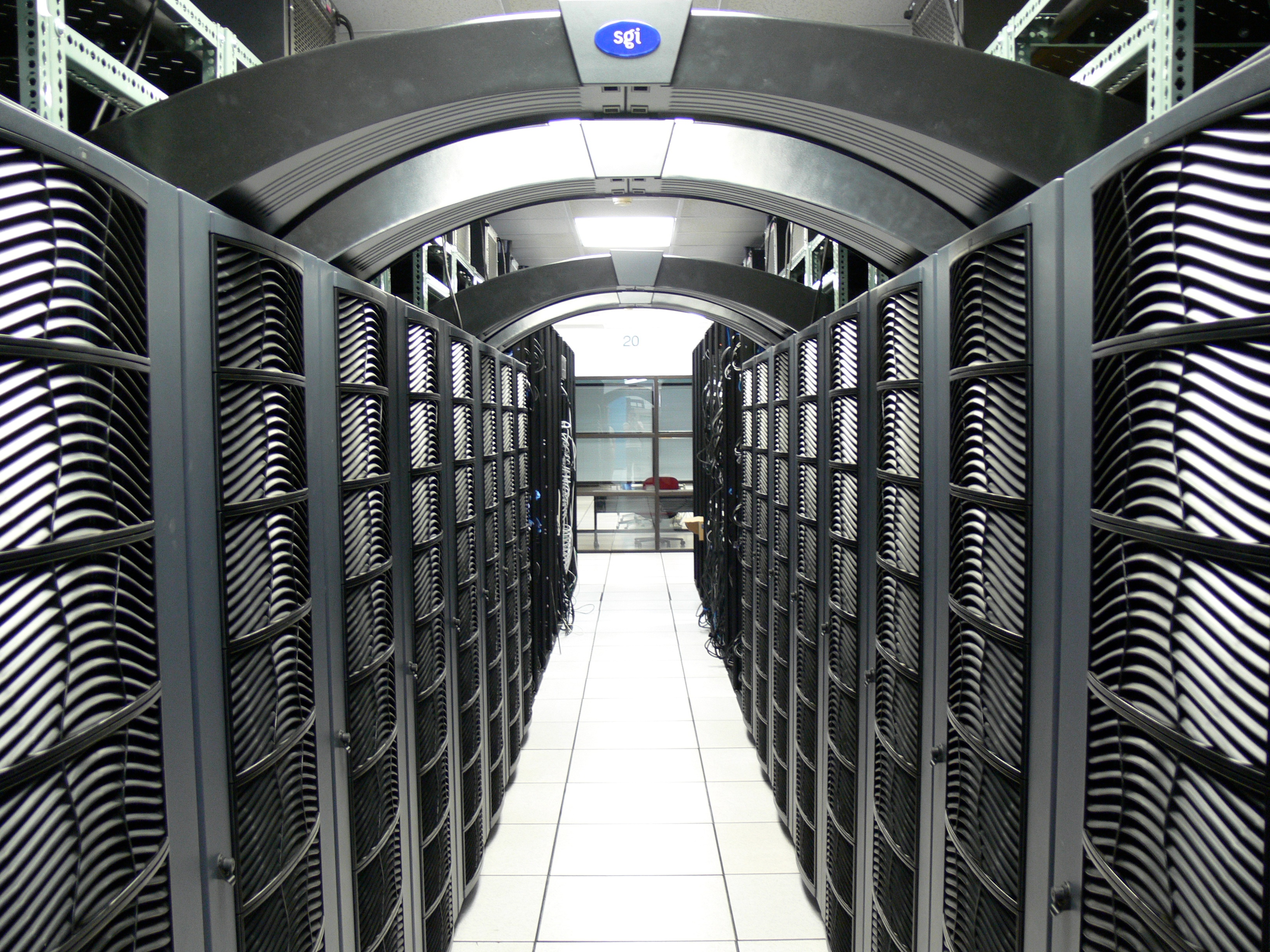
Illustrative image: a corridor inside a data centre, the kind of facility where sealed-room training would run. Image: Wikimedia Commons / Virginia Tech, CC BY-SA 2.0.
Two pilots demonstrated at the launch show what this looks like in practice. In one, a bank that has been testing the approach since March identified which customers of a fintech partner qualified for its credit cards before seeking consent, then approached only those with a genuine offer — handling more than 2 million requests in two weeks, according to Mint. In another, hospitals and a health-tech startup are training a tumour-detection model on MRI scans that the startup never sees. Day-to-day management is expected to sit with Samyog, a new industry group powered by iSPIRT, which will register participants, provide standard contracts and handle disputes.
Why it matters for India readers
The stakes the handbook cites are large: a $550 billion financial services landscape, a ₹20–25 trillion credit gap for micro, small and medium enterprises, a $600 billion-plus healthcare market, and 250 million students in education. The claim is that extending formal credit to 400 million underserved individuals and small businesses becomes possible when lenders can train models on real financial data without ever holding it — and that Indian-language, Indian-context AI models get better when startups can train on Indian data instead of imported datasets.
There is also a timing angle. The main rules of the Digital Personal Data Protection Act, 2023 are expected to take effect in May 2027, and the government is separately weighing dedicated AI legislation. DEPA Training is positioned as the practical plumbing that lets innovation continue inside those guardrails: compliance, in the handbook's words, "is not a barrier to innovation; it is the feature that unlocks it." The same week, telecom regulator TRAI released draft guidelines for responsible AI use in telecom networks, with comments open until 27 November 2026 — a sign that India's AI rulebook is being written sector by sector.
Honesty notes matter here. The framework is a draft and is not legally binding. The handbook says payment methods for data owners "will be explored" and does not spell out who is liable if data leaks from a sealed room. Observers expect binding rules to come from sectoral regulators rather than a new law, much as the Account Aggregator framework did. And the $500 billion figure is the handbook's own projection, not a measured outcome — the pilots so far are small, and trust from risk-averse banks and hospitals is the real test.
Should you care? Our verdict
✅ Yes — if you build, buy or regulate AI in India. For startups and researchers, this could be the first lawful route to the domain data that makes Indian AI models genuinely Indian. For everyone else, it is a framework to watch, not a product to use: nothing changes until consultations, pilots and sectoral rules turn the draft into something enforceable. The pilots in finance and healthcare are the milestones to track first.
FAQs
What is DEPA for AI training?
It is a draft Indian framework, unveiled by MeitY on 30 October 2026, that lets AI models be trained on sensitive data from hospitals, banks and public agencies without the raw data ever being handed to developers. It builds on the DEPA consent-sharing architecture NITI Aayog introduced in 2020.
How does the DEPA "sealed room" work?
Data providers register anonymised, encrypted datasets on an exchange platform. A consumer requests data for a specific use case, a machine-readable electronic contract checks the request, and training runs inside a secure computing environment. The developer receives only the trained model or a decision — never the raw records.
Is DEPA for AI training legally binding?
No. It is a draft handbook, not a law. Consultations are expected in the coming weeks, followed by pilots in finance and healthcare and regulatory sandboxes. Binding rules, if they come, are expected from sectoral regulators rather than a new standalone law.
What data can be used under DEPA Training?
Bulk, de-identified data from providers such as hospitals, banks and public agencies — for example, MRI scans for a tumour-detection model or transaction patterns for credit eligibility. It is distinct from DEPA Inference, which handles one individual's consented data sharing through the Account Aggregator model.
Who runs DEPA for AI training?
Day-to-day management is expected to sit with Samyog, a new industry group powered by iSPIRT, which will register participants, provide standard contracts and handle disputes. MeitY steered the handbook, prepared with the iSPIRT Foundation.
Takeaway: India is trying to solve AI's hardest trade-off — models need real data, and real data must stay private — by moving the model to the data instead of the data to the model. The sealed-room idea is sound; whether banks and hospitals trust it enough to open their vaults is the question the pilots must answer.
Follow India Tech on TechByCountry for tomorrow's update.
📸 Get tech in the last 24 hours on Instagram — follow @_techinlast24hrs for daily posts (9 AM–9 PM) and reels at 12:30 PM & 8:30 PM.
Sources
- Elets CIO — DEPA for AI Training: MeitY's Plan to Unlock Data for AI (31 Oct 2026)
- Business Standard — India proposes framework to unlock data for AI training, protect privacy (30 Oct 2026)
- Inc42 — MeitY Floats Framework To Unlock Data For Training AI Models (31 Oct 2026)
- iSPIRT ProductNation — DEPA-Training: Tech Updates
Related reading: AI training opt-out robots.txt token explained, Google Suncatcher data center satellite explained.
Comments
Post a Comment