
Image: Wikimedia Commons / Markus Spiske, CC0 — Illustrative image: code on a computer monitor. GPT-6.1 Terra is a model, not a device, so there is no product photo; this image illustrates the computer-based work it is built for.
📌 KEY HIGHLIGHTS
- Launched 26 October 2026: GPT-6.1 Terra replaces GPT-5.6 Terra, the one model left behind when OpenAI moved the rest of its line-up to GPT-6 in September.
- Half the price: API pricing of $1 per million input tokens, $0.05 per million cached input tokens and $5 per million output tokens — 50% below GPT-5.6 Terra and GPT-6.1 Sol.
- Built for computer use: detailed visual reasoning plus precise actions on application screens — drafting proposals, reading technical drawings, filling forms, editing video.
- Faster and more accurate (OpenAI's numbers): over 3x faster than GPT-6 Astra and GPT-6.1 Sol on agentic tasks, 50.3% on Terminal-Bench 4.0 versus 21.5% for GPT-5.6 Terra, and a factual-error rate down to 4.3% at maximum effort.
- Who gets it: Plus, Pro, Business, Enterprise and Edu users in ChatGPT Work and Codex, plus developers via the API as gpt-6.1-terra. Free-tier access is not supported.
What happened?
OpenAI introduced GPT-6.1 Terra on Monday, 26 October 2026, calling it "a fast, efficient model that combines detailed visual reasoning and precise computer use alongside clearer, more natural writing." The company positions it as "a significant step up" from GPT-5.6 Terra for the communication and computer-based tasks that fill a workday — from drafting proposals and interpreting technical drawings to filling out forms and editing videos.
The release fills an obvious gap. OpenAI's current line-up runs from Luna (cheapest) through Terra and Sol to Astra (most capable), but Terra missed last month's GPT-6 refresh: GPT-6 Astra arrived on 3 September and GPT-6.1 Sol on 29 September, leaving Terra a generation stale. This update brings it level with the rest of the family, and it is available the same day in ChatGPT Work, Codex and the API. In Codex, the command-line tool needs version 0.159.0 or later, and OpenAI notes that availability varies by plan, region and workspace settings during the rollout.
Under the hood, OpenAI's developer documentation lists a 1,050,000-token context window with up to 128,000 tokens of output and a knowledge cutoff of 1 June 2026. The model takes text and images and produces text; tool calling requires the Responses API, and prompts above 272,000 input tokens are charged at higher rates.
OpenAI GPT-6.1 Terra explained: price, speed and benchmarks
The headline is price. At $1 per million input tokens, Terra costs half what GPT-5.6 Terra and GPT-6.1 Sol charge, and OpenAI says it performs on par with GPT-6 Astra at only one-tenth of Astra's price per token. Inside ChatGPT Work and Codex, the same usage allowance stretches further with Terra than with Sol or Astra, which is the point: this is the model meant to run all day, not the flagship meant to impress.
| Model | API input price | API output price | What OpenAI claims |
|---|---|---|---|
| GPT-6.1 Terra (new) | $1 / 1M tokens | $5 / 1M tokens | 3x+ faster than Astra and Sol; 50.3% on Terminal-Bench 4.0 |
| GPT-5.6 Terra (replaced) | $2 / 1M tokens | $10 / 1M tokens | 21.5% on Terminal-Bench 4.0; 53.6% error rate at low effort |
| GPT-6.1 Sol | $2 / 1M tokens | $10 / 1M tokens | Still recommended for the most complex coding tasks |
| GPT-6 Astra (flagship) | ~10x Terra's price | — | Most capable overall; Terra matches it on some agent tests at 1/10th the price |
On benchmarks, all figures below are vendor-reported — OpenAI's own results, not independently verified tests. On Agents' Last Exam, Terra scored 15 percentage points higher than GPT-5.6 Terra at medium reasoning effort while costing about one-third as much. On OpenAI's internal benchmark of error-inducing prompts, the error rate at low reasoning effort fell from 53.6% to 16.7%, and at maximum effort it fell by 18 percentage points to 4.3%, nearly matching Astra and Sol. On Terminal-Bench 4.0, a coding benchmark, Terra scored 50.3% at maximum reasoning effort — more than double GPT-5.6 Terra's 21.5%. OpenAI still recommends GPT-6.1 Sol or GPT-6 Astra for the most complex coding work, and it has classified Terra at the Critical tier of its cybersecurity capability scale under its Preparedness Framework, as reported from its documentation.
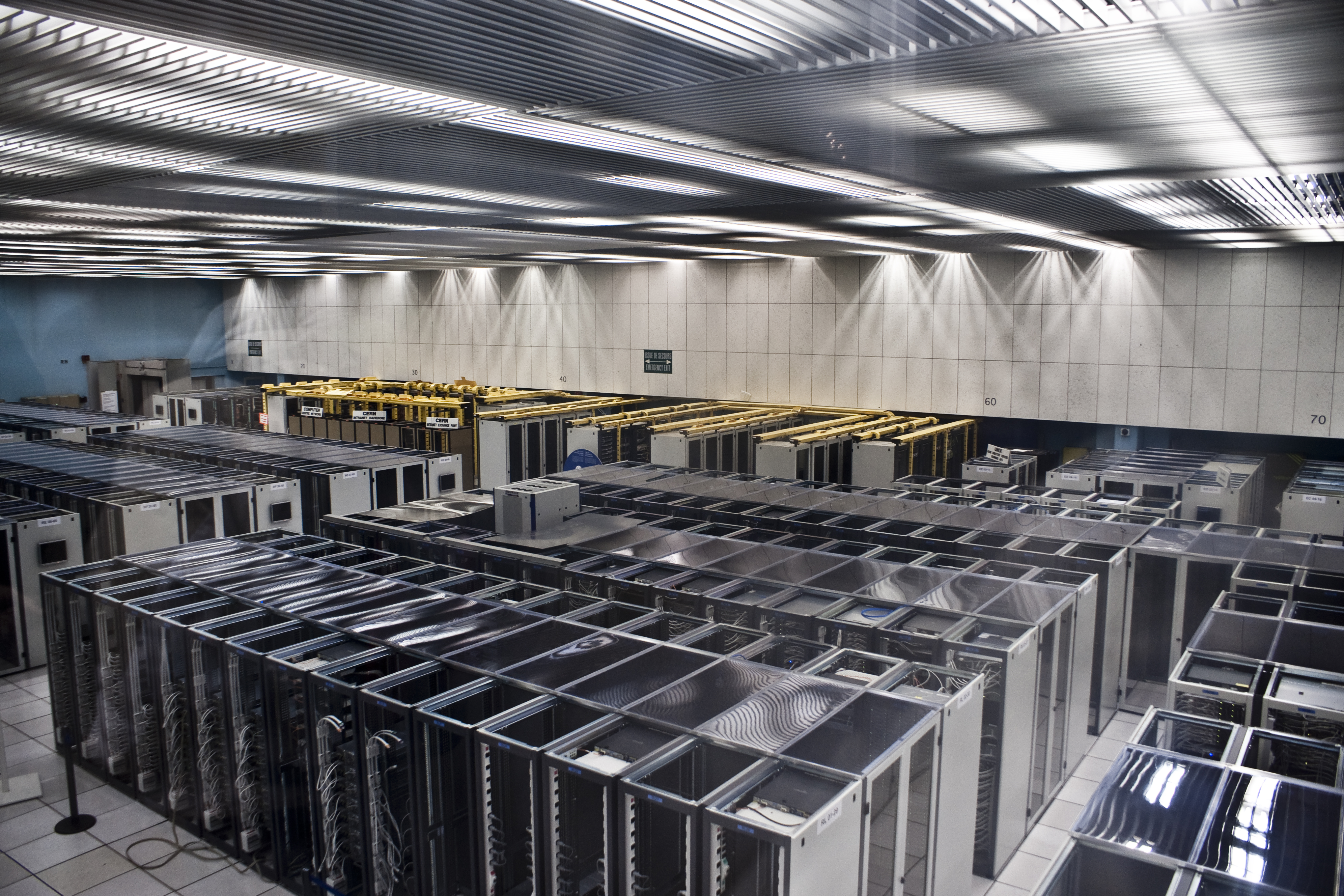
Image: Wikimedia Commons / Florian Hirzinger, CC BY-SA 3.0 — Illustrative image: server hardware in a data centre, illustrating the infrastructure behind large AI models, not OpenAI's systems.
Why it matters for Indian developers and businesses
For Indian developers, this is a practical price cut, not a headline model. India has one of the world's largest developer communities building on AI APIs, and a mid-tier model at half price changes what is economical to automate: form-filling, document reading, proposal drafting, catalogue matching from product photos, and back-office agents that click through software all day. The 1,050,000-token context window also matters for real workloads — whole codebases, long contracts or large spreadsheets can fit in a single call.
The timing fits a wider pattern. China's iFLYTEK Spark X2.6 launched days ago on domestic compute, and S&P Global's OpenZeppelin acquisition shows incumbents buying the security layer for onchain finance — the AI stack is being priced and packaged for everyday business use, not just demos. Terra is OpenAI's version of that: the workhorse tier, priced to be left running.
Two cautions. First, the speed and accuracy numbers are OpenAI's own; independent tests will show whether the 3x speed and 4.3% error rate hold outside its labs. Second, API pricing is in US dollars, so Indian buyers pay the rupee conversion on top — the $1 headline is before taxes and exchange rates.
Should you care?
✅ Verdict: Yes, if you build with AI or pay for ChatGPT — Terra is the model most daily work will actually run on: cheaper, faster, and now as accurate as the flagships on everyday tasks. ⏳ Wait if: you need the hardest coding or research — OpenAI itself still points those jobs at Sol or Astra. 🔍 Watch out: rollout is gradual, so your plan, region or workspace may not show Terra yet, and the benchmarks are vendor-reported until independent tests land.
FAQs
What is OpenAI GPT-6.1 Terra? It is OpenAI's new mid-tier AI model, released on 26 October 2026, designed for visual reasoning, precise computer use and clear writing. It replaces GPT-5.6 Terra and sits between the cheaper Luna and the more capable Sol and Astra models.
How much does GPT-6.1 Terra cost? Through the API it costs $1 per million input tokens, $0.05 per million cached input tokens and $5 per million output tokens — 50% less than GPT-5.6 Terra and GPT-6.1 Sol. In ChatGPT Work and Codex, the same allowance covers more tasks than with Sol or Astra.
Who gets GPT-6.1 Terra in ChatGPT? Plus, Pro, Business, Enterprise and Edu users in ChatGPT Work and Codex, with rollout starting 26 October 2026. Free-tier access is not supported, and availability can vary by plan, region and workspace settings during the rollout.
Is GPT-6.1 Terra better than GPT-6.1 Sol for coding? Not for the hardest tasks. Terra more than doubled its predecessor on Terminal-Bench 4.0 (50.3% versus 21.5%), but OpenAI still recommends Sol or Astra for the most complex coding work — Terra's edge is price, speed and computer-use tasks, not peak capability.
Takeaway: GPT-6.1 Terra is OpenAI's workhorse move: half the price, three times the speed, and good enough for the tasks that fill a workday. The flagship race gets the headlines; the mid-tier price cut is what changes what developers can afford to build.
Follow World Tech on TechByCountry for tomorrow's update.
📸 Get tech in the last 24 hours on Instagram — follow @_techinlast24hrs for daily posts (9 AM–9 PM) and reels at 12:30 PM & 8:30 PM.
Sources
1. OpenAI announcement, as reported by BleepingComputer — "OpenAI launches GPT-6.1 Terra with 3x faster AI agents, 50% lower pricing", 26 October 2026: https://www.bleepingcomputer.com/news/artificial-intelligence/openai-launches-gpt-61-terra-with-3x-faster-ai-agents-50-percent-lower-pricing/
2. 9to5Mac — "OpenAI upgrades ChatGPT and Codex with new GPT-6.1 Terra model", 26 October 2026: https://9to5mac.com/2026/10/26/openai-upgrades-chatgpt-and-codex-with-new-gpt-6-1-terra-model/?extended-comments=1
3. Seeking Alpha — "OpenAI unveils new AI model, GPT-6.1 Terra", 26 October 2026: https://seekingalpha.com/news/4657460-openai-unveils-new-ai-model-gptminus-6_1-terra
4. Blockchain.News — "OpenAI launches GPT-6.1 Terra for ChatGPT Work and Codex", 26 October 2026 (model specs from OpenAI's developer documentation): https://blockchain.news/news/openai-launches-gpt-6-1-terra-for-chatgpt-work-and-codex
Comments
Post a Comment