Samsung Android XR Glasses Leak Explained: 25 Styles, 9-Hour Battery and a November Launch Window (World Tech)
UPDATE (10 November 2026): Warby Parker has now set the date — pre-orders open 12 November 2026 and deliveries are expected in mid-December. No price has been announced yet; full details in our new post: Samsung Android XR Glasses Preorder November 12 Explained.
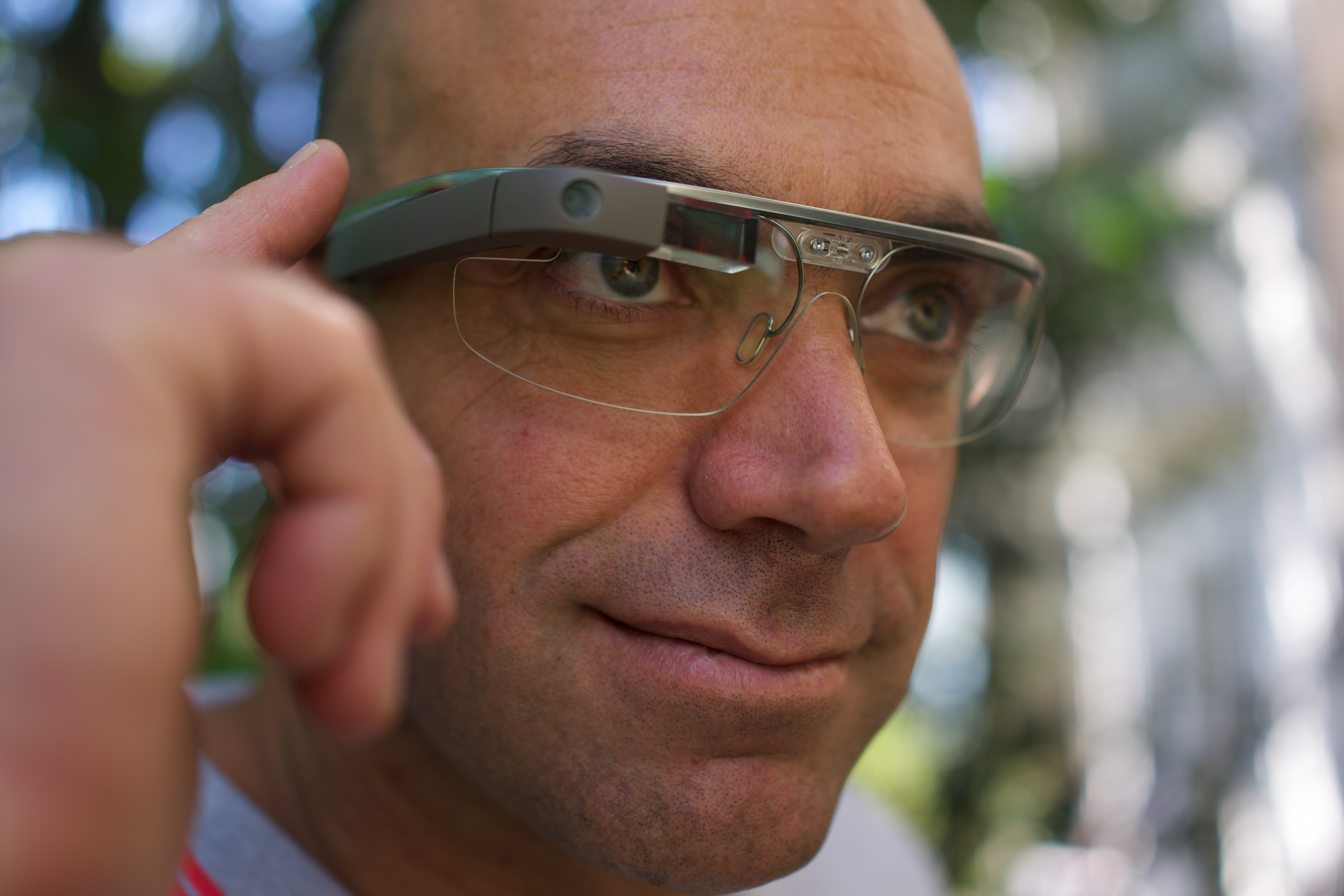
Illustrative image: an early camera smart-glasses wearer. Samsung has released no official product photo of its Android XR glasses — the design is known only from leaked renders. Image: Wikimedia Commons / Loïc Le Meur, CC BY 2.0.
TL;DR: Samsung Android XR glasses leak explained: a detailed leak has revealed Samsung's first Android XR smart glasses — 25 frame styles from Gentle Monster and Warby Parker, a 12MP camera, 9-hour battery and a weight as low as 41g — ahead of a reported November 2026 launch. Samsung has confirmed no price and no firm date, so treat every spec below as leaked, not official.
📌 KEY HIGHLIGHTS
- What leaked: full specs and all 25 styles of Samsung's first Android XR glasses, reported by SammyGuru and covered by 9to5Google and GSMArena on 13–14 October 2026.
- Headline specs (leaked): Snapdragon AR1 Gen 1 chip, 2GB RAM, 64GB storage, 12MP camera with 3K video at 30fps, 9-hour battery (72 hours with the case).
- Lightest in class (reported): as little as 41g — over 10g lighter than the nearest camera-equipped Ray-Ban Meta glasses.
- Fashion-first launch: frames from Gentle Monster (6 styles) and Warby Parker (3 styles), with prescription lenses from Gentle Monster.
- Launch window: November 2026, per reports citing a Samsung official — but no price, no date and no launch markets confirmed.
- What Samsung itself confirmed: only the platform — Android XR, Snapdragon AR1 Gen 1 and up to 9-hour battery, announced at Galaxy Unpacked in London on 22 July 2026.
What happened?
Samsung's smart glasses have been an open secret since July 2026, when the company confirmed at its London Unpacked event that it was building Android XR eyewear with Google and Qualcomm — but showed almost nothing. That changed on 13 October 2026, when SammyGuru published what it described as the full blueprint: hardware specs, battery figures, frame line-up and compatibility details, illustrated with design renders from Samsung's fashion partners. 9to5Google and GSMArena picked the leak up the same week, and the story has held up since: no outlet has contradicted it, and Samsung has neither confirmed nor denied the details.
The timing is the tell. A Samsung official had already told the Korea Herald the glasses would arrive in November, and manufacturers do not usually let this level of detail circulate weeks before launch unless the product is genuinely close. What is missing is just as important: Samsung has announced no price, no exact date and no list of launch countries. Everything in this post that Samsung did not say in July is a leak, and it is labelled that way throughout.
Samsung Android XR glasses leak explained: specs, styles and battery
Start with the hardware. The leaked spec sheet describes a camera-and-audio pair of glasses — no display in the lens. That matters because it puts Samsung's first glasses in the same category as Ray-Ban Meta's camera models, not in the display-glasses category Samsung is reportedly saving for late 2027.
| Detail | Leaked / reported | Status |
|---|---|---|
| Platform | Android XR, Gemini AI | Confirmed by Samsung (July 2026) |
| Chip | Qualcomm Snapdragon AR1 Gen 1 | Confirmed by Samsung (July 2026) |
| RAM / storage | 2GB / 64GB | Leaked (SammyGuru) |
| Camera | 12MP, 3K video at 30fps | Leaked (SammyGuru) |
| Audio | 2 open-ear speakers, 4 microphones | Leaked (SammyGuru) |
| Battery | Up to 9 hours; up to 72 hours with case | 9h confirmed by Samsung; 72h total leaked |
| Weight | From 41g (varies by frame) | Leaked (SammyGuru) |
| Water resistance | IPX4 (glasses only) | Leaked (SammyGuru) |
| Styles | 25 across Gentle Monster + Warby Parker | Leaked (SammyGuru) |
| Price / date / markets | November 2026 reported; price unknown | Unconfirmed |
The style count is the leak's most distinctive claim. Warby Parker contributes three frames — Alden (rounded), Reid (square-ish) and Wren (cateye-ish) — while Gentle Monster contributes six, from rectangular to slim oval, with a much wider colour palette including grey, purple, burgundy and brown. Gentle Monster will also offer prescription lenses, which matters more than it sounds: prescription support is what turns smart glasses from a gadget into something people actually wear all day. The 41g weight figure applies to the lightest configuration with standard lenses; heavier frames and prescription lenses will weigh more.
On compatibility, the leak says core features will work with both Android phones and iPhones, but some Galaxy-only features will require a phone running One UI 9 (Android 17) and a Galaxy Watch on Wear OS 7. That is a familiar Samsung pattern — open the basics to everyone, keep the best tricks for Galaxy owners — and it is worth noting before assuming any phone gets the full experience.

Illustrative image: Ray-Ban Meta glasses on display — the product Samsung's Android XR glasses are measured against. This is not Samsung's product. Image: Wikimedia Commons / Demetri Andriani (Tzim78), CC BY 4.0.
Why it matters for World Tech readers — and for India
For the global market, this is the first credible challenger to Meta's dominance of camera glasses. Meta's Ray-Ban line owns the category today: the camera-equipped Gen 3 at $449, the camera-free Audio at $349, and the $799 Display model for early adopters. Samsung's leaked glasses match the Gen 3's headline numbers — 12MP camera, 9-hour battery — while undercutting it on weight and, crucially, offering 25 styles at launch versus Meta's handful. Fashion variety is not a footnote here: glasses live on your face, and the company with more frames wins more faces.
For India, the honest position is wait-and-watch. No India launch, price or date has been reported, and neither Gentle Monster nor Warby Parker has a deep Indian retail footprint for eyewear. Samsung's wearables usually do reach India — see our coverage of the leaked Samsung Galaxy Fit 4 — but smart glasses also raise a sharper local question than a fitness band: a camera on your face in public spaces, offices and metro stations will meet India's privacy sensitivities head-on, and the European Data Protection Board has already weighed in on recording indicators for smart glasses. Watch for a Samsung India listing before assuming a date, and expect the camera conversation to dominate any Indian launch coverage.
The other India-relevant thread is Gemini. If these glasses run Google's multimodal AI as reported, they become a Hindi-and-English voice-and-vision assistant you wear — translation, whiteboard notes filed to your phone, messages read aloud — without pulling a phone out. That is a genuinely useful proposition for Indian commuters and students, provided the price lands anywhere near Meta's tier and not in Display-model territory.
Should you care? ✅ / ⏳
✅ Worth watching closely if you want camera glasses but found Meta's line too heavy, too limited in styles, or too tied to Meta's AI — Samsung's leak promises lighter frames, far more choice and Gemini instead. ⏳ Wait if you need a price, a date or an India launch: none exists yet, and the first display-equipped Samsung glasses are reportedly a year away — buying these means buying a camera-and-audio pair, not AR. 🔍 Honest caveat: every spec beyond the platform, chip and 9-hour battery is an unconfirmed leak from a single reporting chain; treat the 25 styles, 41g and November window as reported, not promised.
FAQs
When will Samsung's Android XR glasses launch?
Samsung has announced no date. Reports citing a Samsung official point to November 2026, and the detail of the October leak suggests launch is near — but "November" is a reported window, not a confirmed date, and no launch markets have been named.
How much will Samsung's Android XR glasses cost?
Unknown. No price has leaked. The natural benchmarks are Meta's Ray-Ban Gen 3 at $449 and the camera-free Audio at $349; until Samsung prices its glasses, any figure you see elsewhere is speculation.
What specs do Samsung's Android XR glasses have?
Per the SammyGuru leak: Snapdragon AR1 Gen 1 chip, 2GB RAM, 64GB storage, 12MP camera with 3K video at 30fps, two speakers, four microphones, IPX4 resistance, from 41g, and up to 9 hours of battery (72 hours with the case). Only the platform, chip and 9-hour battery are Samsung-confirmed.
Will Samsung's Android XR glasses work with iPhone?
Basic features, yes, according to the leak — core functions work with Android phones and iPhones. Some Galaxy-only features will reportedly require a phone on One UI 9 and a Galaxy Watch on Wear OS 7.
Will Samsung's Android XR glasses come to India?
Unconfirmed. Samsung has named no markets. Its wearables usually reach India, but the fashion partners' limited Indian presence and the camera-privacy debate mean an India date should not be assumed from a global launch.
Do Samsung's Android XR glasses have a display?
No — this first model is camera-and-audio only, per the leak. A separate Samsung model with a colour display is reportedly planned for late 2027.
Takeaway: Samsung's Android XR glasses look like the first real fight for Meta's camera-glasses crown — lighter, more stylish and Gemini-powered — but until Samsung itself announces a price and a date, the leak is a promise to verify, not a product to buy.
Follow World Tech on TechByCountry for tomorrow's 6 PM update.
📸 Get tech in the last 24 hours on Instagram — follow @_techinlast24hrs for daily posts (9 AM–9 PM) and reels at 12:30 PM & 8:30 PM.
Related on TechByCountry: Samsung Galaxy Fit 4 leak: familiar design, three colours and an expected $60 price; OnePlus Buds Clip open-ear earbuds explained; Huawei Watch D3 UAE pre-order price explained.
Sources
- 9to5Google — Samsung's first Android XR glasses leak in 25 styles alongside 9-hour battery, specs (13 Oct 2026)
- GSMArena — Leak: images and specs of Samsung's upcoming Android XR smart glasses surface (14 Oct 2026)
- Immersive Wire — Report: Samsung's Android XR glasses leak (SammyGuru leak summary; Korea Herald November timing)
- Samsung — Galaxy Unpacked, London, 22 July 2026 (Android XR platform, Snapdragon AR1 Gen 1, up to 9-hour battery — as reported by GSMArena/NeoTeo)
- Meta / Ray-Ban list prices and Audio specs ($349, 43g, 12-hour battery) as reported by Bloomberg via 25 Oct 2026 coverage and Korben/Engadget
Comments
Post a Comment