Fal AI Series F Funding 16 Billion Valuation Explained: $1.3B Bessemer Round Doubles Value in Six Months
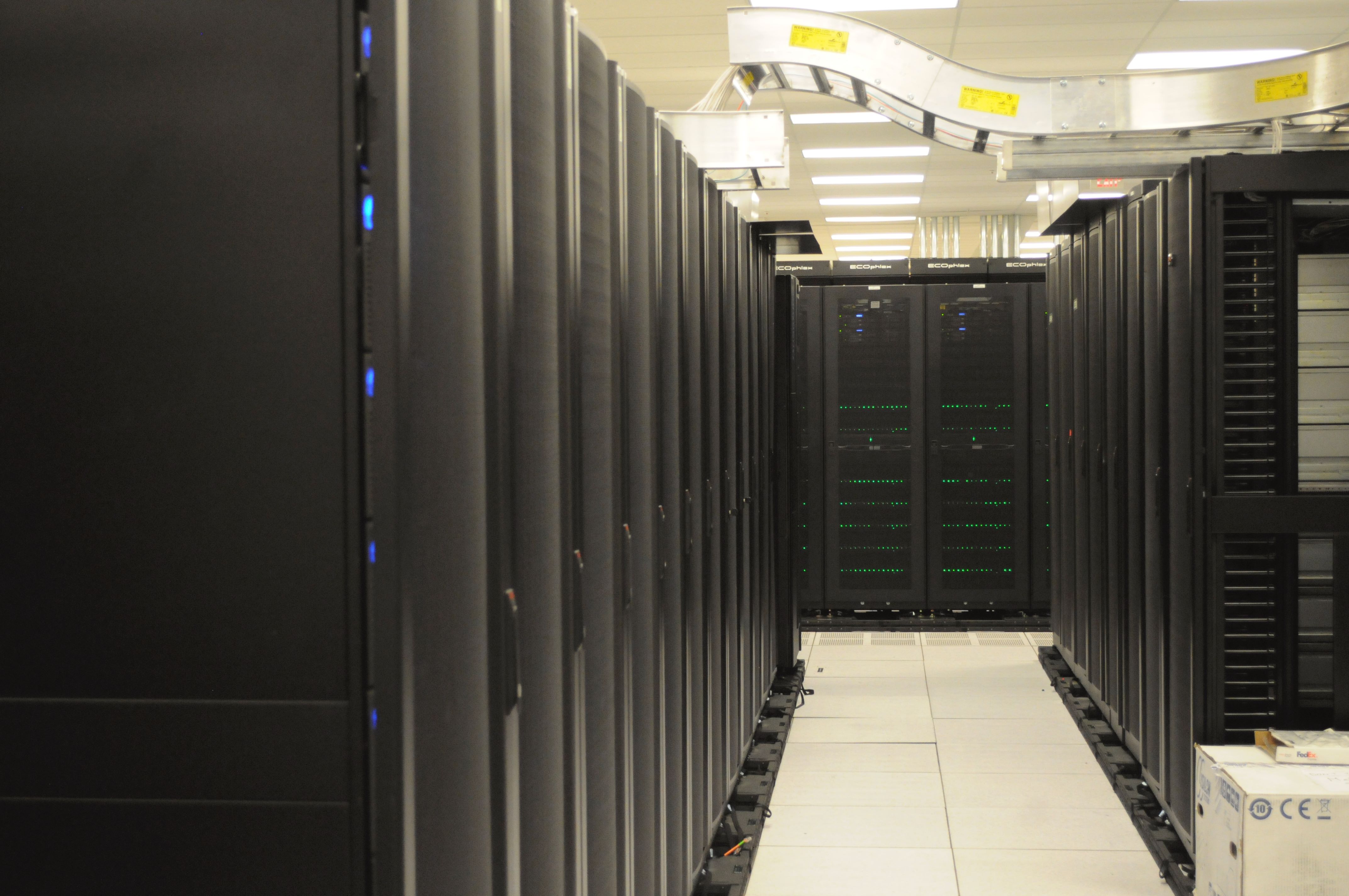
Illustrative image: server racks in a data centre — the kind of compute capacity Fal sells access to. Fal is a software platform, not a hardware maker, so no product photograph exists; this photo illustrates the inference infrastructure behind the funding story. Image: Wikimedia Commons / NERSC, CC0.
TL;DR — Fal AI Series F funding 16 billion valuation explained in one line: the San Francisco AI inference startup raised $1.3 billion in a Bessemer-led Series F, doubling its valuation to $16 billion in six months, as demand to run generative video, image and audio models keeps outrunning compute supply.
📌 KEY HIGHLIGHTS
- The round: $1.3 billion Series F, led by Bessemer Venture Partners, with Nvidia, Sound Ventures, HOF Capital and T. Rowe Price participating.
- The valuation: $16 billion — double the $8 billion valuation from April 2026, as reported by Bloomberg.
- Two rounds at once: Fal announced Series E and Series F together, raising a combined $1.65 billion; Sequoia led the earlier Series E.
- The business: Fal hosts and runs AI video, image and audio models for creators and developers; annualised revenue passed $800 million earlier in 2026.
- Why now: inference — running trained models to generate outputs — is the AI market's current bottleneck, and rivals Baseten, Fireworks AI and Modal are raising fast too.
What happened?
On 3 November 2026, Fal announced that it had closed a $1.3 billion Series F funding round, led by Bessemer Venture Partners. The round values the San Francisco company at $16 billion, according to Bloomberg's reporting of the deal — twice the $8 billion valuation attached to its April 2026 round. The financing itself closed in October 2026, with the announcement following on 3 November.
Fal did not announce the Series F alone. It disclosed its Series E and Series F rounds at the same time, noting that $1.65 billion was raised across both. The Series E was led by Sequoia Capital and raised $350 million in April 2026 at the $8 billion valuation; the Series F adds the remaining $1.3 billion. That makes this one of the largest private AI infrastructure financings of the year — and a remarkably fast doubling, from a $4.5 billion valuation in December 2025 to $16 billion in under a year.
Fal AI Series F funding 16 billion valuation explained: the rounds at a glance
| Round | Detail |
|---|---|
| Series D — December 2025 | $140 million raised; $4.5 billion valuation |
| Series E — April 2026 | $350 million, led by Sequoia Capital; $8 billion valuation |
| Series F — closed October, announced 3 November 2026 | $1.3 billion, led by Bessemer Venture Partners; $16 billion valuation (Bloomberg) |
| Combined Series E + F | $1.65 billion raised across both rounds |
| Revenue | Annualised revenue above $800 million, passed earlier in 2026 |
| Lead investors | Series F: Bessemer Venture Partners; participants include Nvidia, Sound Ventures, HOF Capital, T. Rowe Price |
Illustrative image: example code on a screen. Fal's customers are developers and creators who call hosted models through code rather than training models themselves. Image: Wikimedia Commons.
Why inference demand is surging
Fal, co-founded in 2021 by Burkay Gur — a former Coinbase machine learning leader and Oracle engineer — and Gorkem Yurtseven, a former Amazon developer, sits in the least glamorous but currently most in-demand layer of the AI stack. Training a model makes headlines; inference is the everyday work of actually running it — every generated image, video clip or audio track is an inference job, and each one consumes expensive GPU time.
That demand is rising fastest from customers using open-source models, who need someone else's infrastructure to run them at scale. Fal says the new funding will go toward more compute capacity and hiring, the two constraints on its growth. The boom has a catch, though: inference companies' gross margins stay thin because buying or leasing compute is so costly, a point TechCrunch's reporting stresses. Fal is not alone in this race — Baseten, Fireworks AI and Modal are all growing rapidly and raising large rounds at higher valuations, which means the $16 billion price tag is a bet that Fal can convert scale into durable margins before the capacity crunch eases.
Why it matters for India readers
India's developers, startups and creators are heavy users of exactly this layer. Generative-media apps built by Indian teams typically run on hosted inference platforms rather than their own GPU fleets, so the price and availability of inference directly shapes what Indian products cost to run. A $1.65 billion injection into one of the biggest inference providers signals that capacity — and competition between providers — should keep growing, which is good news for builders. The caution applies here too: if inference margins stay thin, today's cheap API pricing may not last, so teams building on hosted models should watch unit costs as closely as model quality. Readers following our Node-RED exploited-flaw explainer and our Next.js November security release explainer will recognise the pattern of this season's enterprise stories: infrastructure, not apps, is where the big money is moving.
Should you care?
✅ Yes, if you build with AI — ⏳ otherwise, watch the inference race. If you run generative models in production, Fal's raise means more capacity and fiercer competition among inference providers. If you don't, the takeaway still matters: the AI money has moved from training models to running them, and the companies that run them cheapest will decide what AI features cost everyone else.
FAQs
What is Fal?
Fal is a San Francisco startup founded in 2021 that hosts and runs AI video, image and audio models for creators and developers. Customers use its platform to run models — especially open-source ones — without owning the GPU infrastructure themselves.
How much did Fal raise in its Series F?
Fal raised $1.3 billion in its Series F round, led by Bessemer Venture Partners, with Nvidia, Sound Ventures, HOF Capital and T. Rowe Price participating. Announced together with its Series E, the two rounds total $1.65 billion.
What is Fal's valuation after the Series F?
Fal is valued at $16 billion following the Series F, according to Bloomberg's reporting — double its $8 billion valuation in April 2026 and up from $4.5 billion in December 2025.
What is AI inference, and why is demand surging?
Inference is the process of running an already-trained AI model to generate an output — an image, video or audio clip. Demand is surging because generative media is now embedded in everyday apps, and each output consumes costly GPU compute, creating a capacity bottleneck that companies like Fal are raising billions to fill.
Takeaway: Fal's $1.3 billion Series F at a $16 billion valuation crowns inference — the unglamorous work of running AI models — as the AI boom's hottest layer. Capacity is the constraint, and the race to supply it is now a multi-billion-dollar contest.
Follow World Tech on TechByCountry for tomorrow's update.
📸 Get tech in the last 24 hours on Instagram — follow @_techinlast24hrs for daily posts (9 AM–9 PM) and reels at 12:30 PM & 8:30 PM.
Sources
- TechCrunch — AI inference startup Fal doubles its valuation to $16B as demand surges (3 November 2026)
- PANews — AI Inference Startup Fal Closes New Funding Round, Valuation Rises to $16 Billion (Bloomberg reporting, 3 November 2026)
- Crypto Briefing — Fal raises $1.3B at $16B valuation as AI inference demand outruns supply (3 November 2026)
Comments
Post a Comment