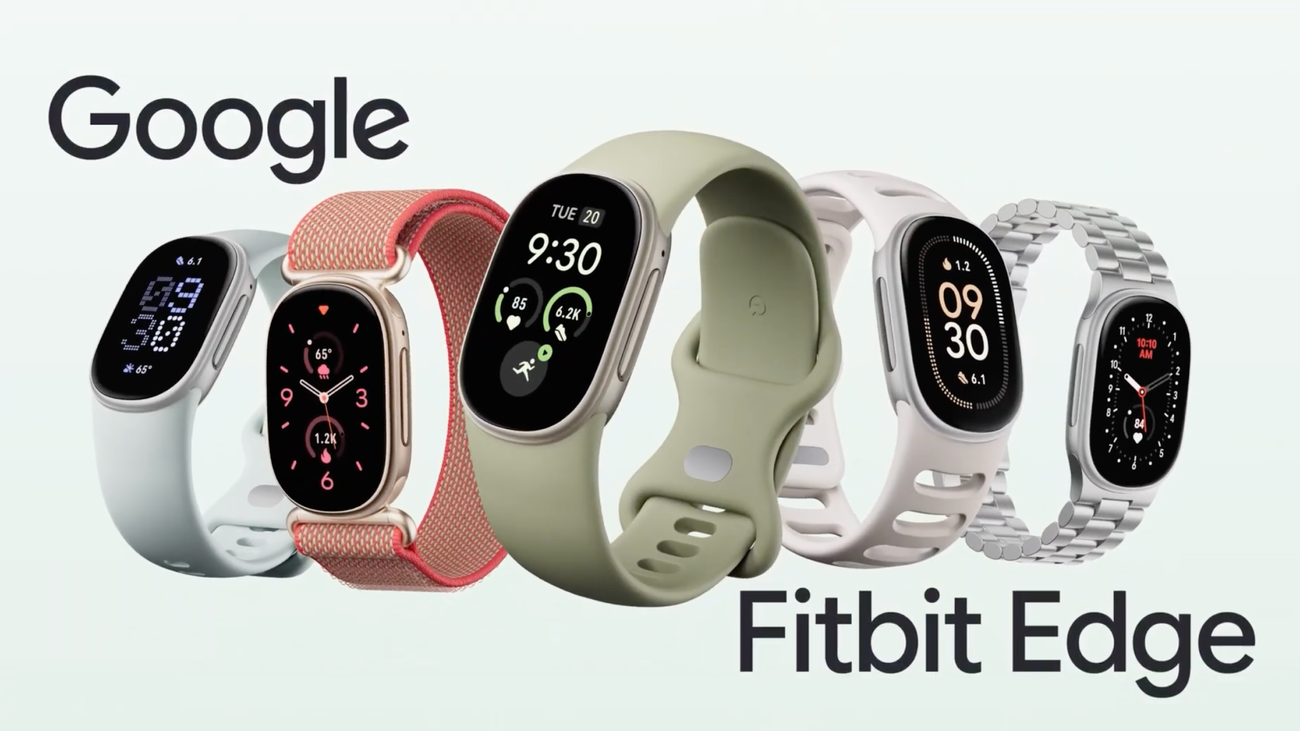
Image: Google — Fitbit Edge (official product image)
📌 Key Highlights
- Price: $179.99 in the US (about ₹17,200); Stephen Curry Special Edition $219.99; Japan ¥26,800. No India price announced.
- Firsts: Google's first repairable fitness tracker — modular design with a user-replaceable 65mAh battery — and its largest, brightest tracker screen yet.
- Battery: up to 7 days with the always-on display off; about 2 days with it on; full charge in around 90 minutes.
- Health: ECG, SpO2, skin temperature, HRV, built-in GPS and an altimeter; Gemini-powered Health Coach needs a Google Health Premium subscription.
- The catch: no NFC (no Google Wallet), no microphone or speaker, and no calls from the wrist.
Google Fitbit Edge explained: what Google actually launched
Google announced the Fitbit Edge on 12 October 2026, opened pre-orders the same day, and put it on sale on 27 October. It is a deliberate middle step in Google's wearable line-up: it sits between the screenless Fitbit Air ($99.99) and the full smartwatch Pixel Watch 5 (from $349.99). Think of it as the Charge 6's successor with a bigger screen, better GPS and a battery you can eventually replace — rather than a smaller smartwatch.
The headline feature is repairability. The Edge has a modular internal design and a 65mAh battery that the owner can replace, a first for a Fitbit tracker. Google still recommends professional repair for people without the right experience, and keeping the water resistance intact after a swap needs care — but a tracker that does not become e-waste the day its battery ages is a genuine change for this category, and one the EU's repairability rules have been pushing the whole industry towards.
Key specifications
| Specification | Google Fitbit Edge |
|---|---|
| Display | 1.34-inch AMOLED, always-on, Gorilla Glass 3; 46% more viewing area than the Charge 6 |
| Price | $179.99 (US); Stephen Curry Special Edition $219.99; Japan ¥26,800 |
| Battery | 65mAh, user-replaceable; up to 7 days (always-on display off), about 2 days (on); 90-minute full charge; 5-minute charge gives up to a day (30W adapter, sold separately) |
| Build | 100% recycled aluminium case, 17.7g without band, about 11.6mm thick; 5ATM + IP68 |
| Sensors | Optical heart rate, ECG, SpO2, skin temperature, HRV, altimeter, accelerometer, gyroscope; built-in GPS |
| Software | Fitbit OS (not Wear OS); tile interface; physical side button; Google Maps, notifications, media controls |
| Missing | No NFC (no Google Wallet), no microphone or speaker, no calls, no calendar app |
| Compatibility | Android 11 or later, iOS 16.4 or later; Google Health app; Bluetooth 5.4 |
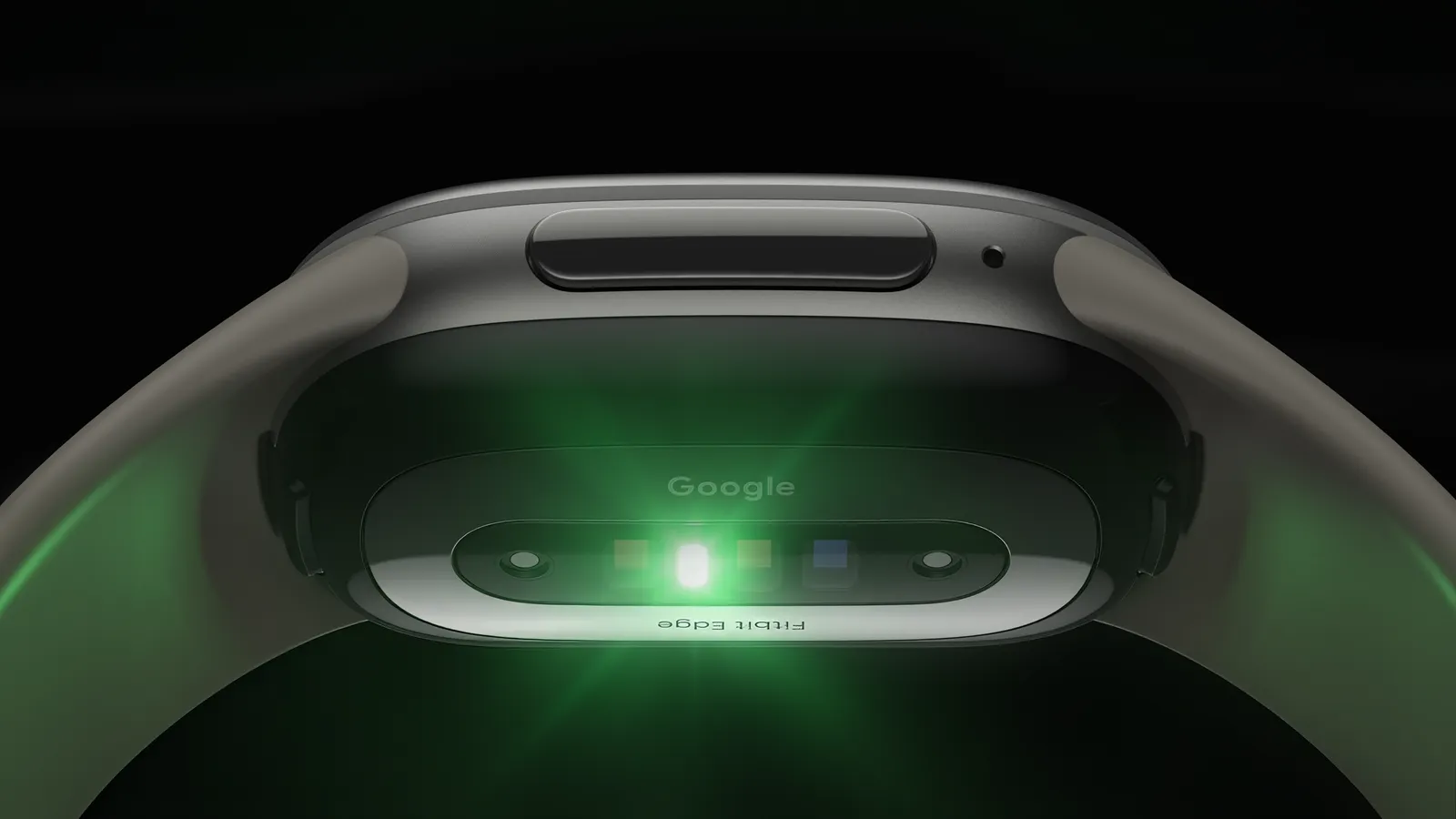
Image: Google — Fitbit Edge underside with the optical heart-rate sensor (official product image)
What the reviews say so far
We have not tested this device; the verdicts below are what named reviewers concluded after wearing it. Engadget scored it 9 out of 10, calling it the right amount of fitness tracker for most people, and Tom's Guide gave it 4.5 out of 5. Mashable's reviewer had no complaints but still preferred the screenless Fitbit Air for everyday comfort. The Verge enjoyed it as a low-key tracker but found the price "a tad expensive", and Android Authority was the most critical, calling it "stuck in the middle" between a band and a smartwatch.
On battery, Google's seven-day claim held up in most testing with the always-on display off: Tom's Guide managed eight days with a 45-minute GPS workout each day, Android Authority reached the end of day seven with just over 10% left, and 9to5Google charged once in about two weeks. Switch the always-on display on and the figure collapses — The Verge saw about a day and a half, Engadget just over two days. The missing NFC is the omission every reviewer mentions: the cheaper Charge 6 had tap-to-pay, and the Edge does not.
Why it matters for India readers
Google has not announced an India launch date or an India price for the Edge, and the tracker is not listed on the Google Store India page. What Google does sell in India today is the screenless Fitbit Air at ₹13,999 — see our Google Fitbit Air review for what that band does and does not do.
Unofficial estimates put the Edge at around ₹19,999 to ₹22,000 if and when it arrives, based on the Air's India pricing and a tipster figure near ₹22,000. Treat those as estimates, not prices: Google has confirmed nothing, and features such as the ECG app vary by country, so Indian buyers should check which health features are actually supported here before buying. An imported unit bought from abroad may also not carry an India warranty, so waiting for an official launch is the safer move.
Should you care?
Price, availability and alternatives
| Tracker | Price | Screen / GPS | Battery | Worth noting |
|---|---|---|---|---|
| Fitbit Edge | $179.99 (India price not announced) | 1.34-inch AMOLED / built-in GPS | Up to 7 days; replaceable battery | No NFC; coach needs Premium |
| Fitbit Air | $99.99 / ₹13,999 in India | Screenless / phone GPS only | Up to 7 days | On sale in India now; most comfortable, per Mashable |
| Pixel Watch 5 | From $349.99 | Full smartwatch display / dual-frequency GPS | Up to 40 hours with always-on display | Calls, payments, Gemini on wrist |
| Fitbit Charge 6 | $159.95 | Smaller OLED / built-in GPS | Up to 7 days | Has NFC and Google Wallet; older design |
FAQs
Is the Fitbit Edge worth it?
For runners and gym-goers who want a screen, built-in GPS and week-long battery without a full smartwatch, reviewers mostly say yes — Engadget gave it 9/10 and Tom's Guide 4.5/5. It is weaker value if you want tap-to-pay, calls, or the Gemini coach without paying for Premium.
Does the Fitbit Edge have NFC?
No. The Edge has no NFC chip, so Google Wallet and contactless payments do not work on it — a step back from the cheaper Charge 6, which has both. Google says fewer than 1% of Charge 6 owners used tap-to-pay.
How long does the Fitbit Edge battery last?
Google rates it at up to seven days with the always-on display off and battery-saving features on. Reviewers matched that: Tom's Guide got eight days with a daily GPS workout, Android Authority finished day seven with 10% left. With the always-on display on, expect about two days.
When will the Fitbit Edge launch in India, and what will it cost?
Google has not announced an India launch date or price. Unofficial estimates suggest around ₹19,999 to ₹22,000, but those are not official prices. The Fitbit Air, its screenless sibling, sells in India at ₹13,999.
Takeaway
The Fitbit Edge is Google's most practical tracker in years: a readable screen, real GPS, a week of battery and — for the first time — a battery you can replace. The missing NFC and the subscription-locked coaching are real trade-offs, and Indian buyers have one more to weigh: there is no India launch yet. If you want a Fitbit today, the Air at ₹13,999 is the one Google actually sells here; if you want the Edge, wait for the official India price rather than paying grey-market rates for an imported unit.
If you run outdoors with your phone left behind, check the official Google Store listing linked below for the full spec sheet — and if you want the screenless alternative, our Google Fitbit Air review and the Pebble Qore Vox and Moto Watch 2 Fit vs Moto Watch comparisons cover the other screen-free and budget options.
Sources
- Google — Google Fitbit Edge announcement (official blog)
- Google Store — Google Fitbit Edge product page
- Google Store — Google Fitbit Edge tech specs
- Google Health Community — Fitbit Edge now in stores
- Business Standard — Fitbit Edge launch: no India launch date or price announced
- TechRepublic — Google Fitbit Edge cheat sheet: features and battery life
- Android Authority — Fitbit Edge launches with 7-day battery for $180
- Yuphora — Fitbit Edge review round-up: battery, GPS and NFC
- GIGAZINE — Fitbit Edge hands-on review (battery at 65% after 72 hours)
- Gogi.in — Fitbit Edge India price estimates (unofficial)
Comments
Post a Comment