Harbinger Motors $240 Million Series D Funding Explained: FedEx Trucks, Defence and the AI Power Play
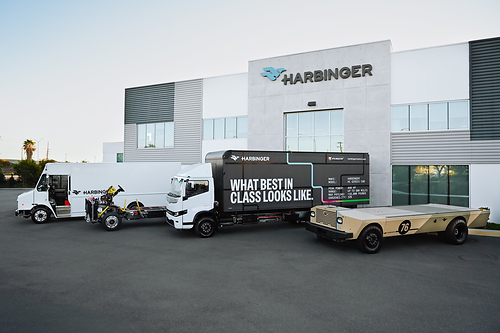
Image: Harbinger / PR Newswire — Harbinger's official Series D funding announcement graphic (official announcement image).
TL;DR — Harbinger Motors $240 million Series D funding, announced on 5 November 2026, takes the electric truck maker past $650 million raised since 2021. Tiger Global, Capricorn's Technology Impact Fund and Ridgeline co-led the round, and the money will push Harbinger beyond trucks into energy storage, power generation, autonomy software and defence — with a 2,000-truck FedEx order already on the books.
📌 KEY HIGHLIGHTS
- The deal: Harbinger raised $240 million (roughly ₹2,250 crore at about ₹94 to the dollar) in a Series D round announced on 5 November 2026, co-led by Tiger Global, Capricorn's Technology Impact Fund and Ridgeline. The company's valuation was not disclosed.
- Total raised: more than $650 million since Harbinger was founded in 2021 in Garden Grove, California.
- Where the money goes: commercial vehicles, energy storage systems, power generation, autonomy software and defence applications, plus ramping up manufacturing of its medium-duty electric truck platform.
- The proof point: FedEx has ordered 2,000 all-electric Harbinger trucks worth more than $300 million, for delivery by the end of 2027 across the US and Canada. FedEx is also a strategic investor in the round, and its senior vice president Paul Melander recently joined Harbinger's board.
- The defence angle: Harbinger is building the platform for an uncrewed US Army supply vehicle under an American Rheinmetall contract, and its defence arm, Harbinger Praesidia, launched in June 2026 with funding from In-Q-Tel.
What happened?
Harbinger, the American company that builds electric and hybrid medium-duty truck chassis, announced on 5 November 2026 that it has closed a $240 million Series D funding round. The round was co-led by Tiger Global, Capricorn's Technology Impact Fund and Ridgeline, with Goldman Sachs and Morgan Stanley acting as placement agents.
The investor list reads like a crossover between Wall Street and the logistics industry. Alongside the three co-leads, the round brought in Fidelity Management & Research Company, Squarepoint Capital and Xantium as crossover investors; returning backers Maniv, Greycroft, Australian Gulf Capital, PanaceaVC, ArcTern Ventures and Leitmotif; and strategic investors FedEx and THOR Industries (through TechNexus) plus BuildGroup, which invests in data centres.
Harbinger is not a truck company in the usual sense. It sells stripped chassis — the frame, powertrain, battery, steering and brakes — in Classes 4, 5 and 6, which body builders then turn into delivery vans, box trucks, RVs and emergency vehicles. It designs and makes its own motors and battery packs in-house, which is how it claims to sell electric trucks at price parity with comparable diesel vehicles. Its HC Series Cab, unveiled in March 2026, adds a petrol range extender good for up to 500 miles and up to 15 kilowatts of exportable power, so a work crew does not need a separate generator.
Harbinger Motors $240 million Series D funding: the deal in numbers
| Item | Detail |
|---|---|
| Series D amount | $240 million (about ₹2,250 crore) |
| Announced | 5 November 2026 |
| Co-leads | Tiger Global, Capricorn's Technology Impact Fund, Ridgeline |
| Total raised since 2021 | More than $650 million (about ₹6,100 crore) |
| Previous round | $160 million Series C in late 2025; FedEx placed an initial order for 53 trucks then |
| Valuation | Not disclosed |
| FedEx order | 2,000 all-electric trucks, worth more than $300 million (about ₹2,820 crore); delivery by end of 2027 |
| Use of funds | Commercial vehicles, energy storage, power generation, autonomy software, defence; more manufacturing capacity |

Illustrative image: an electric delivery truck — the kind of medium-duty vehicle Harbinger's electric chassis powers. Image: Wikimedia Commons, CC BY 2.0.
Why Tiger Global is betting on more than trucks
The most revealing line in the announcement is not the $240 million figure. It is the list of markets the money is meant to open: energy storage, power generation, autonomy software and defence. Harbinger is pitching itself as an industrial electrification platform, not a truck maker, and Tiger Global's partner Griffin Schroeder said the firm led the financing because electrification "has become one of the most pressing bottlenecks of the AI era" — a nod to the power demands of data centres, where BuildGroup, another investor in the round, operates.
Each of those new markets already has a foothold. Harbinger has started selling its batteries for energy storage, according to Bloomberg, and it acquired autonomy software maker Phantom AI. On defence, the company launched Harbinger Praesidia in June 2026 with funding from In-Q-Tel, the US intelligence community's venture arm, and in May it partnered with American Rheinmetall to develop uncrewed ground vehicles. In late July 2026 the US Army awarded the team — American Rheinmetall as lead contractor, with Forterra and Primordial Labs — an 18-month contract to build autonomous hybrid-electric resupply vehicles under its Project Sustainment programme. The vehicles are prototypes, typically three to ten units, and no contract value has been disclosed, but the platform behind them is Harbinger's commercial plug-in hybrid chassis, rated for payloads of up to 18,000 pounds and able to export up to 350 kilowatts of power to field equipment.
That dual-use logic is the heart of the bet: the same vertically integrated chassis that carries parcels for FedEx can carry supplies for soldiers, with no driver and no diesel generator. Harbinger's co-founder and CEO John Harris put it bluntly in the announcement: "Electrification is at the core of everything we do, and increasingly, electrification is at the core of industry, defense, mobility, and AI."
Why it matters for India readers
Harbinger has announced no India plans, and its trucks are not sold here — so this is not a buying guide. The relevance for Indian readers is the model it proves. Harbinger's pitch is electric trucks at diesel price parity, built by owning the powertrain and battery IP in-house and keeping the supply chain one or two layers deep. That is exactly the problem India's commercial vehicle makers — Tata Motors, Ashok Leyland and Mahindra — are working on for the last-mile delivery fleets that serve India's e-commerce boom.
The FedEx order is also the largest real-world test of medium-duty electrification anywhere: 2,000 trucks, one-for-one replacements for diesel vehicles, built and delivered within about 18 months, with each truck estimated to save around $20,000 a year in fuel. If Harbinger hits its end-of-2027 deadline — after recently completing its 1,000th vehicle — it will show fleet operators everywhere, including in India, that electric delivery trucks can scale on economics alone rather than subsidies. The context is encouraging: zero-emission trucks reached a record 4.14% of US truck deployments in the second half of 2025, according to CALSTART.
Should you care?
✅ Verdict: yes, if you follow EVs, logistics or defence tech — this is one of the most consequential startup rounds of the year. A $240 million Series D, a $300 million-plus FedEx order and a US Army contract in the same company is a rare combination, and the next two years will show whether Harbinger's platform can scale from 1,000 vehicles to 2,000 FedEx trucks and beyond. ⏳ If you are waiting for an India launch or a Harbinger truck to buy, there is nothing to act on yet — no India plans have been announced.
FAQs
What is Harbinger Motors?
Harbinger Motors is an American industrial technology company founded in 2021 and based in Garden Grove, California. It designs and builds all-electric and plug-in hybrid stripped chassis for medium-duty commercial vehicles in Classes 4, 5 and 6, making its own powertrain, battery system, steering and brakes in-house, and it has expanded into energy storage, power generation, autonomy software and defence.
How much did Harbinger raise in its Series D?
Harbinger raised $240 million — roughly ₹2,250 crore — in a Series D funding round announced on 5 November 2026. The round takes the company's total capital raised since its founding in 2021 to more than $650 million. The company's valuation was not disclosed.
Who led Harbinger's Series D funding round?
The round was co-led by Tiger Global, Capricorn's Technology Impact Fund and Ridgeline. Other participants included Fidelity Management & Research Company, Squarepoint Capital, Xantium, Maniv and Greycroft, plus strategic investors FedEx and THOR Industries through TechNexus and BuildGroup. Goldman Sachs and Morgan Stanley were the placement agents.
What is Harbinger's FedEx order worth?
FedEx ordered 2,000 all-electric Harbinger trucks in a deal worth more than $300 million (about ₹2,820 crore), announced on 30 September 2026. The trucks are one-for-one replacements for diesel vehicles in FedEx's pickup and delivery operations in the US and Canada, with delivery planned by the end of 2027. FedEx had earlier co-led Harbinger's $160 million Series C and placed an initial order for 53 trucks.
Takeaway
Harbinger's $240 million Series D is a bet that the company which worked out how to electrify a delivery truck at diesel prices can electrify much more — data-centre power, grid storage and driverless military supply runs. The FedEx order is the test that will prove or puncture that bet, and its 2027 deadline is the date to watch. Fleet operators weighing electric medium-duty trucks should track those deliveries: if 2,000 trucks land on time, the price-parity argument for electric fleets gets a lot harder to ignore.
Sources
- Harbinger — Harbinger Raises $240 Million Series D Funding Round, Led by Tiger Global (PR Newswire, 5 November 2026)
- FreightWaves — Harbinger raises $240M to expand EV platform beyond trucks (5 November 2026)
- The EV Report — Harbinger Raises $240 Million Series D to Expand Beyond Electric Trucks (5 November 2026)
- Transport Topics — EV truck maker Harbinger raises $240M for power, defense (5 November 2026)
- The Trucker — Harbinger receives $300M+ order for electric medium and heavy-duty trucks from FedEx (30 September 2026 announcement)
- CleanTechnica — US Army (Finally) Dives Into The EV Pool (3 August 2026)
- Tectonic Defense — Harbinger Raises $240M Series D, Eyes Defense Expansion (6 November 2026)
Related reading on TechByCountry: Anthropic's pre-Thanksgiving IPO and its lower valuation range; Fox's $22 billion Roku acquisition; and Meesho's majority-stake buy of Quick Ride in India.
Comments
Post a Comment