IndiaAI EKA-1 Dhīr Models India Explained: 3 Homegrown Foundation Models, Offline AI and What They Mean

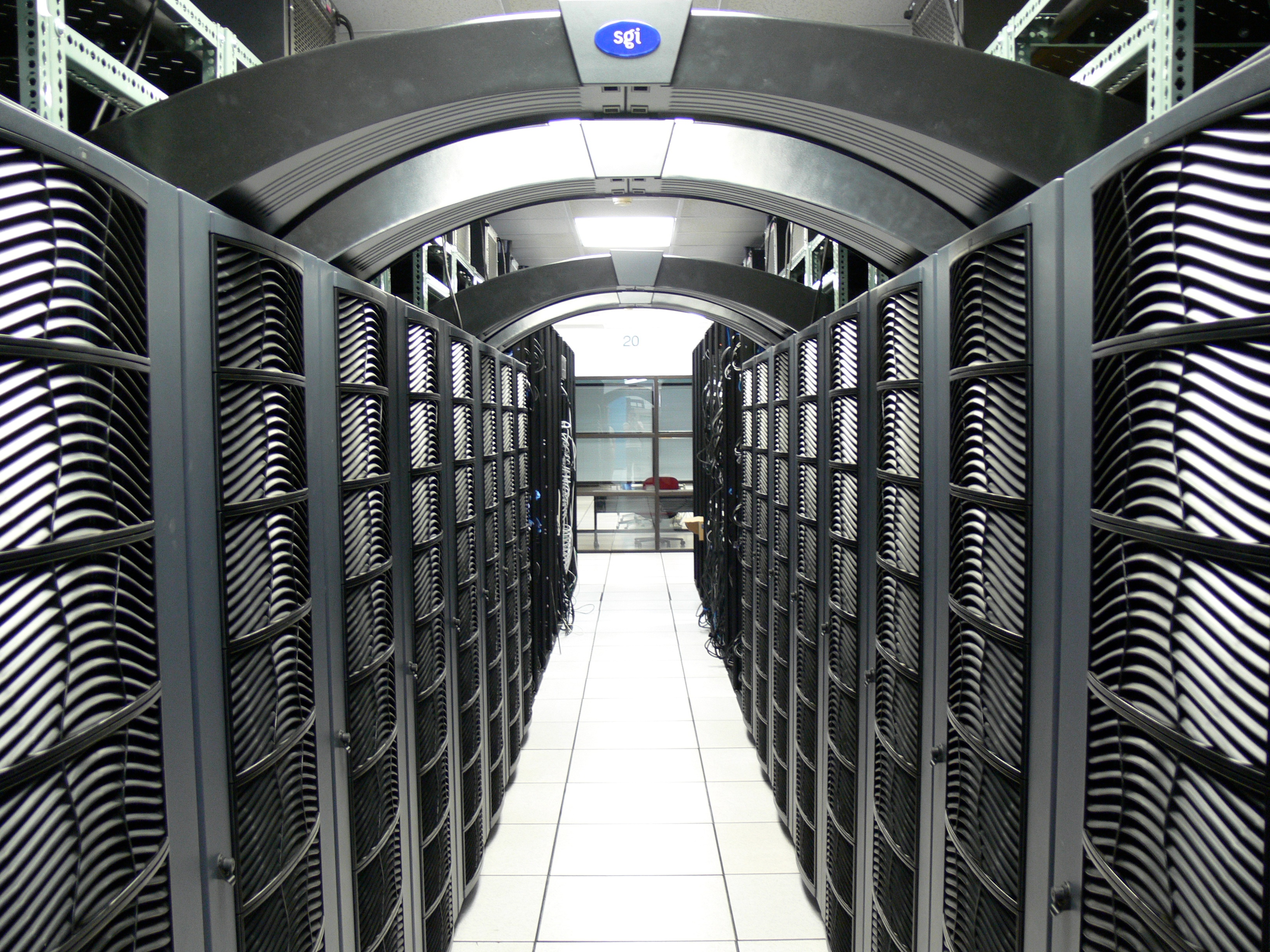
Illustrative image: server racks in a data centre. These are AI models, not a device — there is no product photo to show. Image: Wikimedia Commons / Fleshas, CC BY-SA 3.0.
TL;DR — IndiaAI EKA-1 Dhīr models India explained: on 3 November 2026, the IndiaAI Mission unveiled three homegrown foundation models — Soket Labs' EKA-1 and ZenteiQ's Dhīr 2B and Dhīr 5B — built for Indian languages, banking, cybersecurity and offline use in secure, low-connectivity settings.
📌 KEY HIGHLIGHTS
- Three models, one launch: EKA-1 (Soket Labs) plus Dhīr 2B and Dhīr 5B (ZenteiQ), unveiled in New Delhi on 3 November 2026 by MeitY Secretary S. Krishnan.
- EKA-1: a 26.3-billion-parameter sparse hybrid model trained on about 7.5 trillion tokens, covering all 22 scheduled Indian languages plus English.
- Dhīr models: small, open-source models that run fully offline on laptops and edge devices — Dhīr 2B (2.03 billion parameters) and Dhīr 5B (5.09 billion total, 1.79 billion active).
- Why it matters: air-gapped and on-premises deployment for sensitive government, defence and enterprise data that cannot leave the premises.
- Honest caveat: no comprehensive independent benchmark results have been published yet, and no bank or operational cyber-defence deployment has been confirmed.
IndiaAI EKA-1 Dhīr models India: what happened?
On 3 November 2026, the IndiaAI Mission — the government's AI programme under the Ministry of Electronics and Information Technology (MeitY) — publicly released three indigenous foundation models in New Delhi. MeitY Secretary S. Krishnan unveiled EKA-1, built by Soket Labs, and Dhīr 2B and Dhīr 5B, built by Bengaluru-based ZenteiQ, in the presence of senior MeitY and IndiaAI officials. The models are accessible through AIKosh, the government's AI platform, for researchers, students, innovators, enterprises and the general public.
The launch is one of the first public outputs from the startups the government picked to build sovereign models under the mission's Foundation Model pillar — and it lands on the same week as another Indian AI launch, Sarvam Prism, the 44-millisecond decision model. Where Sarvam Prism is built for fast business decisions, the IndiaAI trio is aimed at language coverage, secure deployment and offline use.
What each model does
EKA-1 — the big reasoning model. Soket Labs describes EKA-1 as an open, sparse hybrid language model built for mathematics, coding, reasoning and agentic tasks — multi-step work where the model plans, uses tools and executes code. It is pitched at banking, financial services and cybersecurity, sectors where data sensitivity and Indian-language context matter as much as raw capability. It is designed to run on-premises, in private clouds and in air-gapped environments, and some reports note it can perform certain inference locally on devices such as smartphones. One reporting discrepancy to note: while most launch coverage puts EKA-1 at all 22 scheduled Indian languages plus English, the syndicated ANI report describes broader coverage of more than 100 Indian and international languages — the narrower, language-list figure is the safer one to rely on.
Dhīr 2B and Dhīr 5B — the small offline models. ZenteiQ's pair is built for a different job: compact, open-source multilingual assistants for offline-capable automation, document-grounded work, knowledge retrieval and citizen or enterprise services in low-connectivity or sensitive environments. Dhīr 2B is a dense model with 2.03 billion parameters; Dhīr 5B uses a mixture-of-experts design with 5.09 billion total parameters, of which 1.79 billion are active at a time. Both were pretrained from scratch — not adapted from existing weights — on Google Cloud TPUs, support English and 10 Indian languages, and can run fully offline on laptops, edge devices and tested mobile hardware. ZenteiQ has released the weights under the Apache 2.0 licence, with technical documentation and evaluation tools, through AIKosh, and a larger Dhīr 9B is already in development.
| Model | Builder | Size | Languages | Built for | Deployment |
|---|---|---|---|---|---|
| EKA-1 | Soket Labs | 26.3B parameters, ~7.5T tokens | 22 scheduled Indian languages + English | Banking, cybersecurity, maths, code, reasoning | On-premises, private cloud, air-gapped |
| Dhīr 2B | ZenteiQ | 2.03B parameters (dense) | English + 10 Indian languages | Offline assistants, document work | Fully offline, laptops and edge devices |
| Dhīr 5B | ZenteiQ | 5.09B total, 1.79B active (MoE) | English + 10 Indian languages | Offline automation, retrieval, citizen services | Fully offline, on-premises |
Illustrative image: a data centre aisle. The models run on infrastructure like this — or, for the Dhīr models, on a laptop with no connection at all. Image: Wikimedia Commons / Christopher Bowns, CC BY-SA 2.0.
Why it matters for India readers
India's AI story this week is about independence and access. India is now ChatGPT's largest market by weekly users, yet the models most Indians use are built abroad, run in foreign clouds and priced in dollars. A sovereign model shelf — EKA-1 for heavy reasoning, Dhīr for small offline jobs — gives Indian enterprises and public bodies an option for data that cannot leave their premises: defence files, government records, bank systems and factory floors with patchy connectivity. MeitY's argument is that air-gapped deployment could unlock enterprise AI adoption that has so far stalled on data-sovereignty worries, and small offline models also cut the cost of running AI versus large cloud-hosted models.
The backstory matters too. Soket AI was selected in May 2025 to develop India's first open-source 120-billion-parameter foundation model tuned for the country's linguistic diversity, aimed at defence, healthcare and education. ZenteiQ — born at the Indian Institute of Science (IISc) in Bengaluru and led by founder Prof Sashikumaar Ganesan — was named in September 2025 to build India's Scientific Foundation Model, with ₹75 crore earmarked in its first year, mostly for compute. EKA-1 and the Dhīr pair are the first public deliverables from those bets, not the end of them.
Should you care?
✅ Yes — if you build or buy AI in India. If you work in government, banking, defence, education or enterprise IT, these are models you can actually download, fine-tune on your own data and run inside your own walls. For everyday users, the effect is indirect for now: better Indian-language and offline AI inside Indian apps and services, over time. Watch for independent benchmarks and the first confirmed deployments before judging how good they are — the launch proves availability, not leadership.
FAQs
Who built the new IndiaAI foundation models? EKA-1 was built by Soket Labs, and Dhīr 2B and Dhīr 5B were built by ZenteiQ AiTech Innovations, an IISc Bangalore-born startup. Both were selected under the IndiaAI Mission's Foundation Model pillar and unveiled by MeitY Secretary S. Krishnan on 3 November 2026.
Can the Dhīr models run without the internet? Yes. ZenteiQ says Dhīr 2B and Dhīr 5B run fully offline on laptops, edge devices and tested mobile hardware, and can be fine-tuned on an enterprise's own data and deployed on its own infrastructure — the point is secure use where cloud access is unavailable or unwanted.
What is EKA-1 used for? EKA-1 is aimed at mathematics, coding, reasoning and agentic tasks, with banking, financial services and cybersecurity as its target sectors. It handles all 22 scheduled Indian languages plus English and is designed for on-premises, private-cloud and air-gapped deployment.
Are the models open source? The Dhīr models are open source: ZenteiQ released their weights under the Apache 2.0 licence, with documentation and evaluation tools, through AIKosh. Soket describes EKA-1 as an open model, and all three are accessible through AIKosh for researchers, students, innovators, enterprises and the public.
TAKEAWAY: Three homegrown models, two very different jobs — EKA-1 for heavy Indian-language reasoning, Dhīr for small offline work. The launch is real; the proof of quality comes next, in benchmarks and deployments.
Follow India on TechByCountry for tomorrow's update.
📸 Get tech in the last 24 hours on Instagram — follow @_techinlast24hrs for daily posts (9 AM–9 PM) and reels at 12:30 PM & 8:30 PM.
Sources
- The Tribune (ANI) — MeitY unveils indigenous AI models EKA-1, Dhīr 2B and 5B under IndiaAI Mission
- CIO / Elets — IndiaAI Foundation Models: EKA-1 and Dhir Launch
- The420 — India Launches Three Homegrown AI Models for Banking, Cybersecurity and Offline Use
- The Economic Times (Telecom) — IndiaAI Mission releases indigenous foundation models EKA-1, Dhīr 2B, Dhīr 5B
Comments
Post a Comment