Path Robotics Series E $300 Million Explained: $2.45 Billion Valuation and the Plan to Automate the Whole Factory
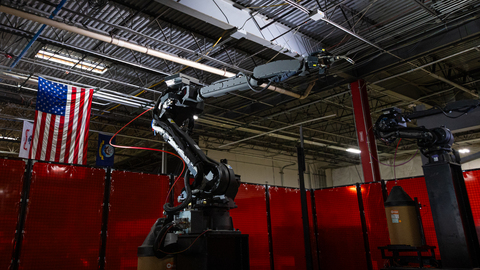
Image: Path Robotics / Business Wire — Path Robotics' intelligent welding cell (official press image from the Series E announcement).
TL;DR: Path Robotics, a Columbus, Ohio startup that teaches robots to weld, raised $300 million in a Series E round announced on 10 November 2026 at a $2.45 billion valuation. This Path Robotics Series E $300 million explained guide covers the Georgian-led deal, the Obsidian welding AI behind it, the $600 million HII shipbuilding agreement, and what the physical-AI funding wave means for factories — including India's.
Key Highlights
- Path Robotics raised $300 million in Series E financing at a $2.45 billion post-money valuation, announced on 10 November 2026 and led by Georgian, an AI-focused growth-equity firm.
- The valuation is reported to be nearly four times the previous round's — physical AI for factories is now commanding software-AI-scale money.
- Revenue is growing fast: annual recurring revenue rose 17-fold over the past 18 months, though Path does not disclose the absolute figure.
- Customers include HII, Lockheed Martin and Saronic, plus a $600 million performance-based production agreement with HII for US Navy shipbuilding.
- The money funds expansion beyond welding — new manufacturing tasks, new robot form factors including the quadruped Rove system — and heavier investment in AI model training.
Path Robotics Series E $300 million: the deal in numbers
Path Robotics announced the round on 10 November 2026 through a Business Wire press release. Georgian led the financing, and Georgian partner Emily Walsh will join Path Robotics' board of directors. Existing investors Addition, Drive Capital, IronArc Ventures, Tiger Global and Yamaha Motor Ventures took part, alongside new investors D. E. Shaw Ventures and NAVER Ventures. The company, founded in 2018 in Columbus, Ohio, has now raised more than $610 million in total.
| Deal term | Detail |
|---|---|
| Round | Series E, announced 10 November 2026 |
| Amount raised | $300 million |
| Post-money valuation | $2.45 billion — reported to be nearly four times the previous round's valuation |
| Lead investor | Georgian (AI-focused growth-equity firm); partner Emily Walsh joins Path's board |
| Existing investors | Addition, Drive Capital, IronArc Ventures, Tiger Global, Yamaha Motor Ventures and affiliates |
| New investors | D. E. Shaw Ventures, NAVER Ventures |
| Total raised since 2018 | More than $610 million |
| Revenue growth | Annual recurring revenue up 17-fold over 18 months (absolute figure not disclosed) |
| Workforce | Up 97% year over year; Path plans to reach 400 employees by the end of 2026 |
The round lands in a week when AI funding records keep falling. Mercor's $750 million Series D at a $20 billion valuation was announced the same day, and Crunchbase data cited by Reuters shows AI-driven startups raised $102 billion — 64% of all global venture capital — in the third quarter of 2026. Path's round shows that money is now flowing just as fast to AI that works with its hands as to AI that works with text.
What is Obsidian, and what is Rove?
Path Robotics builds what it calls physical AI for manufacturing, starting with welding — one of the hardest factory jobs to automate, because no two welds are quite the same. Traditional industrial robots follow rigid programming and predetermined paths, which breaks down when parts vary, surfaces are uneven or the work itself moves. Path's answer is Obsidian, its physical AI welding model. Trained on real-world welding data, Obsidian lets a robot identify weld joints, plan and execute welds, and adapt to changing conditions in real time — turning a repeat-only machine into a system that can see, understand and adjust.
Rove is the same intelligence on legs. Launched publicly in April 2026 at the Sea-Air-Space expo, Rove is a mobile robotic welding system that pairs Obsidian with a quadruped robot, taking autonomous welding out of the fixed factory cell and to large, immovable structures such as ships and heavy construction. The idea is the same one driving NVIDIA's GR00T 2 humanoid robot model: AI models trained on real-world physical data, deployed on robots that must cope with the messiness of the real world rather than a scripted demo.

Image: Wikimedia Commons / KOMATSU Ltd, CC BY-SA 2.1 JP — Illustrative image: an arc-welding robot at work. This is not Path Robotics' own system; the featured image above is Path's official welding-cell photo.
"We started with welding because it is one of the hardest jobs on the factory floor to automate, and we've proven that our technology can succeed in real production environments," said Andy Lonsberry, CEO and co-founder of Path Robotics. "Our goal isn't to automate one step, but to automate the entire factory." Georgian's Emily Walsh said Path is "well positioned to become one of the defining companies in industrial physical AI", with every deployment improving the models behind the system. Lockheed Martin Ventures' Chris Moran called the investment "an important milestone for Path and the broader industry" for strengthening America's defence industrial base.
The HII deal: why shipbuilding matters
The most concrete proof that Path's technology works outside a demo is its shipbuilding business. Earlier in 2026, Path signed a $600 million performance-based production agreement with HII, America's largest military shipbuilder, to accelerate the deployment of physical AI across US Navy shipbuilding programmes. HII said in August that it intends to award up to $900 million in combined shipbuilding work to Path and GrayMatter Robotics over seven years, contingent on technology, manufacturing-readiness and performance milestones. The headline figure is not revenue already received — it is performance-based work to be earned — but it explains why investors are paying a near-fourfold valuation: the customers are the largest manufacturers in the United States, and the bottleneck they face is production capacity, not demand.
That framing runs through the whole announcement. Shipbuilding, defence, heavy equipment and energy infrastructure are the industries Path names, and Lonsberry told Bloomberg the Series E money will support expansion into defence and energy work. HII's Eric Chewning said partnering with leading physical AI technologies will help grow the maritime industrial base and improve throughput in ship fabrication. The pitch is not replacing workers for its own sake: the release frames it as overcoming chronic labour shortages while increasing production capacity and improving quality.
Why it matters for India readers
Path Robotics has announced no India operations, and Indian readers should not assume its systems are available here yet. The story still matters for India, for three reasons. First, the constraint Path is solving — too few skilled welders, too little factory capacity — is one Indian manufacturers share, and it sits at the centre of India's manufacturing push. Second, shipbuilding and defence production are stated Indian priorities too, so the HII model — AI welding inside a national shipbuilding programme — is a template Indian policymakers and shipyards will be watching. Third, the funding wave is reaching Indian robotics: Peppermint Robotics' ₹100-crore pre-Series B round for cleaning robots was announced in India this month, and the question for Indian startups is whether physical-AI rounds of Path's size start landing here as well.
For Indian engineering students and factory managers, the practical signal is narrower: welding automation is moving from fixed cells to mobile robots, and the skill that matters is no longer just welding itself but supervising, programming and maintaining the systems that weld. That shift is already visible in Indian industry; Path's valuation simply puts a number on how fast investors think it will happen.
Should you care?
✅ Yes, as a signal — not as something to buy. Path Robotics is a private company, so there are no shares to buy and no product to order. What matters is the direction of travel: $300 million at a $2.45 billion valuation says investors now believe factory-floor AI is as valuable as chatbot AI. If you work in manufacturing, engineering or robotics, Obsidian and Rove are the systems to track; for everyone else, the takeaway is that the AI money is moving from screens to shop floors.
FAQs
What does Path Robotics do?
Path Robotics builds physical AI for manufacturing, starting with welding. Its Obsidian model lets robots weld autonomously, its intelligent welding cells handle complex variable welds that traditional automation cannot, and its Rove system takes that capability to large structures in the field. The company was founded in 2018 and is based in Columbus, Ohio.
How much did Path Robotics raise in its Series E?
Path Robotics raised $300 million in Series E financing, announced on 10 November 2026. The round was led by Georgian, with existing investors Addition, Drive Capital, IronArc Ventures, Tiger Global and Yamaha Motor Ventures, plus new investors D. E. Shaw Ventures and NAVER Ventures.
What is Path Robotics' valuation after the Series E?
The round valued Path Robotics at $2.45 billion post-money. Reports describe that as nearly four times the valuation of the previous round, though Path has not disclosed the earlier figure. The company has raised more than $610 million in total since its founding in 2018.
What is Obsidian, Path Robotics' AI welding model?
Obsidian is Path Robotics' physical AI model for welding. Trained on real-world welding data, it enables robots to identify weld joints, plan and execute welds, and adapt to changing conditions in real time. It powers Path's intelligent welding cells and the mobile Rove system, which mounts it on a quadruped robot.
Takeaway
Path Robotics' $300 million Series E is the clearest sign yet that the AI funding wave has reached the factory floor: a welding startup is now worth $2.45 billion, its revenue is growing 17-fold in 18 months, and the US Navy's shipbuilder is its customer. The question now is how fast this physical AI spreads beyond welding — and whether Indian factories and startups ride the same wave.
If you track where AI money is going, read how Mercor doubled to a $20 billion valuation in the same week — the software side of the same funding wave.
Sources
- Path Robotics Announces $300 Million Series E Financing at $2.45 Billion Valuation to Scale Physical AI for Manufacturing — Business Wire press release (10 November 2026) — round size, valuation, investors, board appointment, ARR growth, workforce growth, Obsidian and Rove descriptions, HII agreement, executive quotes.
- Same Business Wire release, syndicated text (verified loading 11 November 2026) — full release text as issued.
- Unite.AI — "Path Robotics Raises $300M Series E at $2.45B to Expand Manufacturing AI" (10 November 2026) — round details, HII agreement context, CEO quote.
- Securities.io — "Path Robotics Raises $300 Million Series E at $2.45 Billion Valuation" (10 November 2026) — investors, customers, Obsidian description, HII agreement terms.
- CityBiz — "Path Robotics Raises $300 Million Series E at $2.45 Billion Valuation" (10 November 2026) — total raised above $610 million, ARR growth, workforce growth.
- The AI Insider — "Path Robotics Raises $300M in Series E Funding to Expand Manufacturing AI" (10 November 2026) — Rove quadruped system, expansion beyond welding.
- OhioTechNews — "Path Robotics unveils mobile welding system to automate heavy industry" (24 April 2026) — Rove public launch at Sea-Air-Space 2026, quadruped platform, shipbuilding and heavy construction use.
Comments
Post a Comment