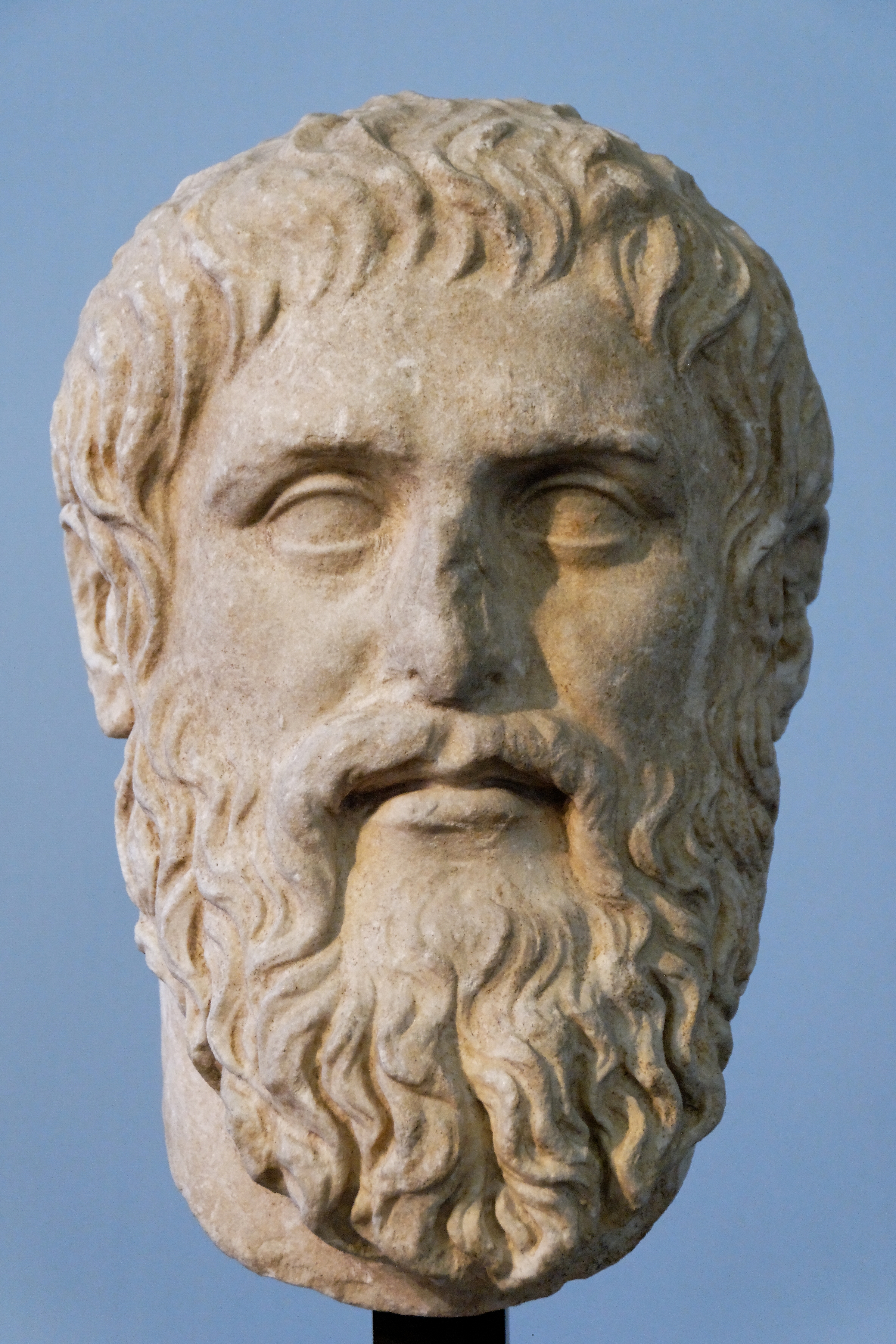
Illustrative image: a marble bust of Plato. The hypothesis borrows its name from Plato's cave allegory — many imperfect projections pointing back to one underlying reality. Image: Wikimedia Commons / Marie-Lan Nguyen, CC BY.
TL;DR — Platonic representation hypothesis JEPA theorem explained in one line: Yann LeCun and Randall Balestriero have turned a famous AI observation into a theorem, proving that JEPA models trained on different senses of the world learn the same internal picture — provided they are trained on genuinely different views of the same scene, which the authors say needs 42 times fewer training samples than today's next-token prediction.
📌 KEY HIGHLIGHTS
- The paper: "Proving and Improving the Platonic Representation Hypothesis with JEPAs" by Randall Balestriero and Yann LeCun, posted on arXiv on 29 October 2026 (arXiv:2610.39302).
- The theorem: JEPAs trained separately on any number of modalities learn the same representation, up to one rotation, when their positive pairs are two observations of one scene — "good views".
- The twist: next-token prediction is a JEPA with "bad views" — pieces of one document, not two views of one scene — which explains why language models need enormous scale to line up with vision models.
- The numbers: good views need 42 times fewer samples for the same alignment, and a small 109M-parameter text JEPA out-aligned language models up to 72B parameters.
- The caveat: this is a preprint, not peer-reviewed, and the guarantee covers JEPAs under stated conditions — not every AI model ever built.
Platonic representation hypothesis JEPA theorem explained: what happened
Start with the observation. Vision models, language models and audio models are trained on very different signals — pixels, words, sounds. Yet as they get more capable, researchers noticed their internal representations growing more similar in structure, as if each were recovering the same underlying world from a different angle. That is the Platonic Representation Hypothesis, named for Plato's cave: prisoners see only shadows on a wall, but the shadows all come from one real scene outside.
Until now, though, it was just that — an observation with no proof, no guarantee and no recipe. Balestriero and LeCun's paper changes its status for one important family of models. Their argument, in plain terms: a JEPA trained with whitened second-order anti-collapse learns the spectral embedding of its positive pairs — the pairs of inputs it is told are views of each other. If two modalities observe the same world and their positive pairs refer to the same world states, then their two training problems are really one problem written in different coordinate systems. So their solutions must coincide, up to a single rotation. That is the Platonic Representation Theorem.
The paper reached the Hacker News front page on 1 November 2026, which is why it is in the news now even though it was posted on 29 October. It is a theory paper with experiments attached, not a product launch — and that distinction matters for how much weight to put on it.
What a JEPA is, and what "good views" means
A Joint-Embedding Predictive Architecture does not reconstruct pixels or words. It encodes a context into a compact representation, encodes a target the same way, and trains a predictor to map one to the other — all inside representation space. Because it predicts abstract features rather than surface detail, it can ignore things like leaf texture or sensor noise and keep the structure that matters. LeCun proposed the architecture in his 2022 position paper as a building block for world models, and Meta's I-JEPA (images) and V-JEPA (video) put it into practice.
The whole theorem turns on one design choice: what counts as a positive pair. Two photographs of the same scene from different angles are good views — two observations of one world state. Two adjacent chunks of the same document are bad views — they are parts of one artefact, not two observations of one scene. Next-token prediction, the training method behind today's chatbots, falls in the second camp: it predicts the next piece of a document from the pieces before it. The paper's claim is that this is why language models only align with vision models through brute-force scale. They are learning the shared picture the hard way.

Illustrative image: a simple neural network diagram — input layer, hidden layer, output layer. A JEPA works one level up from this picture, predicting representations rather than raw outputs. Image: Wikimedia Commons / Wiso, public domain.
| Training setup | Positive pairs | What the theorem says |
|---|---|---|
| JEPA with good views | Two observations of one scene | Representations coincide, up to one rotation |
| JEPA with imperfect views | Views that only partly match | Misalignment stays bounded, not zero |
| Next-token prediction | Parts of a single document (bad views) | Alignment arrives only through scale — inefficiently |
| Good views vs next-token | Same corpus, both methods | Good views need 42× fewer samples for equal alignment |
The experiments behind the claim
A theorem about one architecture class would be a curiosity without evidence that the conditions can actually be met. The authors validate the theory across a wide range — from 145,000 captions up to the texts of 940 million web images — and report a scaling law of alignment that predicts unseen runs within seed noise. In other words, the alignment is not just predicted in principle; its strength follows a predictable curve as training data grows.
Two results carry the headlines. First, the efficiency gap: good views need 42 times fewer training samples than next-token prediction on the same corpus to reach the same alignment. Second, the small-model upset: a 109-million-parameter text JEPA aligned with DINOv2's and CLIP's image encoders better than every language model the authors evaluated, up to 72 billion parameters — and better than CLIP's own text encoder. As showcases, a single rotation turns separately trained encoders into an image captioner scoring CIDEr .838 on COCO, and on a pair-free benchmark the text JEPA beats every zero-shot accuracy reported with language models up to 8 billion parameters, including 64% against at most 56% top-5 on ImageNet-100.
Read those numbers as the authors' reported results, not as independent verification. The paper is a preprint: no peer review has yet tested the proofs or reproduced the experiments. The 42× figure is measured on the authors' setup and corpus, and "alignment" here is a specific measured quantity, not a general certificate that two models understand the world identically. For a sibling result in the same rotation, see our IIT Gandhinagar shortest path algorithm explainer, another theory result whose claims also need reading with their conditions attached.
Why it matters for India readers
If the result holds up, it is good news for everyone training models outside the hyperscaler club — and that includes India's research labs, startups and students. Training a competitive model today mostly means paying for enormous data and compute; a recipe that reaches the same cross-modal alignment with 42 times fewer samples would lower that bill dramatically. It also speaks directly to India's multilingual reality: models that must bridge many languages and modalities — text in Hindi, Tamil or Bengali alongside images and speech — benefit most from a principled way to make representations line up, rather than hoping scale alone does it.
For students, the practical lesson is about where the leverage sits. The paper's punchline is that positive views, not scale alone, are the lever for building shared representations. Designing what a model treats as "two views of the same thing" becomes a first-class engineering decision, not an afterthought. And for the wider agent-coding shift, see our DeepSeek super agent explainer and our MiniCPM-OCR open-source document parsing explainer, which cover what today's agent and document models actually do with the representations they learn.
Should you care?
✅ Verdict: Yes, if you build or study AI models — this reframes where training effort should go. Good views beat brute scale in this paper's experiments, and a theorem with explicit conditions is something engineers can design against. ⏳ Wait if: you only use chatbots and image tools — nothing in your apps changes tomorrow, and the result still needs peer review and independent reproduction before it counts as settled science.
FAQs
What is the Platonic Representation Hypothesis?
It is the idea that AI models trained on different kinds of data — images, text, audio — converge toward the same internal representation of the world as they scale, because they are all recovering structure from one shared reality. It is named after Plato's cave allegory, where different shadows point back to one real scene.
What is a JEPA?
A Joint-Embedding Predictive Architecture is a self-supervised model that predicts the representation of a target from the representation of a context, entirely in abstract representation space, instead of reconstructing pixels or words. LeCun proposed it as a building block for world models; I-JEPA and V-JEPA are its image and video versions.
Does this prove all AI models think alike?
No. The theorem is proven for JEPAs under stated conditions — good views and bounded misalignment — not for every architecture. It also says representations match "up to one rotation", meaning the same structure in a different coordinate system, not identical weights. Claims beyond the JEPA class are unproven.
Why does next-token prediction need so much scale to align with vision?
Because, in this paper's framing, it trains on bad views: parts of a single document rather than two observations of one scene. The shared structure is only recoverable indirectly, so alignment emerges slowly and only with massive data — whereas good views expose it directly, needing 42 times fewer samples in the authors' experiments.
Takeaway: A famous AI hunch now has a proof for one model family — and the proof says the secret is not more data, but better views of the same world. Watch for peer review and reproductions before treating it as settled.
Follow World Tech on TechByCountry for tomorrow's 6 PM update.
📸 Get tech in the last 24 hours on Instagram — follow @_techinlast24hrs for daily posts (9 AM–9 PM) and reels at 12:30 PM & 8:30 PM.
Sources
- arXiv — Balestriero & LeCun, "Proving and Improving the Platonic Representation Hypothesis with JEPAs", arXiv:2610.39302 (submitted 29 Oct 2026)
- DEV Community — "Platonic Representation Hypothesis becomes a theorem for JEPAs in new arXiv paper" (1 Nov 2026)
- AI Weekly — "LeCun Proves Platonic Representation Hypothesis; Good Views Need 42x Fewer Samples"
Comments
Post a Comment