Rocket Lab Electron 99th Launch iQPS Explained: The Sea God Surveys, Tonight's Radar Satellite and the Road to 100

Image: NASA Kennedy Space Center / Rocket Lab, via Wikimedia Commons (public domain) — an Electron rocket lifting off. ILLUSTRATIVE image of the Electron vehicle, not this mission.
TL;DR: Rocket Lab Electron 99th launch iQPS explained: tonight, 2 November 2026, an Electron rocket lifts off from New Zealand carrying Japan's 10th iQPS radar satellite, "The Sea God Surveys". Liftoff is set for 16:41 UTC (22:11 IST), and success would leave Rocket Lab one flight away from 100 Electron launches — a first for a privately developed small rocket.
UPDATE (3 November 2026) — Launch successful: "The Sea God Surveys" lifted off from Rocket Lab Launch Complex 1, Mahia Peninsula, New Zealand, at 5:41 a.m. NZDT on 3 November 2026 (16:41 UTC on 2 November, 22:11 IST), and deployed the WADATSUMI-II synthetic aperture radar satellite into a 575 km low Earth orbit, on an inclination tailored to optimise iQPS's revisit rates over the Asia-Pacific region. This was Electron's 99th flight and Rocket Lab's 20th mission of 2026 — and the tenth consecutive Electron launch for iQPS with a 100% success record. Eight more dedicated Electron launches are booked to complete iQPS's SAR constellation by 2030. Next milestone: Rocket Lab says its 100th Electron launch, another QPS-SAR mission titled "The Mountain God Rises", is scheduled no earlier than 14 November 2026.
📌 KEY HIGHLIGHTS
- Launching tonight: "The Sea God Surveys" (iQPS Launch 9) is targeted for 16:41 UTC on 2 November 2026 — 22:11 IST — from Rocket Lab Launch Complex 1, Mahia Peninsula, New Zealand.
- Flight 99: it would be Electron's 99th mission overall and its 20th of 2026, passing the 19 flown through October in a record-pace year.
- The payload: a single QPS-SAR satellite, QPS-SAR-20 "WADATSUMI-II", joining iQPS's radar constellation at 575 km altitude — the network's 10th satellite.
- Radar that sees through weather: the ~100 kg satellite's 3.6-metre antenna delivers imagery at up to 0.46-metre resolution, day or night, through cloud cover.
- What comes next: flight 99 succeeded on 3 November 2026 — and the 100th Electron flight, "The Mountain God Rises", is now listed for no earlier than 14 November 2026 (see update above).
What happened?
Rocket Lab's Electron is the workhorse of the small-launch world, and tonight it takes one step from a milestone no privately developed small rocket has reached. "The Sea God Surveys", the ninth dedicated Electron mission for Japanese Earth-imaging company iQPS, is scheduled to lift off from Launch Complex 1 on New Zealand's Mahia Peninsula at 16:41 UTC on Monday, 2 November 2026 — 11:41 a.m. Eastern time in the US, and 22:11 IST for viewers in India. Independent launch trackers list the mission as "Go for Launch", after a small slip from an earlier 16:00 UTC target; as with any launch, the time can still move.
The count is what makes this flight matter beyond its single satellite. Electron has flown 98 missions since its first test flight in May 2017 and its entry into commercial service in November 2018. Tonight's flight would be number 99, and the 20th Electron launch of 2026 — one more than the 19 completed through October, in what is already a record-pace year. Electron flew 21 missions in 2025, its previous annual high; six more flights after tonight would break that mark. Rocket Lab's most recent flight, "We're Not Hawking Around" in October 2026, carried three HawkEye 360 satellites as the 98th mission and the 19th of the year.
Rocket Lab Electron 99th launch iQPS explained: the satellite and its radar
iQPS — the Institute for Q-shu Pioneers of Space, based in Fukuoka, Japan — is building a constellation of synthetic aperture radar (SAR) satellites. Unlike an optical camera, a SAR satellite sends out its own radar pulses and reads the echoes, so it produces sharp imagery in darkness, through cloud, fog and smoke. That is the practical difference: where optical satellites go blind in a typhoon, a radar satellite keeps imaging. iQPS has pointed to imagery over Japan's Noto Peninsula, captured through conditions that would have defeated optical sensors, as proof of the point.
Tonight's satellite packs that capability into a spacecraft weighing roughly 100 kilograms — about a tenth of a traditional military SAR satellite. Its 3.6-metre deployable antenna folds down to just 0.8 metres for launch, then unfurls in orbit. Operating in the X-band at 9.38 GHz and transmitting 2-kilowatt radar pulses, it synthesises an effective antenna far larger than its physical dish, reaching ground resolution as fine as 0.46 metres in spotlight mode.
| Mission fact | Detail |
|---|---|
| Mission | "The Sea God Surveys" (iQPS Launch 9) — Rocket Lab's 10th dedicated Electron flight for iQPS |
| Payload | QPS-SAR-20 "WADATSUMI-II", a synthetic aperture radar satellite, ~100 kg |
| Launch time | 2 November 2026, 16:41 UTC (22:11 IST; 11:41 a.m. ET) |
| Launch site | Rocket Lab Launch Complex 1, Mahia Peninsula, New Zealand |
| Target orbit | 575 km circular orbit, 42° inclination |
| Radar capability | 3.6 m deployable antenna, X-band 9.38 GHz, up to 0.46 m spotlight resolution |
| Constellation goal | 36 satellites for ~10-minute global revisit; 24 by late 2028, full 36 by 2030 |
| Rocket | Electron: 18 m tall, 1.2 m diameter, 2–3 stages, ~300 kg to low Earth orbit, ~US$7.5 million per launch |
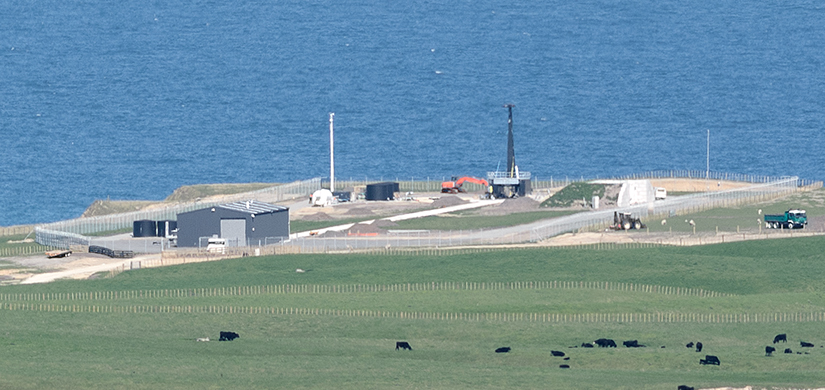
Image: Wikimedia Commons / Grumpy Eye, CC BY-SA 2.0 — Rocket Lab Launch Complex 1 on the Mahia Peninsula, New Zealand, tonight's launch site.
Why it matters for World Tech readers
The constellation logic is the story behind the single launch. A radar network's value is measured in revisit time — how often a customer can get a fresh image of the same spot. Today's commercial imagery services typically revisit in hours or days, which is fine for tracking slow changes in infrastructure or land use, but too slow for vessel tracking, disaster response or time-sensitive surveillance. With 36 satellites in four orbital planes of nine, iQPS projects an average revisit of roughly ten minutes anywhere on Earth. Ten satellites is not 36, and the company itself calls 24 the minimum for commercially meaningful revisit performance — but each added satellite measurably shortens the wait, and tonight's flight takes the network into double digits for the first time.
For India, the relevance is direct. Radar imagery that works through monsoon cloud is exactly what flood and cyclone response needs, and India is building its own radar-imaging capability alongside — including the NASA-ISRO NISAR mission — while its private launch sector gathers pace, as our Reflect Orbital and Skyroot Vikram launches explainer and our ISRO Kulasekarapattinam first rocket launch explainer covered. The dedicated-launch model matters here too: Electron delivers the satellite directly to its exact orbital plane, where a rideshare launch would leave weeks or months of fuel-burning manoeuvres to reach the right slot. iQPS has flown every one of its satellites on Electron since December 2023, with 18 missions contracted in total — and rival Japanese SAR operator Synspective signed a 47-mission Electron agreement in September 2026, a sign of how far dedicated small launch has come.
Should you care?
✅ Verdict: Watch tonight if you follow spaceflight — 22:11 IST, streamed on Rocket Lab's YouTube channel — because flight 99 sets up a genuine first: the 100th launch of a privately developed small rocket, likely within weeks. If you follow Earth observation, the milestone that matters more is iQPS's 10th satellite: the network is now a third of the way to the 24 satellites it needs for commercially meaningful revisit times.
FAQs
What is the Rocket Lab Electron 99th launch? "The Sea God Surveys" (iQPS Launch 9), scheduled for 2 November 2026 at 16:41 UTC from Rocket Lab Launch Complex 1 in New Zealand. It would be Electron's 99th mission and its 20th launch of 2026, carrying Japan's 10th iQPS radar satellite.
What does iQPS's radar satellite do that optical satellites cannot? Its synthetic aperture radar transmits its own pulses and reads the echoes, so it images through cloud, fog, smoke and darkness. The ~100 kg QPS-SAR-20 satellite reaches 0.46-metre resolution in spotlight mode, useful for disaster response and maritime tracking when optical sensors are blinded.
When and where can I watch the Rocket Lab Electron 99th launch? Liftoff is targeted for 16:41 UTC on 2 November 2026 — 22:11 IST — from Mahia Peninsula, New Zealand. Rocket Lab streams its launches live on its YouTube channel; launch times can still slip for weather or technical reasons, so check Rocket Lab's feed before the window.
When will Rocket Lab's 100th Electron launch happen? Flight 99 succeeded on 3 November 2026, so only one more Electron launch is needed for 100. A follow-on iQPS mission, "The Mountain God Rises", is now listed for no earlier than 14 November 2026, and Rocket Lab has described it as the expected 100th flight, with multiple further flights planned through the end of the year.
Takeaway: Tonight's launch is two milestones in one: iQPS's radar network reaches double digits, and Electron stands one flight from 100 — proof that small, dedicated rockets have become the quiet infrastructure of the Earth-observation business.
Follow World Tech on TechByCountry for tomorrow's update.
📸 Get tech in the last 24 hours on Instagram — follow @_techinlast24hrs for daily posts (9 AM–9 PM) and reels at 12:30 PM & 8:30 PM.
Update: Rocket Lab has now set the date for the milestone flight — read our Rocket Lab 100th Electron launch explained (The Mountain God Rises, 11 AM IST on 14 November).
Sources
- Rocket Lab (GlobeNewswire) — Mission Success: Rocket Lab Launches 99th Electron Mission (3 November 2026)
- Telecompaper — Rocket Lab completes 99th Electron launch, deploying Japanese SAR satellite (3 November 2026)
- Space & Defense — Rocket Lab completes 99th Electron launch for iQPS SAR satellite; 100th launch NET 14 November 2026 (3 November 2026)
- TechTimes — Rocket Lab Targets 100th Electron Launch After iQPS Radar Mission Monday (1 November 2026)
- KeepTrack — Upcoming Rocket Launches (The Sea God Surveys, 2 November 2026, 16:41 UTC, Go for Launch)
- FlightAtlas — Next mission: The Sea God Surveys, QPS-SAR-20 "WADATSUMI-II", 575 km orbit
- RocketLaunch.Live — Rocket Lab launch schedule (The Sea God Surveys; The Mountain God Rises NET 10 November)
- Wikipedia — Rocket Lab Electron (specifications, launch history, launch sites)
Comments
Post a Comment