Samsung Galaxy Glasses December Launch Explained: Mid-December Sales in US and Korea First, Price Still Undecided
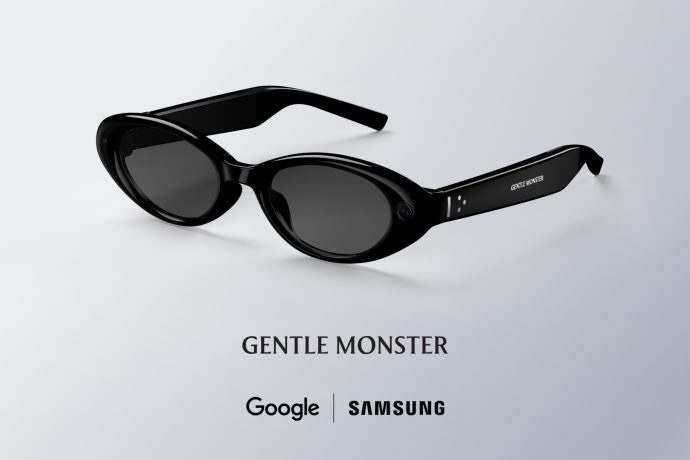
Image: Samsung — Intelligent Eyewear in the Gentle Monster style (official product image).
TL;DR: Samsung Galaxy Glasses December launch explained in one line: industry reports say Samsung's first AI smart glasses go on sale in mid-December 2026 in South Korea and the US only — with no display, Gemini AI on board and the price still undecided. Samsung itself has not confirmed the date, so treat mid-December as reported timing, not an official announcement.
📌 KEY HIGHLIGHTS
- The reported date: First sales in mid-December 2026, in South Korea and the United States only, according to Korean industry reporting from 30 October.
- What is NOT in the first wave: Europe, China and Japan are excluded at launch; Samsung reportedly wants to read demand and feedback before expanding.
- The price: Still undecided and under discussion, per the same report — any price you see quoted today is a rumour, not a Samsung fact.
- The product: Android XR glasses with Gemini AI, a camera, microphones and speakers — but no display. Voice is the whole interface.
- The catch to know: AI requests route through your paired Galaxy phone to Google's Gemini infrastructure, with conversations retained by default — check the privacy terms before buying.
Samsung Galaxy Glasses December launch explained: what was reported
Korean business daily Chosun Biz reported on 30 October 2026, citing electronics industry sources, that Samsung Electronics has set mid-December as the release timing for its AI smart glasses, known as "Intelligent Eyewear", and will sell them first in Korea and the United States. GSMArena carried the report on 31 October, and TrendForce and Dataconomy followed on 2 November with the same timing and the same two first markets. That is two-plus independent outlets on one underlying industry report — enough to report it, labelled as reported, but not enough to call it confirmed.
The honest framing matters here, because the "delay" story is easy to overstate. Samsung's own announcement, from its first look in May 2026, promised only that the first collections would launch "this fall in select markets" — no month, no country list. The November window came from a Samsung official quoted by The Korea Herald in early October. So mid-December is roughly a six-week slip from that unofficial November window, not from a Samsung press-release date. A November launch event with December retail sales is still possible, but nothing confirms it.
| Detail | Status | Source |
|---|---|---|
| First sales in mid-December 2026 | Reported, not Samsung-confirmed | Chosun Biz, 30 Oct 2026 |
| First markets: South Korea and the US | Reported, not Samsung-confirmed | Chosun Biz; carried by GSMArena |
| Europe, China, Japan excluded at launch | Reported | Chosun Biz; 2027 expansion per Dataconomy |
| Retail price | Undecided, under discussion | Chosun Biz report |
| Android XR + Gemini, no display | Confirmed by Samsung | Samsung Newsroom, May 2026 |
| Snapdragon AR1 Gen 1, up to 9 hours per charge | Samsung's claims, via reporting | Samsung announcement, via GSMArena |
The glasses themselves: no display, Gemini, Android XR
These are not the augmented-reality glasses of science fiction. There is no screen in front of your eyes at all. Instead, the glasses carry a camera, microphones and speakers, and everything happens by voice through Google's Gemini: real-time translation in the speaker's voice, spoken turn-by-turn directions, summaries of important texts, calendar entries, and photos of documents or meetings that get automatically organised into the Notes app on a paired Galaxy phone. Samsung showed four styles so far — two at Google I/O in May and two more at its Galaxy Unpacked event — designed in collaboration with eyewear brands Gentle Monster and Warby Parker, so they look like ordinary glasses rather than a gadget strapped to your face.
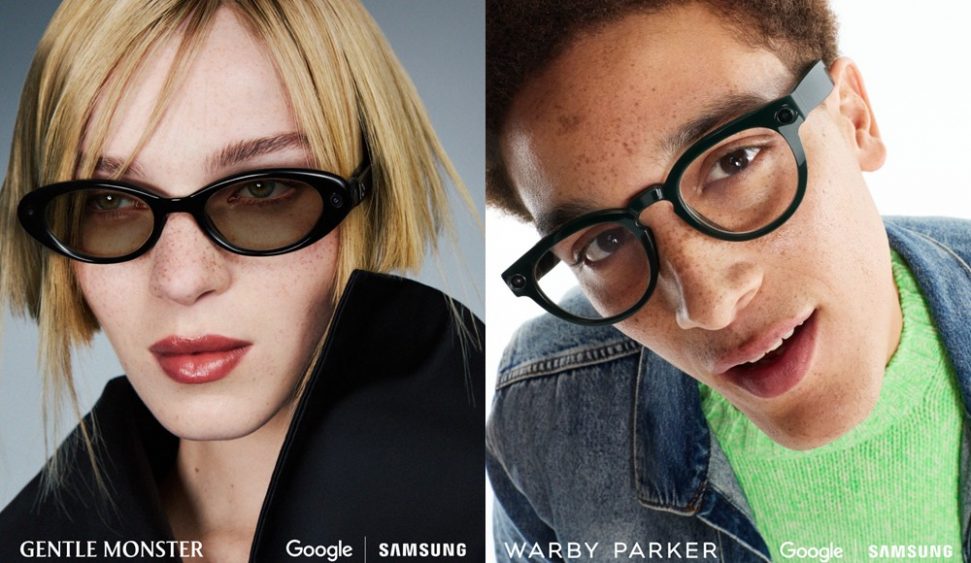
Image: Samsung — Intelligent Eyewear styles from the official first look (official press image).
Under the frames sits Qualcomm's Snapdragon AR1 Gen 1 chip, and Samsung promises up to nine hours of use on a single charge, with the carrying case holding further charges. Reports also mention a 12-megapixel camera, though Samsung has not published a full spec sheet yet. What is confirmed is the philosophy: this is a companion to your Galaxy phone, not a standalone computer. TechTimes flags the consequence worth knowing before you buy — the glasses do not process AI requests on your face; every question routes through the paired phone to Google's Gemini infrastructure, where, under Google's Gemini Apps Privacy Hub terms, activity is retained for 18 months by default and up to three years if flagged for human review. That is a setting to check, not a reason to dismiss the product — but it is exactly the kind of detail a launch announcement will not headline.
Why only two countries first — and what it means for World Tech readers
The two-country launch is a deliberate pattern, not an accident. Samsung did the same with its Galaxy XR headset: it launched in Korea and the US last October and only reached the UK in July this year. The reported reasoning for the glasses is identical — read real demand and user feedback in two markets before committing to a wider rollout. It is also a defensive move. Counterpoint Research figures cited in coverage put AI smart glasses shipments up 263% year over year in the first half of 2026, with Meta holding about 94% of the market. Samsung is walking into a category its rival already owns, so a cautious first wave is the sensible play — and a mid-December date lands just before the holiday spending peak, giving Samsung only a short window to build early sales.
For India readers, the honest answer is: nothing is announced. No India date, price or launch window appears in any of the sources for this story, and India is not named among the 2027 expansion markets in the reporting (China, Europe and Japan are). Readers in India should not assume a Korean or US release means an Indian one follows quickly — Samsung's own XR headset took nine months to reach a third country. If you want a sense of where wearables are heading in the meantime, see our Pebble Qore Vox price in India explainer for what a screenless band does differently, and our Huawei Watch 6 Malaysia pre-order price explainer — another launch where the headline product arrived without a price.
Should you care? ✅ / ⏳
✅ Yes, if you follow AI hardware — ⏳ but don't budget for it yet. A mid-December launch in two countries, with no confirmed price and no India timeline, is a story to watch, not a product to wait for with money set aside. The interesting part is the strategy: Samsung betting that voice-only, fashion-first glasses can dent Meta's 94% share. The buying decision only becomes real when Samsung itself announces a date, a price and your market.
Price, availability and alternatives
There is no official price, and the one rumour in circulation — $349 to $499 in the US depending on frame, from an earlier report — should be treated as speculation until Samsung says otherwise. Availability, per the report, is mid-December in South Korea and the US only, with wider markets to follow after Samsung reads the first response. The alternatives you can actually buy today are Meta's: the Ray-Ban Meta Gen 3 starts at $449 and the camera-free Ray-Ban Meta Audio at $349, per TrendForce. If you want AI glasses now, Meta is the only established choice; if you want Samsung's version, the rational move is to wait for Samsung's own announcement — expected before any December sale date — and to check the Gemini retention settings the moment you pair them.
FAQs
When are Samsung Galaxy Glasses available to buy? According to industry reports published on 30–31 October 2026, first sales begin in mid-December 2026 in South Korea and the US. Samsung has not confirmed an exact date, so mid-December is a reported window, not a guaranteed sale day.
How much will Samsung smart glasses cost? Samsung has not announced a price; the 30 October report says pricing is still under discussion. An earlier rumour suggested $349–$499 in the US depending on frame, but that is unconfirmed speculation, not a Samsung fact.
Do Samsung Galaxy Glasses have a display? No. The Intelligent Eyewear has no display — it uses a camera, microphones and speakers, with Gemini AI delivered by voice through a paired Galaxy phone. A separate display model is reportedly planned for 2027, but that is a different product.
Will Samsung smart glasses launch in India? No India launch has been announced in any source for this story, and India is not named in the reported 2027 expansion markets. Do not assume an Indian release follows the Korean and US launch quickly.
Takeaway: Samsung's AI glasses are reportedly six weeks from their first sale — in two countries, at an undecided price, against a rival that owns 94% of the category. Watch Samsung's own announcement, not the rumour mill, before you decide.
Follow World Tech on TechByCountry for tomorrow's 6 PM update.
📸 Get tech in the last 24 hours on Instagram — follow @_techinlast24hrs for daily posts (9 AM–9 PM) and reels at 12:30 PM & 8:30 PM.
Sources
Chosun Biz — Samsung launches AI smart glasses mid-December in Korea, US (30 Oct 2026)
GSMArena — Here's when Samsung plans to release its Android XR glasses and where (31 Oct 2026)
Samsung Newsroom — Samsung and Google give first look at new Intelligent Eyewear
TrendForce — Samsung's first AI glasses reportedly launching mid-December in Korea, US (2 Nov 2026)
Tech Times — Samsung smart glasses slip to December: Google keeps Gemini conversations 18 months (1 Nov 2026)
Comments
Post a Comment