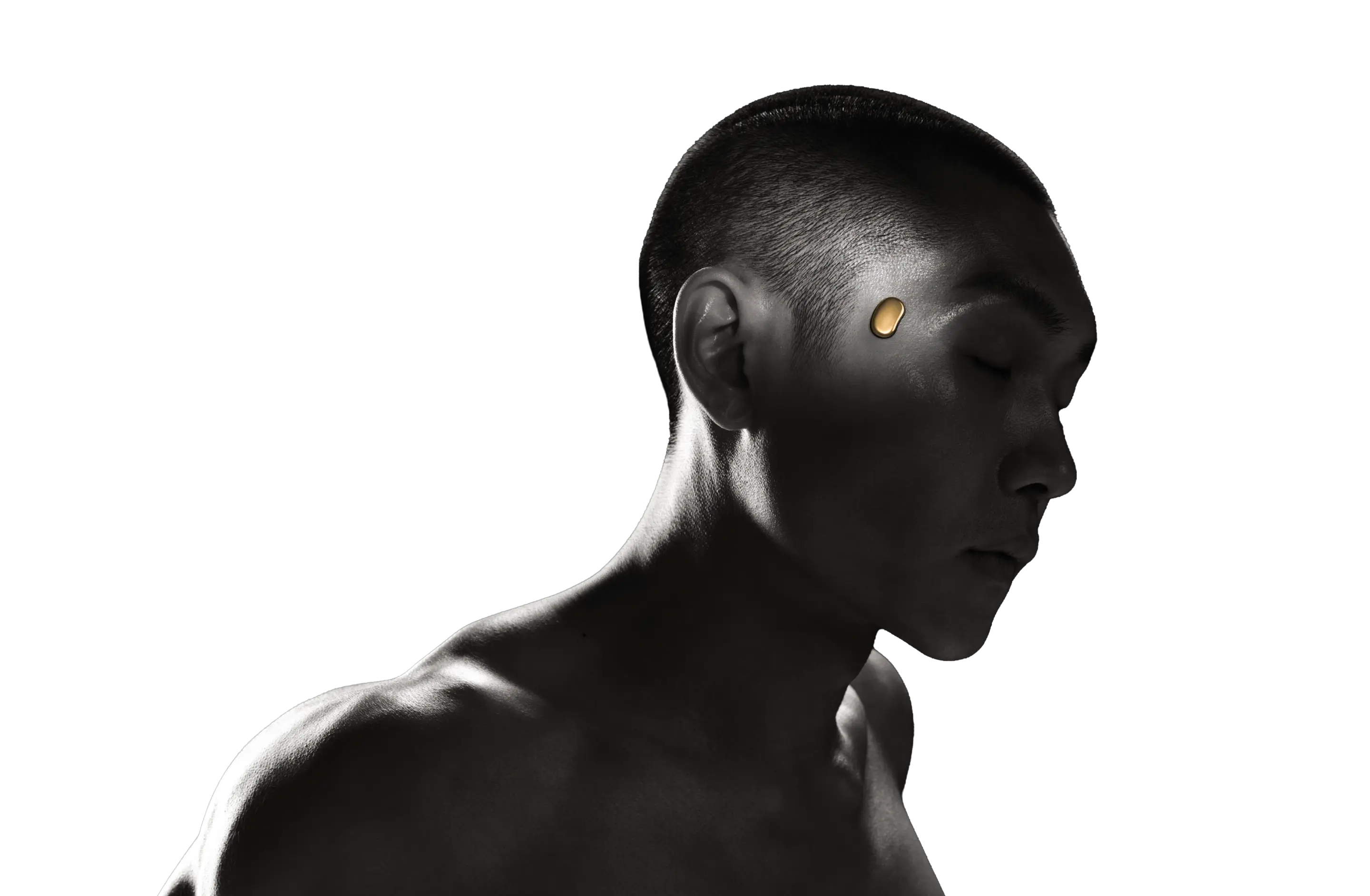
Image: Temple — the Temple wearable worn on the temple (official product image)
TL;DR: Temple wearable brain blood flow claims explained: Deepinder Goyal's ₹85,000 head-worn device promises to track blood flow to the brain, but doctors say the claim is unproven — no peer-reviewed study backs BrainFlow, and the sensor reads blood near the skin, not inside the skull. Temple calls it a wellness device, not a medical one.
Key Highlights
- Reuters reported on 11 November 2026 that doctors are publicly disputing Temple's claim that its ₹85,000 wearable tracks blood flow to the brain, saying the science is not backed by peer-reviewed research.
- Temple is a pill-shaped device, less than 1 inch wide and under 2 grams, stuck to the temple with adhesive grips. It uses optical PPG sensors and reports two proprietary numbers: BrainFlow and Entropy (1–250).
- The dispute turns on anatomy: the sensor sits over the superficial temporal artery, which supplies the scalp and face, while the brain is fed by the internal carotid and vertebral arteries.
- Temple has published two company-funded preprints, neither peer-reviewed nor independently replicated. The company calls BrainFlow and Entropy "new metrics with emerging science" and says some metrics would eventually need regulatory approval.
- Pre-orders opened on 1 November at ₹85,000 (about $907) on temple.com and the Temple app. Goyal says orders have come from more than 62 countries; deliveries take about three months.
What happened?
On 11 November 2026, Reuters reported that doctors in India are publicly challenging the claims behind Temple, the head-worn wearable from Zomato co-founder Deepinder Goyal. The device opened for pre-orders on 1 November at ₹85,000, and Goyal says orders have since come from more than 62 countries. The criticism centres on one claim: that a sensor stuck to the side of the head can track blood flow to the brain.
The loudest critic is hepatologist Dr Cyriac Abby Philips, known as TheLiverDoc, who has called Temple "the biggest health scam" on X, where he has 328,000 followers. Paediatrician and nephrologist Dr Sanjeev Bagai called the device a "gimmick" on prime-time TV, saying it had "no formal approval or clearance". Goyal has hit back, saying Temple is a "fitness tracker, and wellness device", not a medical one, and that the company has made no medical claims. Temple told Reuters that BrainFlow and Entropy are "new metrics with emerging science", that more research would follow, and that some metrics would eventually need regulatory approval. India's health ministry did not respond to Reuters' questions.
The device has been worn in public by India cricket captain Shubman Gill and Olympic badminton medallist P.V. Sindhu. Temple raised $54 million in February at a valuation of about $190 million, and its scientific advisory board includes professors from Boston University, the University of Ottawa and Harvard Medical School. We covered the pre-order opening in our earlier Temple pre-order explainer.
Temple wearable brain blood flow claims explained: what the sensor actually reads
Temple is a small pill-shaped pod that sticks to the skin between the forehead and the ear, held by replaceable adhesive grips. Inside are multi-wavelength optical (PPG) sensors — the same light-based pulse sensing used in a smartwatch — plus an accelerometer and a skin-temperature sensor. From those signals Temple builds BrainFlow, which it describes as a proxy for changes in cerebral blood flow, and Entropy, a live score from 1 to 250 that updates every second and is meant to show how hard the body is working to shed heat. Resting Entropy and Entropy Max combine into a third number, Span. The idea behind the device is Goyal's "Gravity Ageing Hypothesis" — that gravity's effect on blood circulation plays a role in ageing.
The doctors' objection is anatomical. Temple's sensor sits over the superficial temporal artery, which supplies blood to the scalp and face. The brain itself is supplied mainly through the internal carotid and vertebral arteries. "A light sensor placed on the temple can only read what is happening in these superficial vessels. It cannot look inside the skull or tell us how blood is flowing through the brain itself," Dr Girish Nair, senior consultant neurologist at Apollo Hospitals Navi Mumbai, told The Indian Express. Dr Jason Philip wrote on X that optical signals over the temple skin would only give data on the superficial temporal artery. Dr Abhijeet Gaikwad, consultant neurologist at Inamdar Multispecialty Hospital, Pune, added that readings from the temporal artery "should not automatically be considered a direct measure of cerebral circulation".
Not every expert dismisses the idea outright. Dr Anurag Agrawal, physiologist and dean of biomedical research at Ashoka University, told The Hindu he considers Temple's index a legitimate mathematical analysis that can be tested for its predictive value — but cautioned it is too early to establish whether it can predict longevity, general well-being or specific diseases. Dr Seema Shahi, director and head of neurology at Pacific One Health Hospitals, Delhi, noted Temple has done a preliminary comparison of BrainFlow readings with Transcranial Doppler ultrasound, but said the findings are "not yet sufficient to establish it as a validated clinical diagnostic tool" and that larger, independent studies are needed.
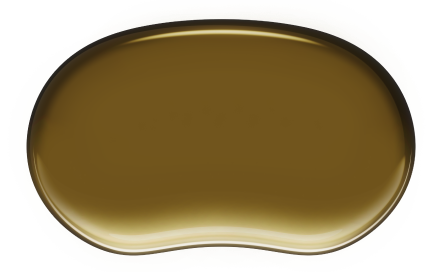
Image: Temple — the Temple device in True Gold (official product image)
What evidence does Temple have?
Temple's evidence so far is two company-funded preprints — research papers shared publicly before independent experts have checked them. Neither has been peer-reviewed, and neither has been independently replicated. Here is what each one reports, as covered by TechTimes, Business Standard, Gadgets Now and The Federal:
| Study | What it compared | What Temple reports | Status |
|---|---|---|---|
| Transcranial Doppler (TCD) validation | BrainFlow readings vs TCD ultrasound, the clinical method for measuring blood speed in brain arteries | 23 healthy adults, 20 completed the protocol; median within-subject correlation of about 0.8 | Preprint; company-funded; not peer-reviewed |
| Time-domain near-infrared spectroscopy (TD-NIRS) validation | BrainFlow vs TD-NIRS, a lab method that can separate brain blood changes from scalp blood changes | 44 healthy young men across 60 sessions; median correlations of 0.839–0.912 with a model-derived brain signal; in a head-down tilt test, BrainFlow matched the brain signal at 0.91 and the scalp signal at 0.49 | Preprint; company-funded; not peer-reviewed |
Temple also cites an internal study on heart-rate tracking, in which it says the device's error was 1.18 beats per minute against a Polar H10 chest strap, against 1.94 for the Apple Watch Series 12. That is the company's own test, not an independent one. Goyal has published the full paper and data on Temple's science page, says an extended study by independent researchers is under way, and has invited further independent replication — offering to fund it.
What the evidence does not show matters just as much: no peer-reviewed paper, no independent replication, no clinical study, and validation samples made up of small numbers of young, healthy adults. Temple's own researchers acknowledge that the anatomical link between the temple signal and the brain does not by itself establish that the signal reflects blood flow inside the brain — and, as The Hindu notes, there is no trial showing that increasing brain blood flow extends life or delays cognitive decline.
Why it matters for India readers
At ₹85,000, Temple costs as much as a flagship phone — and the question of what it actually is matters more than the price. Temple's own terms of sale describe it as a wellness product, and Goyal stresses it is "strictly a fitness + AI device" that is "not proven to diagnose or prevent any disease" and "doesn't do anything that replaces the need for you to see a doctor". But its promotional material talks about monitoring blood flow to the brain and the body's systems — language that reads as medical to many buyers. That gap between wellness labelling and medical-sounding claims is exactly what the doctors are challenging, and why some are calling for the device to come under the purview of medical regulators.
The regulatory picture is unresolved. Bagai's point — "no formal approval or clearance" — stands, and Temple itself says some of its metrics would eventually need regulatory approval. India's health ministry has not responded to questions about the device. Meanwhile the commercial side is moving: pre-orders are open, each unit is made to order, deliveries take about three months, and Temple offers a 14-day no-questions-asked returns policy. Goyal says he has spent $30 million on Temple, including $20 million of his own money, and apologised if the ₹85,000 price upset people — adding that buyers can wait for user reviews before deciding.
Should you buy or wait?
⏳ Verdict: Wait. Temple's BrainFlow is an interesting idea with early lab numbers behind it, but no independent scientist has yet verified that it measures brain blood flow — and ₹85,000 is flagship-phone money for an unproven metric. Wait for peer review, the independent study Goyal says is under way, and the first reviews from real buyers. If you want validated health tracking today, a conventional smartwatch or ring measures heart rate, sleep and activity with established sensors.
Price, availability and alternatives
| Detail | Temple |
|---|---|
| Price in India | ₹85,000 (about $907); the early-access listing indicated lifetime app access is included |
| Pre-orders opened | 1 November 2026, 9:30 PM IST |
| Where to order | temple.com and the Temple app |
| Colours | True Gold, Rose Gold, Black Mirror, Real Jade, Deep Blue, Purple Funk |
| Delivery | Made to order; about three months from purchase (Goyal: Batch 01 ships early 2027) |
| Returns | 14-day no-questions-asked returns |
| Status | Wellness / fitness device, not a medical device; no formal approval or clearance |
If the appeal is validated health tracking rather than the brain-blood-flow experiment, conventional wearables are the safer spend for now — our Xiaomi Watch S5 global launch explainer and Vivo Watch GT 2 India launch explainer cover two recent options with established sensors and clear India pricing. Temple is a different kind of purchase: a bet on a new metric, not a proven health tool.
FAQs
Does the Temple wearable really measure brain blood flow?
Not in any validated sense. Its sensor reads blood-volume signals in the skin over the superficial temporal artery. Temple says its BrainFlow metric is a proxy that correlates with cerebral blood flow under lab conditions, citing two company-funded preprints — but no peer-reviewed study or independent replication has confirmed that it measures blood flow inside the brain.
What is the price of Temple wearable in India?
₹85,000 (about $907), confirmed when pre-orders opened on 1 November 2026. The early-access listing indicated the price includes lifetime access to the Temple app. Each unit is made to order, and deliveries take about three months.
Is Temple wearable a medical device?
No. Temple and Goyal describe it as a fitness and wellness device, not a medical one, and say it makes no medical claims and is not proven to diagnose or prevent any disease. It has no formal medical approval or clearance, and Temple says some of its metrics would eventually need regulatory approval.
Is Temple wearable a scam?
No regulator or court has called Temple a scam. The word comes from one critic — hepatologist Dr Cyriac Abby Philips, who calls it "the biggest health scam" because, in his view, the central brain-blood-flow claim is scientifically unsupported. Temple says BrainFlow and Entropy are new metrics with emerging science, points to its two preprints, and says an independent study is under way.
When will the Temple wearable be delivered in India?
About three months from the date of purchase. Every unit is made to order, and Goyal has said the first batch (Batch 01) ships in early 2027.
Takeaway: Temple is a bold idea: a ₹85,000 sticker on your temple that claims to read your brain. Until independent scientists can check the claim, the honest label for BrainFlow is "promising, unproven" — and that is a lot of money to pay for a promise.
Before ordering, read Temple's own research at temple.com/science-and-research and wait for the independent study Goyal says is under way — then decide with the evidence, not the hype, in front of you.
Sources
- Temple — official website
- Temple — Science and research
- Reuters, via The Hindu BusinessLine — Deepinder Goyal's Temple wearable faces doctors' scrutiny over brain blood flow claims (11 November 2026)
- The Indian Express — Deepinder Goyal's Rs 85,000 Temple Wearable Sparks Debate: Can It Really Track Brain Health? (10 November 2026)
- The Hindu — Does the Temple wearable reveal useful information about brain health? (10 November 2026)
- The Federal — Why doctors are questioning Deepinder Goyal's Rs 85,000 'Temple' wearable (10 November 2026)
- The Economic Times — Deepinder Goyal's Rs 85,000 Temple wearable faces scientific credibility test as doctors question claims (9 November 2026)
- Business Today — Temple pre-orders go live; Goyal says wearable outperforms Apple Watch in internal study (1 November 2026)
Comments
Post a Comment