Wonder 9 Billion Valuation IPO Explained: Marc Lore's Food-Hall Bet, Texas Expansion and Wonder Create
UPDATE — 6 November 2026, 03:45 IST: Wonder has taken the first formal step toward going public. On 5 November 2026 the company announced it confidentially submitted a draft Form S-1 registration statement to the US Securities and Exchange Commission for a proposed initial public offering of its Class A common stock. No share count, price range, listing date, valuation or proceeds target has been announced, and the offering is subject to market conditions and completion of the SEC's review. Founder Marc Lore had previously said Wonder would be "IPO-ready" early next year. Separately, Wonder Create — the $10-a-month programme letting creators start their own restaurant business from a Wonder location — rolls out on 17 November. Sources: Wonder / PR Newswire (5 Nov 2026), TechCrunch, NRN.
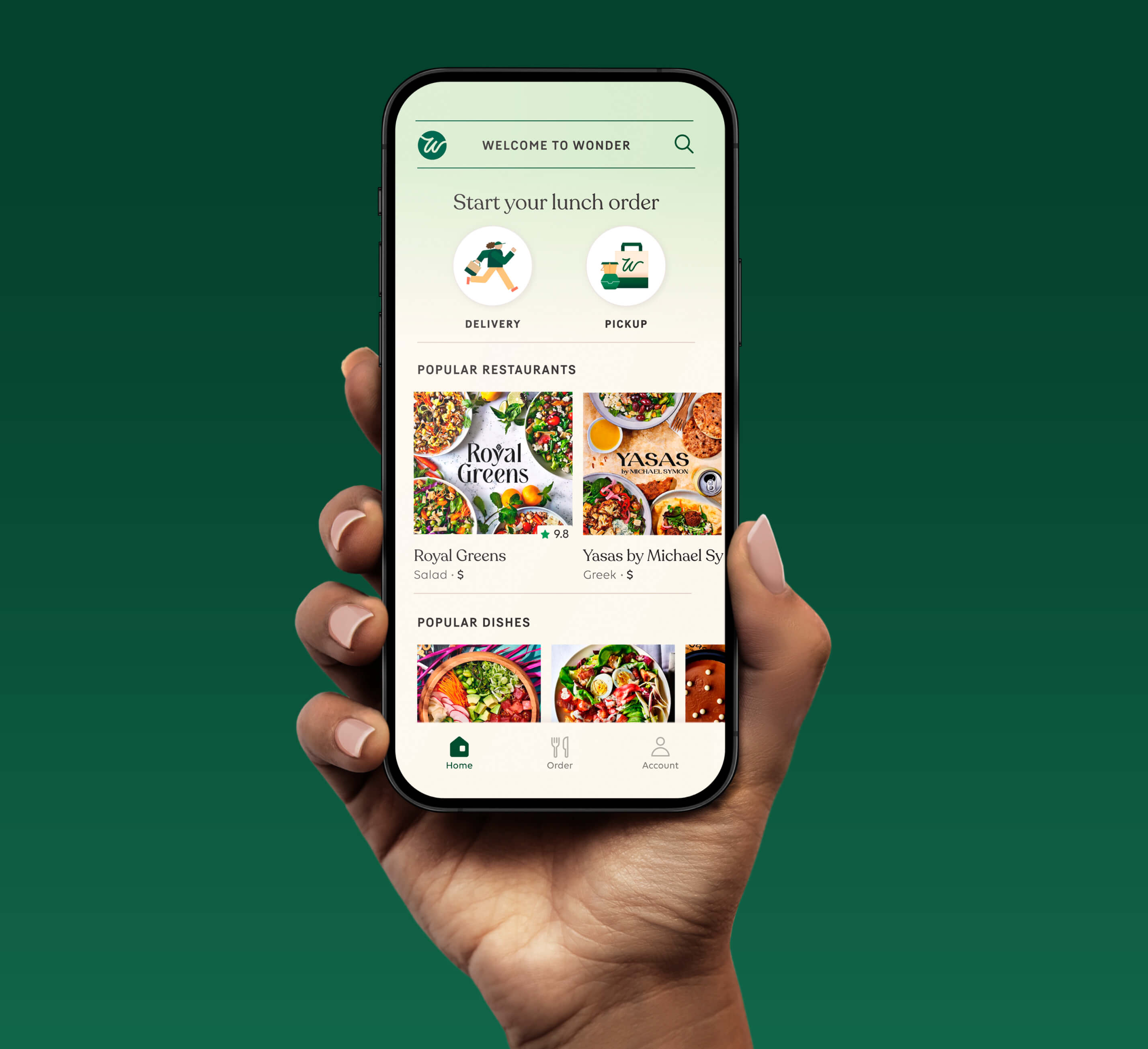
Image: Wonder — the Wonder app (official image).
TL;DR — Wonder 9 billion valuation IPO explained: Marc Lore's food-hall startup is now valued at $9 billion before new money ($9.65 billion after), has raised $3.3 billion, runs about 170 US locations, and is heading for Texas plus a 17 November creator platform — but it has still not named an IPO date, and it is reportedly still loss-making.
📌 KEY HIGHLIGHTS
- $650 million Series D at a $9 billion pre-money valuation — $9.65 billion post-money — from Accel, Google Ventures, NEA, ARK Invest and others.
- Total raised: $3.3 billion since 2018, spent on food halls, Grubhub, Blue Apron and kitchen robotics.
- About 170 locations now, up from 140 at the Series D announcement — with at least 100 Texas sites planned by end of 2027.
- Wonder Create launches 17 November 2026: $10 a month to run your own virtual restaurant out of a Wonder kitchen, with a share of the revenue.
- IPO timing still open: "IPO-ready" by early next year is the company's line, but founder Marc Lore declined to give CNBC a date.
Wonder 9 billion valuation IPO explained: the funding story
Wonder is the food-tech company built by serial entrepreneur Marc Lore, and its latest numbers explain why it keeps making headlines. Lore previously sold the parent of Diapers.com to Amazon for $545 million in 2010 and Jet.com to Walmart for about $3 billion in 2016, then ran Walmart's US e-commerce business until 2021. He founded Wonder in 2018 with a simple pitch: dozens of restaurants under one roof, cooked in one kitchen, ordered in one app.
The funding round at the centre of the story is a $650 million Series D at a $9 billion pre-money valuation, putting the post-money value at $9.65 billion, as reported by trade publication Restaurant Business. Existing backers Accel, Google Ventures (GV) and New Enterprise Associates (NEA) added to their stakes, while AllianceBernstein, ARK Invest and funds managed by Kayne Anderson Rudnick joined as newcomers. Wonder said the money would fund new store openings, growth of its Grubhub delivery marketplace, and technology such as robotics and AI.
One timing point matters for honesty: the Series D itself is a 2026 round, not a 1–2 November announcement. What is genuinely new in the last few days is the wave of coverage around a CNBC interview with Lore — the Texas expansion, the Wonder Create launch date and the IPO framing — summarised again on 1 November. This post separates the two, so readers are not misled into thinking a fresh round closed this week.
How Wonder works: one kitchen, two dozen restaurants
Each Wonder location is a "delivery-first food hall". Around two dozen restaurant concepts — some owned by Wonder, some licensed from celebrity chefs such as Bobby Flay, Marcus Samuelsson and José Andrés — are cooked in a single roughly 2,800-square-foot kitchen and sold through Wonder's app for delivery, pickup or dine-in. Customers can mix dishes from different concepts in one order, which is the model's core trick: one kitchen, one delivery trip, many menus.
The acquisitions explain how Wonder got here. It bought meal-kit firm Blue Apron for $103 million in 2023, delivery platform Grubhub for $650 million in 2024, logistics provider Relay, and Spyce's Infinite Kitchen — the bowl-making robot line once owned by Sweetgreen. It has also bought restaurant brands outright, including Blue Ribbon Fried Chicken, Mighty Quinn's BBQ and Salt & Straw, plus Spice, a kitchen-automation maker, for a reported $186 million in late 2025. The result is a vertically integrated business: Wonder owns the kitchens, the menus, the ordering app and, through Grubhub, the delivery network.
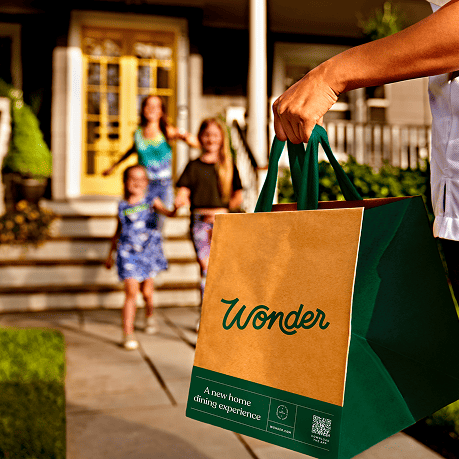
Image: Wonder — a Wonder delivery bag (official image).
What happens next: Texas, Wonder Create and the IPO question
Three dates now define Wonder's next year. First, Texas: Wonder enters the state next year with a target of at least 100 locations by the end of 2027, starting with Dallas–Fort Worth, Houston, Austin and San Antonio — its first move outside the Northeast and Mid-Atlantic corridor. Second, Wonder Create launches on 17 November 2026: for $10 a month, influencers, entrepreneurs and brands can create their own virtual restaurant concept, cooked in Wonder locations, and earn a share of the revenue from their orders. Lore's pitch is restaurant ownership without startup capital, kitchen overhead or staff — and the platform is later due to open to the public, who will pick menu items from Wonder's pantry.
Third, the IPO. Wonder says it is preparing to be "IPO-ready" by early next year, hired Gabrielle Scheibe Rabinovitch from Worldpay as chief financial officer in March 2026, and added longtime former Chipotle CFO Jack Hartung to its board. But Lore declined to discuss IPO timing with CNBC, and an earlier expectation pointed to 2028 — so no date should be treated as confirmed. One reported detail shows how seriously the newest investors take that timing: they reportedly receive additional shares if the IPO prices below 1.5 times their investment, a threshold of roughly $14.7 billion. A company projection of a $40 billion valuation for 2028 has also been reported — but that is a projection, not a valuation.
The counterweight is profitability. The Information has reported that Wonder has been operating at a loss since the Blue Apron and Grubhub deals, and Lore's longer-term vision — fully autonomous food preparation and delivery by 2040, plus Zipline drone delivery in Texas from 2027 — still has to be paid for. Investors are backing scale first and profits later, which is exactly what the IPO will test.
Why it matters for readers in India
Wonder has announced no India launch, so this is read-across, not a market entry. But two ideas travel well. The first is the creator-restaurant model: if Wonder Create works, India's creator economy — already comfortable selling through Instagram and YouTube — gets a template for food brands without kitchens. The second is the cloud-kitchen parallel: India already runs large delivery-first kitchen networks, and Wonder's bet is that owning the kitchen, the app and the delivery fleet beats renting space on someone else's platform. Indian readers watching Zomato and Swiggy's own platform economics will recognise the same argument, with the same unanswered question: does the model make money at scale?
Should you care?
⏳ Watch, don't chase. Wonder is one of the most interesting private food companies in the US, and the 17 November Wonder Create launch is a real date to watch. But with no confirmed IPO date, reported losses and a $14.7 billion investor-protection threshold hanging over any listing, this is a story to follow — not a stock to wait for yet, since there is no stock to buy.
Wonder by the numbers
| Measure | Figure | Source / note |
|---|---|---|
| Series D round | $650 million | Restaurant Business |
| Valuation | $9 billion pre-money / $9.65 billion post-money | Restaurant Business |
| Total raised | $3.3 billion | CNBC-derived reports, late Oct 2026 |
| Locations | ~170 now (140 at Series D) | Latest reports vs Series D coverage |
| Texas target | 100+ locations by end of 2027 | CNBC interview |
| Wonder Create | $10/month, launches 17 Nov 2026 | CNBC interview |
| Grubhub acquisition | $650 million (2024) | Company reports |
| Blue Apron acquisition | $103 million (2023) | Company reports |
FAQs
What is Wonder, the food startup? Wonder is a US food-tech company founded by Marc Lore in 2018 that runs "delivery-first food halls": each location cooks around two dozen restaurant concepts in one kitchen, ordered through one app for delivery, pickup or dine-in. It also owns Grubhub and Blue Apron.
How much is Wonder worth? Wonder's Series D round valued it at $9 billion before the new money and $9.65 billion after it. It has raised $3.3 billion in total, and its newest investors reportedly get extra shares if an IPO prices below about $14.7 billion.
When will Wonder go public? No IPO date is confirmed. Wonder says it aims to be "IPO-ready" by early next year and hired an IPO-experienced CFO in March 2026, but founder Marc Lore declined to give CNBC a timetable, and an earlier expectation pointed to 2028.
What is Wonder Create and how much does it cost? Wonder Create, launching 17 November 2026, lets influencers, entrepreneurs and brands run their own virtual restaurant out of Wonder locations for $10 a month, earning a share of the revenue from their orders. It is due to open to the general public later.
Is Wonder profitable? Not according to reports: The Information has reported that Wonder has operated at a loss since its Blue Apron and Grubhub acquisitions. The company has not published audited profitability figures, so treat any profit claim as unverified.
TAKEAWAY: Wonder turned $3.3 billion of funding into ~170 food halls and a $9 billion valuation — now Texas, Wonder Create and an unconfirmed IPO will decide whether the model is a new kind of restaurant company or an expensive experiment.
Follow USA Tech on TechByCountry for tomorrow's update.
📸 Get tech in the last 24 hours on Instagram — follow @_techinlast24hrs for daily posts (9 AM–9 PM) and reels at 12:30 PM & 8:30 PM.
Related reading: Affle's $420 million all-cash acquisition of Israel's Perion shows how cross-border deals are reshaping adtech, while Aramco's $2.6 billion HUMAIN stake is another big-ticket bet on AI infrastructure. DoorDash — itself a Wonder investor — is also buying Instacart, as covered in our DoorDash–Instacart explainer.
Sources
- Restaurant Business — Wonder valued at more than $9B after latest fundraise
- Restaurant Business — Wonder hires a CFO as it lays groundwork for an IPO
- American Bazaar (via CNBC) — Wonder plans Texas expansion, launches $10-a-month platform
- Dispatch Times (via CNBC) — Wonder eyes IPO, betting on Texas, automation and user-built eateries
- TokenPost — Wonder surpasses $3 billion in funding as it moves toward an IPO (1 Nov 2026)
Comments
Post a Comment