Blacksmith 66 Million Series C 1 Billion Valuation Explained: The Startup Fixing AI Code Testing (World Tech)
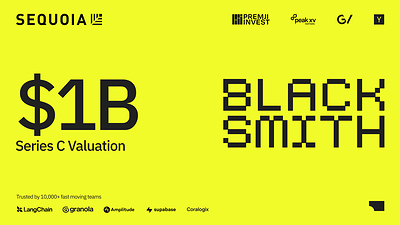
Image: Blacksmith — Blacksmith Series C announcement graphic (official company image, via PR Newswire)
📌 KEY HIGHLIGHTS
- $66 million Series C at a $1 billion valuation: led by Sequoia Capital, with Premji Invest joining as a new investor alongside Peak XV Partners, GV and Y Combinator.
- Total funding now $125 million: up from a $550 million valuation at the Series B two months earlier and $60 million at the Series A about a year ago.
- Weekly CI jobs up 18x in 2026: from 5 million in January to more than 90 million, with annual recurring revenue up 17x in the same period (company-reported).
- 10,000+ companies on the platform: including Ashby, Granola, Handshake and LangChain, running on nearly 10 MW of compute across the US and Europe.
- India angle: Premji Invest (the Wipro founder's investment arm) and Peak XV Partners (Sequoia's former India/Southeast Asia arm) both back the round.
What happened?
Blacksmith, a San Francisco-based startup that runs the infrastructure for building and testing software, announced its Series C on 21 October 2026. Sequoia Capital led the $66 million round at a $1 billion valuation, making Blacksmith a unicorn less than two years after its founding in 2024. The round brings its total funding to $125 million and follows a $45 million Series B in August 2026 that valued the company at $550 million — meaning the valuation nearly doubled in about ten weeks.
The speed of that climb is the story. A year ago, Blacksmith was valued at $60 million after a $10 million Series A. Three rounds in roughly a year, each at a sharply higher valuation, is the market pricing in a single bet: as AI agents write more of the world's software, the infrastructure that checks that software becomes more valuable, not less.
Blacksmith 66 million Series C 1 billion valuation explained: the deal in detail
| Detail | Figure |
|---|---|
| Round | Series C, announced 21 October 2026 |
| Amount raised | $66 million |
| Valuation | $1 billion (unicorn status) |
| Lead investor | Sequoia Capital (partner Isaiah Boone) |
| Other investors | Premji Invest (new); Peak XV Partners, GV, Y Combinator (existing) |
| Total funding to date | $125 million |
| Previous rounds | $45M Series B at $550M (Aug 2026); $10M Series A at $60M (~Oct 2025) |
| Use of funds | Grow the team and expand compute footprint — at least 5x in 2027 |
Blacksmith was founded in 2024 by Aditya "JP" Jayaprakash, Aayush Shah and Aditya Maru, who met as undergraduates at the University of Waterloo in Canada. Shah and Maru were early engineers at Cockroach Labs; Jayaprakash was an engineer at Faire. All three had run spiky, large-scale infrastructure before — and that experience is the product: Blacksmith builds infrastructure purpose-built for continuous integration (CI), the automated process that builds, tests and validates every code change before it is merged.
Customers switch with a one-line change to their workflow file and never provision, scale or maintain CI infrastructure again, according to the company. Blacksmith says its customers' CI jobs complete twice as fast and at 60% lower cost on average. LangChain, one of the named customers, said Blacksmith cut its runner costs by roughly 40% on top of the engineering time saved.
Why AI-written code broke CI
For years, writing code was the slow part of shipping software. That has flipped. With AI coding agents now producing a large and growing share of the world's code, developers who used to push three or four pull requests a day are now pushing orders of magnitude more — and every single change still has to be built and tested before it can merge.
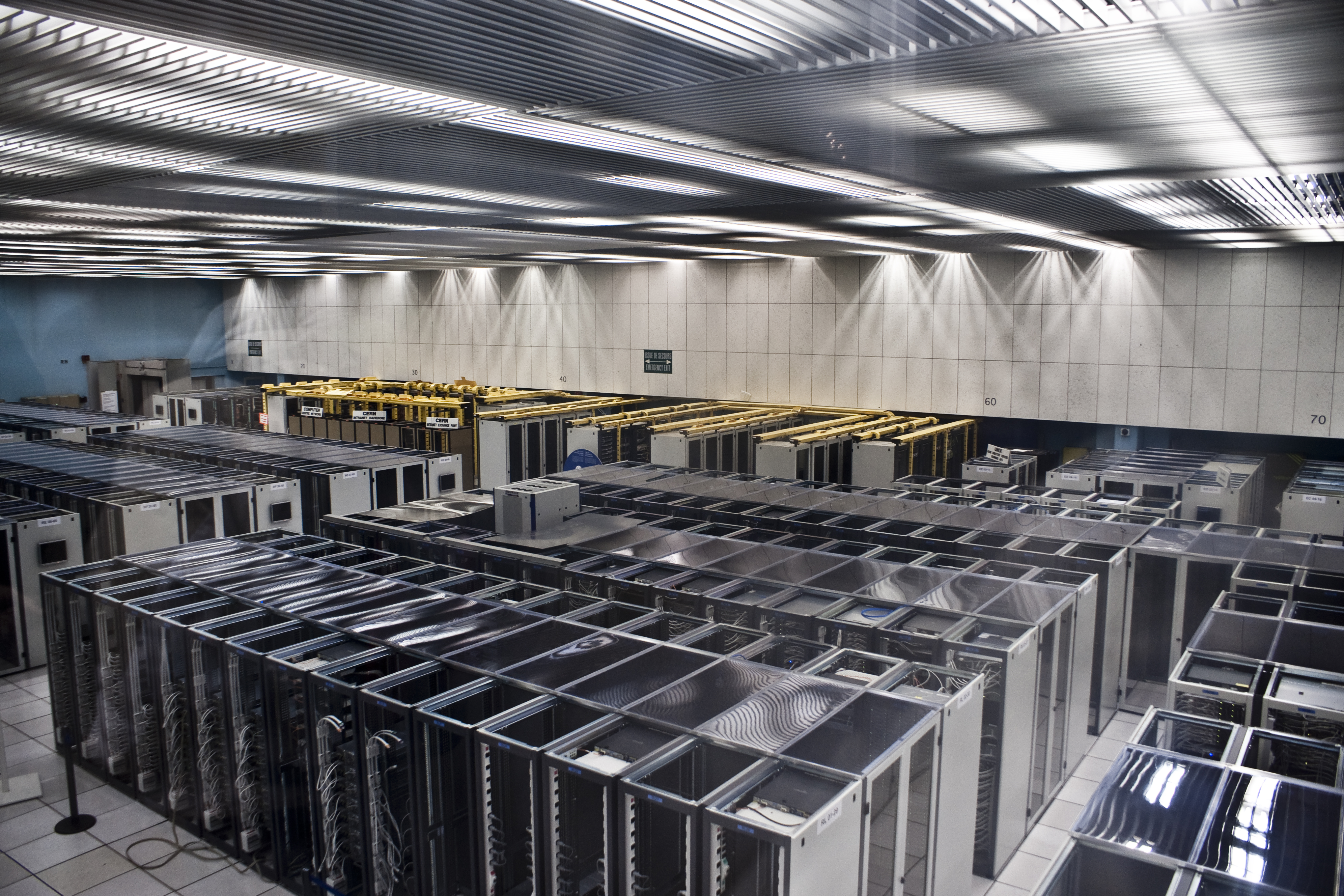
Image: Wikimedia Commons / Florian Hirzinger, CC BY-SA 3.0 — server room (illustrative image of the compute infrastructure CI workloads run on; not a Blacksmith facility)
Most companies run CI on general-purpose cloud infrastructure that was never designed for it. CI is, in Blacksmith's words, the most variable workload a company runs: a single customer's demand regularly jumps from zero to tens of thousands of CPUs and back again. The result is longer waits for compute, slower builds on older-generation CPUs, and a constant fight between over- and under-provisioning. Anthropic reported last month that its own CI volume grew 25x in six months as Claude took over most of its code output — the same pressure Blacksmith is selling against.
Blacksmith's answer is to own the hardware: nearly 10 MW of compute across data centres in the United States and Europe, purpose-built for CI spikes, with a plan to grow that footprint at least fivefold in 2027. The company frames it plainly — as agents write more of the world's software, the question that matters is whether that code can be trusted, and trust is established by testing.
Why it matters for World Tech readers
This round is a useful barometer for where AI money is moving next. The first wave funded the models and the coding assistants themselves — this blog covered VS Code 1.143 making Copilot the default and GitHub's Package Firewall for agent-written code this same week. Blacksmith sits one layer down: the unglamorous plumbing that decides whether AI-written code ships safely. Investors paying $1 billion for plumbing is a signal that the bottleneck has moved downstream from generation to validation.
For Indian readers, two names in the cap table matter. Premji Invest — the investment arm of Wipro founder Azim Premji — joined as a new investor, and Peak XV Partners, the firm Sequoia spun out of its India and Southeast Asia business, is an existing backer. Indian engineering teams feel the same CI squeeze: the country's large IT services and product companies are among the heaviest users of AI coding tools, and the same build-and-test queues are lengthening in their pipelines. A second, less comfortable read: every defect AI-written code carries into production still has to be caught somewhere, and the cost of catching it is becoming a line item of its own — just as this week's Daytona agent-cloud round and Tractian physical-AI round show investors funding the infrastructure around AI, not just the models.
Should you care?
FAQs
What does Blacksmith do?
Blacksmith operates continuous integration infrastructure — the automated builds and tests every code change must pass before merging — on its own hardware in data centres across the US and Europe. Customers switch with a one-line change to their workflow file, according to the company.
How much did Blacksmith raise in its Series C?
Blacksmith raised $66 million in a Series C led by Sequoia Capital at a $1 billion valuation, announced on 21 October 2026. The round brings its total funding to $125 million.
What is Blacksmith's valuation after the Series C?
$1 billion, giving the 2024-founded startup unicorn status. That is nearly double its $550 million Series B valuation from August 2026 and far above the $60 million valuation at its Series A about a year earlier.
Why is code validation suddenly a big market?
AI coding agents let developers produce far more code than before, and every change still has to be built and tested. Blacksmith's weekly CI jobs grew from 5 million in January 2026 to over 90 million, and Anthropic reported its own testing workload grew 25x in six months — making validation the new bottleneck in shipping software.
TAKEAWAY: AI made writing code cheap; Blacksmith's $1 billion valuation says checking code is where the value — and the cost — now sits.
Follow World Tech on TechByCountry for tomorrow's update.
📸 Get tech in the last 24 hours on Instagram — follow @_techinlast24hrs for daily posts (9 AM–9 PM) and reels at 12:30 PM & 8:30 PM.
Sources
- Blacksmith / PR Newswire — Blacksmith Raises Sequoia-Led Series C at $1 Billion Valuation (21 Oct 2026, primary source)
- TechCrunch — Blacksmith hits unicorn valuation after Sequoia leads Series C (21 Oct 2026)
- Indian Startup News — AI code testing startup Blacksmith raises $66 million at $1 billion valuation (24 Oct 2026)
- TechTimes — Sequoia-Backed Blacksmith Raises $66M at $1B to Fix CI Broken by AI Coding Agents (22 Oct 2026)
Comments
Post a Comment