Greenjoules Series B Funding Explained: ₹150 Crore From Amazon Funds, ₹100 Crore Government Loan and India's Biggest Biocrude Plant
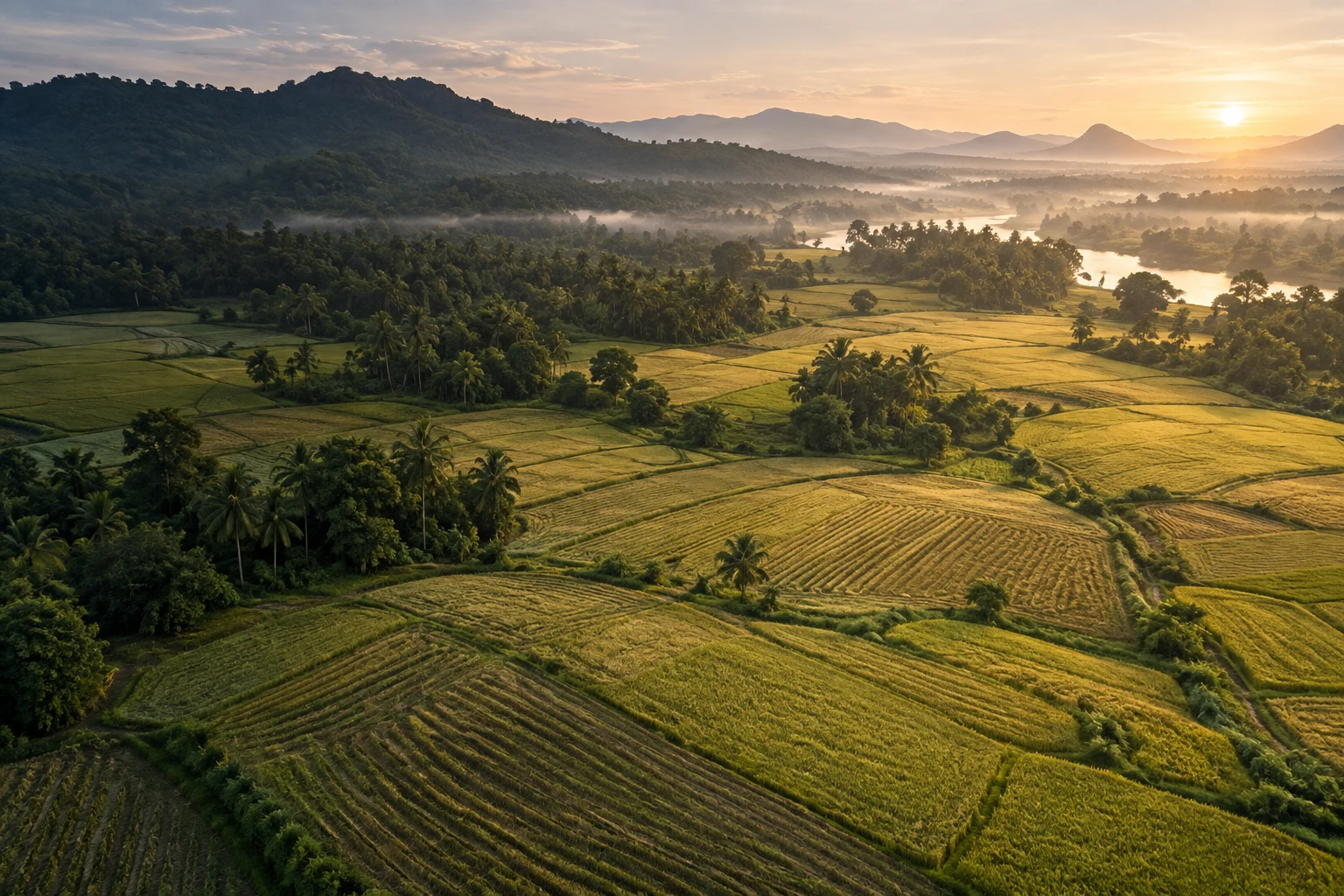
Image: Greenjoules — farmland in India; the company's fuel is made from agricultural waste left over after harvests (official company image, greenjoules.in).
TL;DR: Pune-based Greenjoules has raised ₹150 crore in a Series B round co-led by two Amazon funds, and secured a separate ₹100 crore loan from the government's Technology Development Board — ₹250 crore in all — to build a biocrude plant at Khed City, Pune, designed to turn farm waste into 200,000 litres of fuel a day.
Key Highlights
- ₹150 crore Series B (about $16 million), co-led by Amazon's Smbhav Venture Fund and Climate Pledge Fund, with Rainmatter and Singularity's Strategic Autonomy Fund also investing.
- ₹100 crore loan from the Technology Development Board, under the Department of Science and Technology — taking total financing for the expansion to ₹250 crore.
- The money funds a new plant at Khed City, Pune, designed to produce 200,000 litres of biocrude a day from agricultural waste, built in phases from 2027.
- Greenjoules' own process converts paddy straw, husk, shells and bagasse into biocrude, refined into renewable diesel and bio-naphtha — a drop-in replacement for fossil diesel.
- Blue Ashva Capital, which led the ₹33 crore Series A in 2021, remains the company's largest shareholder.
Greenjoules Series B funding explained: the deal in numbers
Greenjoules announced the round on 11 November 2026. The headline figure is ₹150 crore of equity, but the full picture has three parts — and one of them was already public months ago.
| Part of the financing | Amount | Who / what |
|---|---|---|
| Series B equity | ₹150 crore (~$16 million) | Co-led by Amazon's Smbhav Venture Fund and Climate Pledge Fund; Rainmatter and Singularity's Strategic Autonomy Fund participated |
| Already disclosed in August 2026 | ~₹62 crore of the ₹150 crore | Amazon invested ₹45 crore and Singularity about ₹17 crore, per company filings reported in August — so roughly ₹88 crore is new money |
| Government loan | ₹100 crore | Technology Development Board, under the Department of Science and Technology — backing announced in June 2026 for second-generation diesel-equivalent biofuel |
| Total financing | ₹250 crore | Equity plus loan, for the Khed City expansion |
That last point matters for readers keeping score: the ₹150 crore is not all fresh cash announced this week. Company filings reported in August already showed about ₹62 crore of the round in place, with Amazon buying preference shares worth ₹45 crore and Singularity about ₹17 crore. The November announcement closes the round at its full ₹150 crore and adds the ₹100 crore loan on top.
The round is about four and a half times the ₹33 crore Series A that Blue Ashva Capital led in 2021. Blue Ashva remains Greenjoules' largest shareholder. The company was founded in 2018 by S Viraraghavan and co-founders including Radhika Viraraghavan, Shweta Viraraghavan — who is also chief technology officer — and Sethunath Ramaswamy.
How Greenjoules turns farm waste into diesel
Greenjoules does not make fuel from food crops. Its feedstock is the residue farming leaves behind: paddy straw and husk, groundnut and cashew shells, and sugarcane bagasse. Its proprietary process, called Integrated Catalytic Thermo Cracking, heats that prepared waste to around 600°C in the presence of catalysts and converts it into biocrude — a crude-oil-like liquid that is then refined into renewable diesel and bio-naphtha.
Three claims on the company's own site are worth knowing, because they explain why investors are backing a factory rather than a lab project. First, the fuel is a drop-in replacement: it meets BIS 1460, the Indian diesel standard, and the company says it surpasses Euro VI, so it can replace fossil diesel litre for litre with no engine or infrastructure changes. Second, the process is certified ISCC Biocircular for a third consecutive year — an independent annual audit of inputs and outputs. Third, this is not a pilot: Greenjoules already runs a commercial biorefinery at Chakan, near Pune, with real customers, offtake agreements and revenues, and the process was developed and tested there.
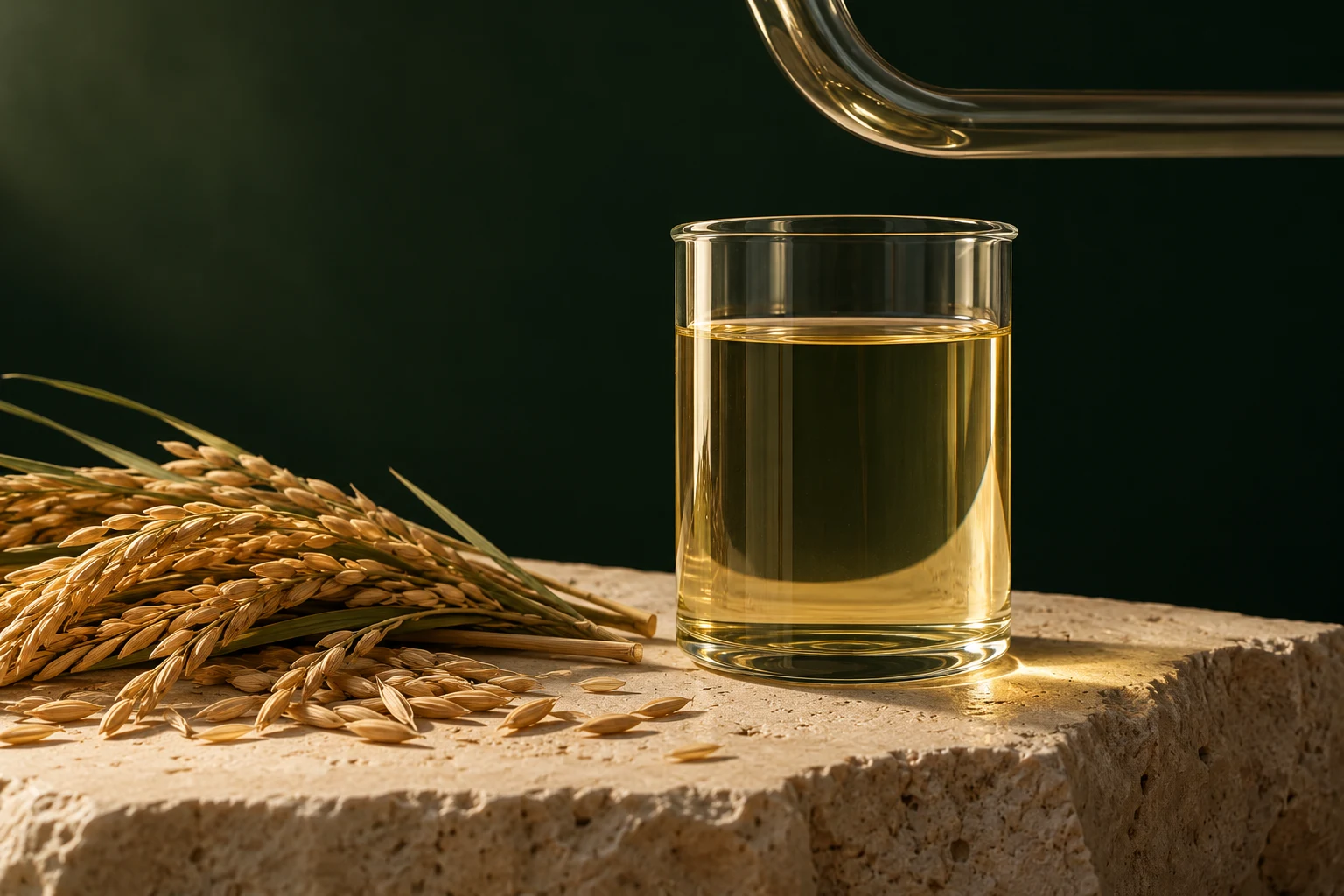
Image: Greenjoules — conceptual image of renewable diesel made from agricultural waste; the company labels this a conceptual image on its own site (greenjoules.in).
Beyond diesel, the company plans to extend the same technology to sustainable aviation fuel, green hydrogen and sustainable materials — the higher-value markets where India's renewable-fuel mandates and airline decarbonisation goals are creating demand.
Why the Khed City plant matters for India
The new plant is the point of the money. It will sit at Khed City, near Pune in Maharashtra, and is designed to produce 200,000 litres of biocrude a day from agricultural waste once fully built. Construction happens in phases from 2027, and the company says the finished facility is expected to be the largest of its kind in India.
The India angle is the feedstock itself. India generates tens of millions of tonnes of crop residue every year, and a large share of it — paddy straw in particular — is still burned in fields after harvest, because farmers have only a few weeks between the paddy harvest and sowing wheat. Punjab alone generates around 20 million tonnes of paddy straw a year, and thousands of farm fires are recorded there every season. A plant that pays for that straw turns a disposal problem — and a pollution problem — into a fuel supply chain. That is the bet Amazon's two funds, Zerodha's Rainmatter and Singularity are all making: waste in, certified diesel out, with farmers as suppliers.
There is also a strategic angle. Amazon's Smbhav Venture Fund was launched in 2021 to back Indian startups, while its Climate Pledge Fund invests in technologies that decarbonise operations such as logistics — Amazon's own delivery network runs on diesel. A domestic, drop-in renewable diesel supplier sits at the intersection of both mandates, and the government loan signals the same priority from the Department of Science and Technology.
What to watch before getting excited
A funding announcement is not a finished plant, and this one deserves four honest caveats.
First, the plant does not exist yet. The 200,000-litres-a-day figure is the designed capacity of the completed facility, not current production. Construction starts in phases from 2027, so the milestones to watch are ground-breaking, commissioning, and the first commercial output — not the cheque.
Second, ₹250 crore is under half the plan. The company's own site puts the full greenfield programme at above ₹600 crore. At least ₹350 crore of it is not yet publicly funded, and no date has been given for the rest.
Third, the round's new money is smaller than the headline. About ₹62 crore of the ₹150 crore was already in place in August, so roughly ₹88 crore is genuinely new equity announced this week. The ₹100 crore loan is new, and the government had already announced its backing in June — the figure is what is new.
Fourth, "largest of its kind in India" is the company's expectation for the completed plant, not a measured fact today. The claim will only be testable once the phased build is finished.
None of that diminishes the round — a commercial biorefinery, certified fuel, two Amazon funds and a government loan is a serious combination. But the story from here is execution: building the plant, securing steady feedstock from farms, and hitting the yields and certifications that make the economics work at 200,000 litres a day.
Should you care?
✅ Yes, if you follow Indian climate tech, energy or farming. This is one of the biggest Indian biofuel financings of the year, with Amazon money and a government loan behind a working — not pilot — technology. The real test is construction from 2027: watch for the Khed City ground-breaking and first production, and treat the "largest in India" claim as a target, not a fact, until the plant runs.
For context on how Indian startups are raising this week, see our explainers on Rox's $100 million Series B at a $1.3 billion valuation and Torus Foundry's $500 million raise for modular AI data centres. For another Pune clean-mobility story, read Green SM's electric taxi launch in Bengaluru.
FAQs
How much did Greenjoules raise in its Series B funding round?
Greenjoules raised ₹150 crore (about $16 million) in Series B equity, co-led by Amazon's Smbhav Venture Fund and Climate Pledge Fund. With a separate ₹100 crore loan from the Technology Development Board, total financing for the expansion is ₹250 crore.
Who led Greenjoules' Series B round?
The round was co-led by Amazon's Smbhav Venture Fund and Climate Pledge Fund. Rainmatter, Zerodha's investment arm, and Singularity's Strategic Autonomy Fund also participated. Blue Ashva Capital, which led the 2021 Series A, remains the largest shareholder.
What does Greenjoules do, and how does it make fuel?
Greenjoules converts agricultural waste — paddy straw, husk, groundnut and cashew shells, sugarcane bagasse — into biocrude using its proprietary Integrated Catalytic Thermo Cracking process at around 600°C. The biocrude is refined into renewable diesel and bio-naphtha that meet India's BIS 1460 diesel standard and work in existing diesel engines without modification.
When will the Greenjoules Khed City plant start producing biocrude?
The plant at Khed City, Pune, will be developed in phases from 2027. It is designed to produce 200,000 litres of biocrude a day once complete, but no first-production date has been announced — the 200,000-litre figure is planned capacity, not current output.
Takeaway
Greenjoules has turned farm waste into a working fuel business at Chakan — and ₹250 crore from Amazon's funds and the government is the bet that it can do the same at industrial scale in Khed City. The funding is real; the plant is still a plan. Watch the 2027 construction milestones.
The next milestone to follow is construction starting at Khed City in 2027 — check the company's site and the Technology Development Board's updates for ground-breaking and first production, and read our Torus Foundry funding explainer for how another big 2026 raise is being spent.
Sources
- Greenjoules — official company website (greenjoules.in) — fuel standard (BIS 1460, Euro VI), ISCC Biocircular certification, commercial operations at Chakan, ₹600 crore greenfield programme
- The Economic Times — Greenjoules raises ₹150 crore in Series B funding, secures ₹100 crore TDB loan (11 November 2026)
- Business Standard — Greenjoules raises ₹150 crore in Series B round to expand renewable fuels (11 November 2026)
- VCCircle — Amazon funds lead Greenjoules' Series B round (11 November 2026)
- Inc42 — Greenjoules closes Series B round at ₹150 crore (11 November 2026)
- The Indian Express — Powered by Amazon & Zerodha, Pune startup plans India's largest plant turning paddy straw into bio-crude (11 November 2026)
- StartupFeed — Greenjoules Series B reaches ₹150 crore, TDB lends ₹100 crore (11 November 2026)
Comments
Post a Comment